
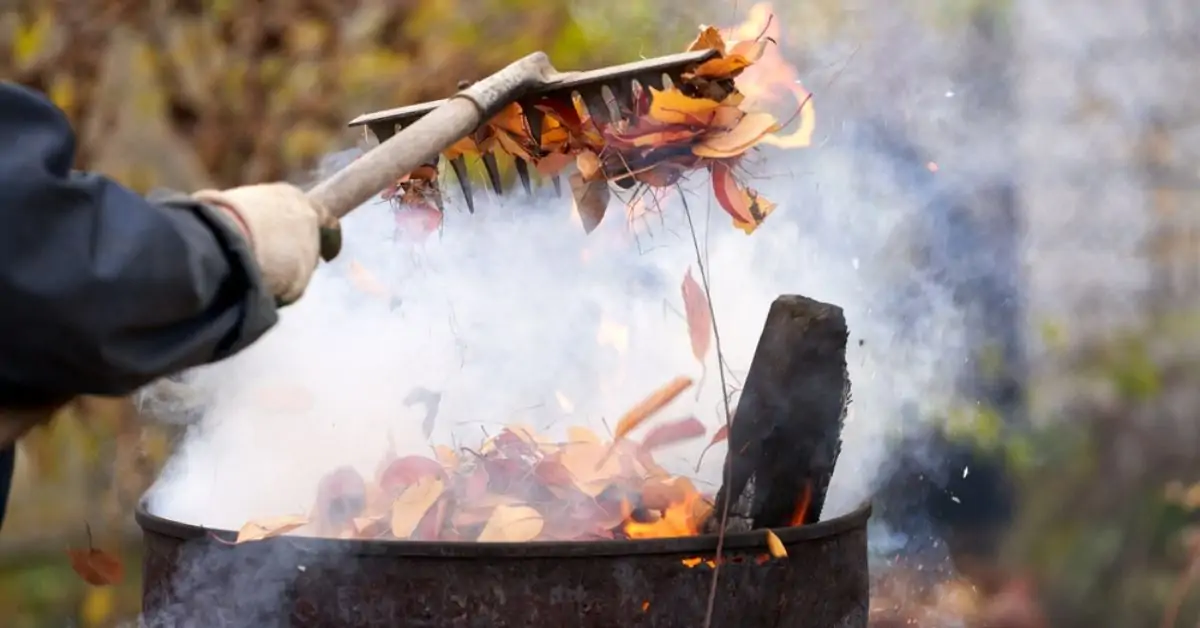
As autumn settles in, fallen leaves already blanket most gardens. Some gardeners choose to make use of them, others prefer to ignore them, while some are determined to get rid of them. A question then arises: do we have the right to burn fallen leaves, considered waste?
Can You Burn Fallen Leaves in Your Yard?
The government’s website provides a clear answer: it is illegal to burn green waste on your property, whether dry or wet. The environmental code states that “yard debris, including those from gardens or parks, cannot be disposed of by open burning”. This ban also applies if leaves are burned using a garden incinerator.
Why is this banned? Because burning green waste, especially when wet, releases toxic substances into the air that can harm humans and the environment (notably fine particulates), the government notes on its site. There are also fire risks, though they are generally smaller than in summer when droughts are more common. There can also be neighbor disturbances to consider.
An Exception Is Possible
Gardeners who break this rule face fines of up to $450, unless an exemption applies. It is possible to obtain permission to burn fallen leaves if the municipality lacks a dedicated trash facility or a green-waste collection program.
What Other Yard Wastes Are There?
Leaves aren’t the only green wastes that you’re not allowed to burn. Other plant materials (from gardens or parks) are also restricted:
- Grass clippings, which can be used for mulch.
- Prunings from shrubs and hedges.
- Debris from brush clearing.
- Fruit and vegetable peels.
What Other Ways Are There to Get Rid of Fallen Leaves Without Burning Them?
Since burning fallen leaves in your yard isn’t allowed, there are other options:
- You can drop them off at a local waste facility or on a yard-waste collection program, depending on the rules in your community.
- Fallen leaves make excellent mulch to protect plants from frost and to boost soil biodiversity.
- Leaves in the garden are genuinely useful, as they help create high-quality compost.
- You can also use fallen leaves to enrich your home compost, as they are biodegradable. Be aware, however, that some types of leaves should not go into compost.
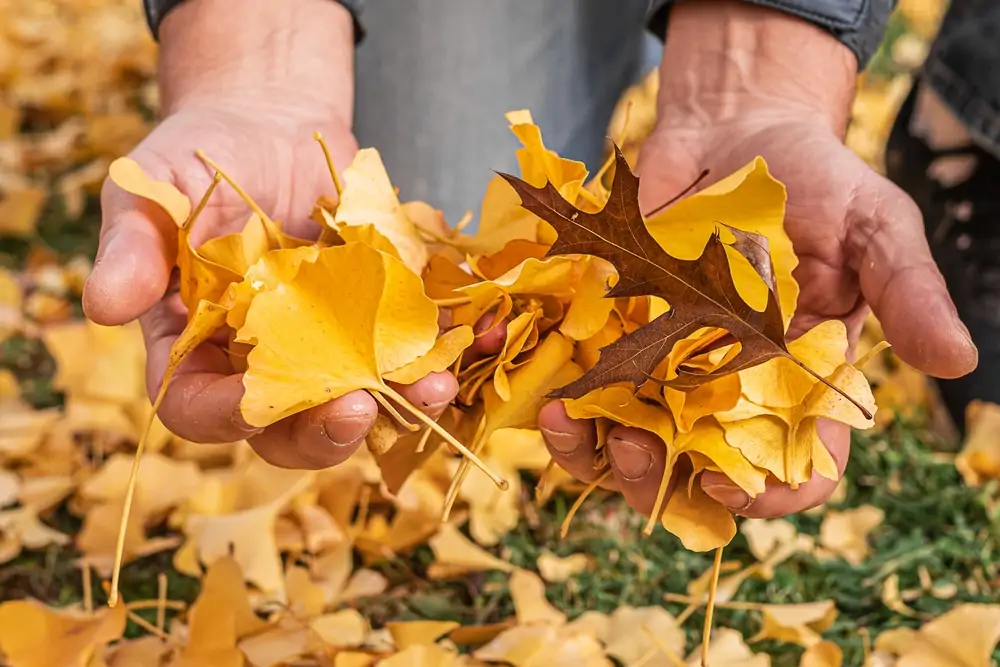
Leaves You Might Want to Avoid Putting in Compost:
Avoid adding leaves that are too thick and will take too long to break down. Plane tree (sycamore), beech, oak, maple, and ivy leaves will slow down decomposition. It’s better to run them through a shredder before incorporating them into compost.
Similarly, the leaves of laurel palm are overly thick and prevent rainwater from penetrating the soil. In compost, they won’t decompose adequately. Also beware of the leaves of fruit trees or roses, which may carry diseases. As for cistus leaves, the allelopathic compounds they contain may linger too long in the compost and hinder future plant growth.
Read also