

They sometimes accompany flu-like symptoms, but more often they are the price you pay for prolonged effort or overdoing it in sports. How can you make these pains naturally fade—soon—and become more than just a bad memory? What are the best natural remedies for muscle soreness?
Whenever possible, prevention is obviously best. You’ve probably heard it before, and we’ll say it again: finish every workout with stretches; this will limit both muscle stiffness and the soreness you’ll feel the next day…
What to Do About Sore Muscles: Natural Remedies
Focusing on Prevention
Alongside that, here’s a potion that helps to prevent the onset of soreness related to athletic exertion:
- Mix 2 to 3 drops of peppermint essential oil into a tablespoon of arnica oil.
- Before exertion, rub the muscles that will be stressed with this preparation.
- After exertion, use it again, this time for a deeper massage.
Arnica oil is particularly recommended as a base when you want to naturally relieve sore muscles. But if you don’t have it, use another vegetable oil, such as sweet almond oil or olive oil.
After Exercise, Our Natural Remedies and Recipes for Sore Muscles
Once the sore muscles have set in, what are the best natural solutions to help you forget them faster?
The Thyme Heat to Relieve Fatigue and Soreness Throughout the Body
First remember that back pain, muscle soreness, and stiff necks are relieved by warmth: yes to patches, a blow-dryer, or warm baths, especially if they’re enhanced with a liter of thyme and/or rosemary infusion!
Drink plenty of water: this will help soreness pass more quickly.

What to Drink Against Sore Muscles?
To be consumed with considerably more restraint, onion wine is also recommended. Its preparation, as well as its reputation, goes back to ancient times, and it’s hardly a coincidence that centenarians are especially numerous in regions where it plays a prominent role at table!
It is particularly valued for helping to quickly eliminate both the flu and muscle stiffness caused by unusual physical effort.
Onion Wine Recipe
- Finely chop 500 g onions.
- Mix them with 150 g honey, preferably thyme honey.
- Then add 1 liter of sweet white wine, stirring as you go with a wooden spoon.
- Let rest for 2 weeks, stirring every 2 days, then strain.
During flu, sore muscles, or painful joints, take 1–2 small glasses per day.
Oils and Massage Synergies to Naturally Relieve Sore Muscles
On the oil side, to apply in gentle circular massages, here are the best options for you:
Argan Oil
In addition to the arnica oil mentioned above, yes to argan oil as well.
This little marvel, very rich in vitamin E, comes from Morocco, and Berbers say it warms the joints. They also appreciate it for soothing rheumatism and easing muscular pains: sore muscles, but also sprains, tendinitis, neck stiffness…
- Simply apply argan oil, preferably cosmetic-grade, to the painful area, and massage gently to help the oil absorb.
- Repeat daily until the pain subsides.
Nigella Oil
The other great workhorse to use neat or as a base for a more sophisticated treatment is nigella oil (black seed oil).
Simply applying warm nigella oil already helps relieve painful joints, rheumatism, osteoarthritis, muscle soreness and other muscle contractions.
How to further optimize its effects?
For a soothing massage oil that’s effective against inflammation and against contractures:
- Mix 10 ml of nigella oil with 10 ml of another vegetable oil.
- Add 8 drops of lavender or lavandin essential oil.
- Shake well.
- Apply to the painful area.
This variant also works very well for muscle or back pain:
Nigella oil and another vegetable oil (almond, for example), in equal parts, but this time with 4 drops of wintergreen essential oil and 4 drops of ylang-ylang essential oil.
Soothing in massages, nigella oil also offers anti-inflammatory properties when used internally. Combine the two!
For sore muscles, but also back or joint pain, take a teaspoon of nigella oil three times a day.
Yes, also to St. John’s Wort Oil!
Another very good natural method is to gently rub the sore area with St. John’s wort oil, ideally homemade. If not, you can find it in drugstores and herb shops, but beware: no sun exposure if, for example, the calves were the ones sore, because St. John’s wort oil is extremely photosensitive!
Anti-Soreness Lotion with Precious Little Oils…
This final recipe, this time with essential oils, helps quickly relieve sore muscles thanks to the beneficial effects of rosemary on muscles and circulation combined with the analgesic properties of chamomile:
- In 125 ml of sweet almond oil, add 5 drops of chamomile essential oil and 4 drops of rosemary essential oil (cineole rosemary).
- Shake well before use.
- Massage the painful areas with this oil.
The Wild Aspirin, Better Twice Than Once!
Did you know that meadow’s meadowsweet is sometimes called the “wild aspirin”? And it’s not just because its flowers and leaves release a strong, somewhat medicinal scent when crushed… they possess exceptional anti-inflammatory, anti-rheumatic, fever-reducing, and pain-relieving properties.
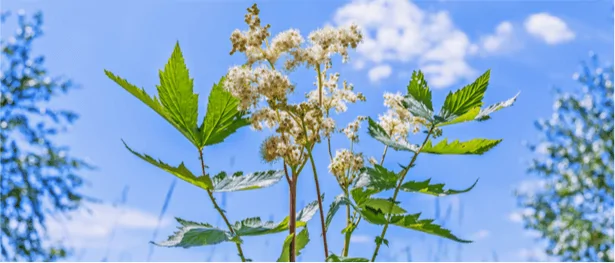
The Proof with This Syrup, Excellent for Joints
- Pour half a liter of hot water over 50 g of dried meadowsweet flowers.
- Let it rest for 8 hours, then strain.
- Add 500 g of sugar.
- Mix well, and refrigerate this syrup.
In case of sore muscles or joint pain, take 4–5 tablespoons spread out over the day
Nothing prevents you from enjoying it as an infusion as well
- Prepare your tisane with 1 teaspoon of dried flowers and leaves per 3 dl of water, 3 times daily.
Note: Meadowsweet is contraindicated for people allergic to aspirin or who take medicines to thin the blood. All of these natural recipes come from the books by Véronique Desarzens.
If you didn’t do a little harvest when the moment was right, no problem: your herbist can provide what you need!
Also read
Special Report – Relieving Joints