
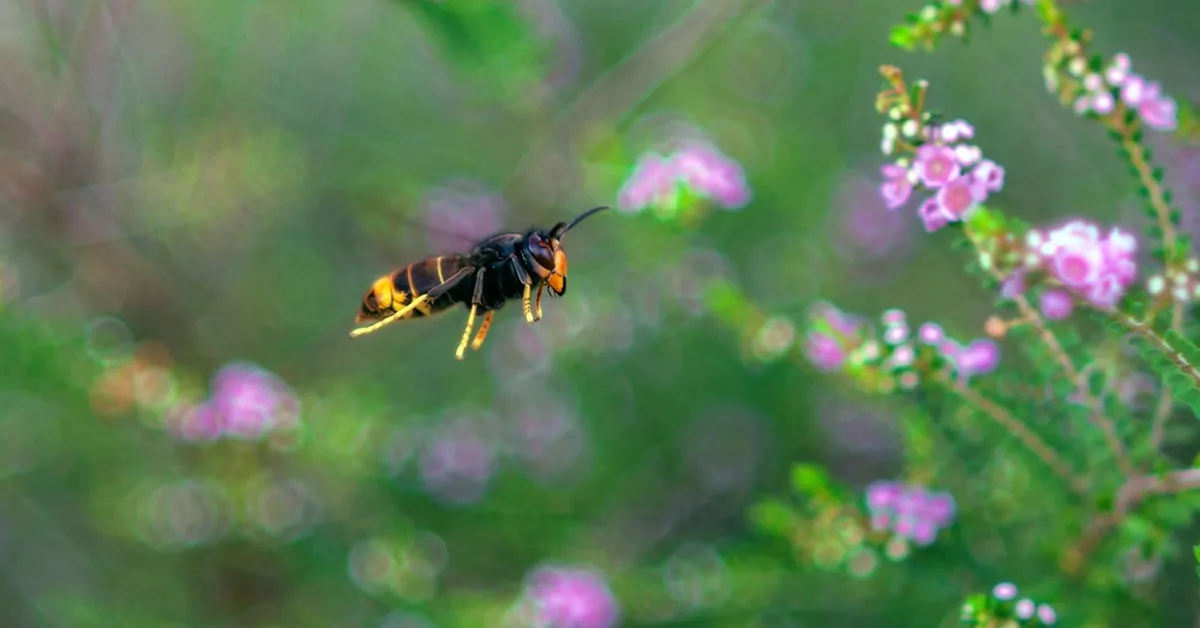
Accidentally introduced in 2004, this exotic invasive species has now settled across all departments of metropolitan France.
Asian hornet, a documented threat to ecosystems
Regarded as an opportunistic predator, the Asian hornet preys on locally abundant species. According to data from the National Museum of Natural History, a single colony consumes on average more than 11 kilograms of insects between March and October. Its diet consists primarily of flies, wasps, and especially domesticated honey bees. These bees account for up to nearly 40% of its prey. While its overall ecological consequences for wild pollinators remain to be explored, the economic impact on beekeeping is clearly established.
To counter this progression, the public response centers around three major axes. First, the development of innovative and environmentally friendly regulation methods, combining the destruction of nests with targeted trapping sessions. This framework also relies on rigorous population monitoring and the establishment of coordinated governance. The aim is to establish a uniform and proportionate action in the face of the pressure observed on the ground.
A Territorial Rollout
The national strategy must now be translated into the drafting of departmental plans developed within six months. In addition, classifying territories according to the presence of the pest will allow the adaptation of local measures. To ensure its effectiveness, this plan will undergo a complete review every six years. Beekeepers’ compensation will, for its part, be managed by a separate mechanism.
Although validated by the National Council for Nature Protection, the scheme has drawn reservations. In the public consultation held in spring, nearly 90% of contributions expressed a mixed or critical opinion. Experts and users point notably to spring trapping, deemed harmful to the surrounding biodiversity, and are calling for more ambitious budget resources.