
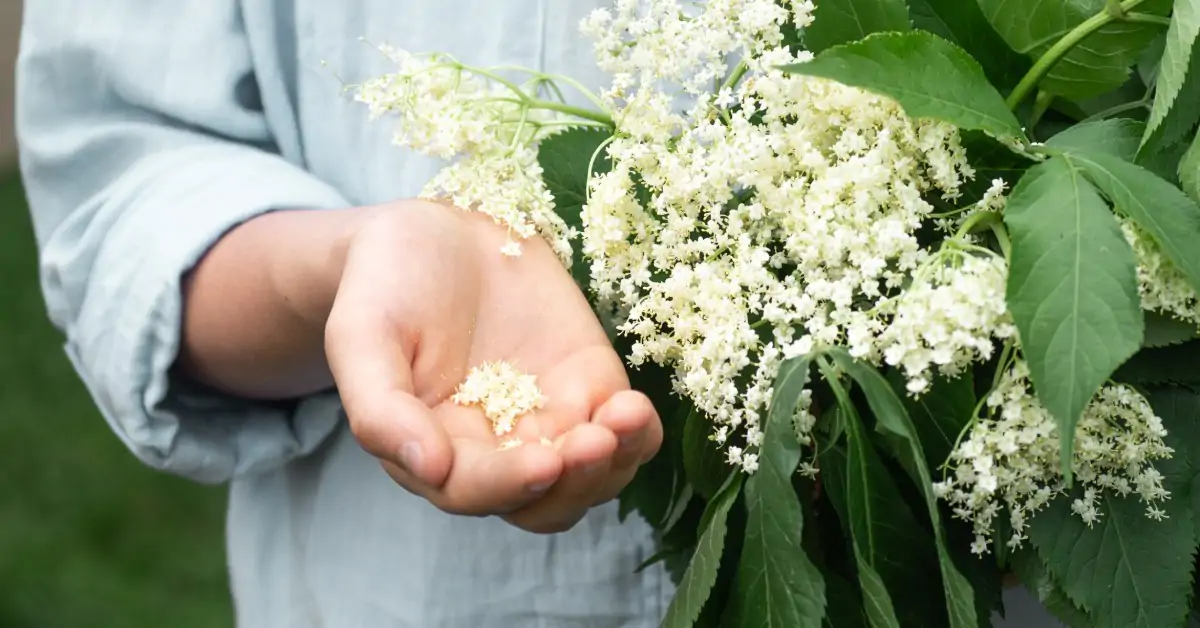
Whether in the garden, the vegetable patch, an orchard, or simply out in the wild, black elderberry is a plant as rich as it is interesting to encounter at any time of year. Cooking, biodiversity support, or DIY will be as many pursuits that go hand in hand with this shrub apart.
Black elderberry for biodiversity
First, let’s look at the characteristics of this fast-growing shrub, widespread in our countryside, yet rarely used in gardens where it has not been greatly appreciated.
The flowers
Black elderberry (Sambucus nigra) is not stingy with blooms, which can be plentiful and carry a strong nectar-rich fragrance. Attracting a wide array of pollinators, the flowering period of this relatively extended wild plant is a real boon for wildlife that feed on pollen and nectar.
The flowers do not all open at once, so the bloom lasts long enough to feed pollinators nearby for weeks.
The berries
The elderberry berries are fairly sweet and juicy, which is why they’re often used to make syrup, attracting many songbirds who will find in this food a good dietary supplement without bothering anyone.
Black elderberry in the kitchen
Black elderberry also has culinary value for us. Its flowers can be enjoyed in sweet fritters, but they can also be dried to make an infusion with analgesic and diuretic properties, and also laxative and sedative effects.
The leaves and bark can be consumed in the same way, but with stronger effects.
The berries, meanwhile, make excellent jams or syrups and can be mixed with currants that ripen around the same time depending on the variety.
Black elderberry to support beneficial insects
Black elderberry grows quickly. The pruning you do can be quite severe without harming it. Come spring, its new shoots race toward the sun, showing an impressive growth rate.
But you won’t be the only one marveling at how fast this shrub grows… Aphids do too! Indeed, with such rapid growth, the elderberry requires a lot of sap to transport nutrients, so aphids will quickly arrive to feed on it.
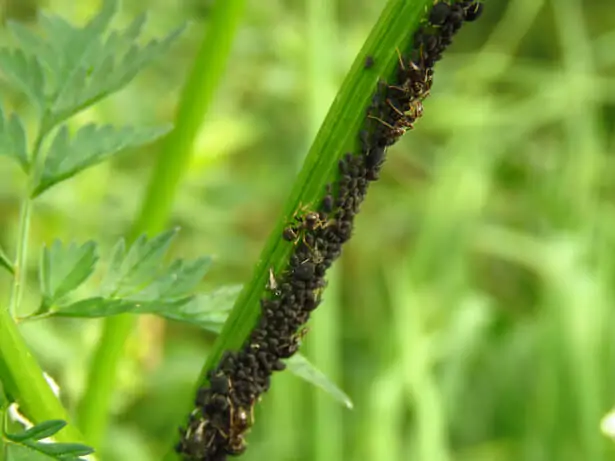
Not just any aphids—the elder aphid (Aphis sambuci) that feeds on elder and nowhere else. They arrive early in the season on their favorite plant and are spotted by beneficial insects, such as chickadees, that need to feed. These aphids thus open the canteen for the beneficials who will return more easily the rest of the season, because they will have already found food on site! For others, use a natural aphid deterrent.
Black elderberry in purin
The elder leaves smell particularly strong. It’s enough to take one between your hands and rub it vigorously to notice.
But that odor can be quite useful in the vegetable garden if you want to deter unwelcome visitors like moles or voles.
How to make elder purin?
Elder purin is obtained by chopping 1 kilogram of fresh leaves and mixing them with 10 liters of water and letting it macerate for 8 days.
Before use, dilute the solution to 10% and don’t hesitate to reapply regularly to the areas where micro-mammals bother you the most.
Black elderberry in a hedge
Maybe the most obvious place to plant one is in a hedge. A hedge will complement all the other species you plant there to nourished biodiversity, but more importantly the black elderberry will readily tolerate pruning to keep it within the hedge’s boundaries thanks to its hardiness and very fast growth.
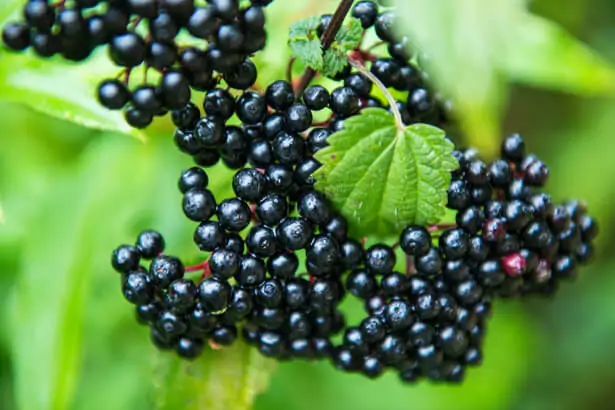
Black elderberry is undoubtedly one of the most interesting shrubs when it comes to balancing garden efficiency with producing a few tasty treats from the table!