Making your own DIY dish soap is one of the initial steps toward a greener, more economical approach to household chores. Easy to whip up with a few everyday ingredients, this recipe helps cut down on plastic packaging while giving you control over the ingredients used daily in the kitchen.
How to make an effective DIY dish soap?
Key takeaways
• A DIY dish soap helps reduce plastic waste.
• Marseille soap forms the cleaning base of the recipe.
• Washing soda crystals boost degreasing power.
• It’s best to wear gloves when handling washing soda crystals.
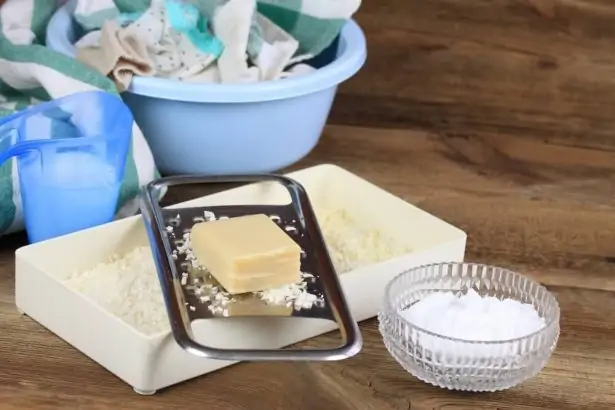
To prepare your homemade dish soap, you’ll need the following ingredients:
- 1 heaping tablespoon of washing soda crystals
- 1 teaspoon baking soda
- 1 teaspoon of liquid black soap diluted in 200 ml of water
- 1 small authentic Marseille soap, rich in vegetable oils, grated into flakes
The step-by-step DIY dish soap recipe
- Grate the Marseille soap to obtain roughly one cup of flakes.
- Pour the flakes into a large mixing bowl.
- Add the washing soda crystals, baking soda, and the diluted liquid black soap.
- Gradually pour in half a liter (about 2 cups) of hot water while stirring.
- Stir thoroughly until you achieve a smooth, homogeneous mixture.
- If you wish, add a few drops of essential oil to scent the blend. Note: essential oils are not recommended for young children, pregnant women, and people with allergies.
- Let cool, then transfer to a bottle or repurposed container.
The texture may thicken or separate slightly over time. Simply shake the bottle before use.
How to protect your hands while doing the dishes?
While this recipe is simpler and more natural than many industrial products, it remains degreasing. If you have sensitive skin or weak hands, you can add:
- one teaspoon of vegetable glycerin;
- a dab of aloe vera gel;
- half a teaspoon of honey;
- a few drops of a mild vegetable oil (sweet almond oil or calendula).
These ingredients won’t turn dish soap into a cosmetic product, but they can help limit the drying effect of the cleaners.
A tip to prevent spots on dishes
Practical tip
If your water is hard, finish with a final rinse using water that has a little white vinegar in it. Your glasses will come out shinier and mineral deposits will be reduced.
However, be sure never to mix white vinegar directly with the washing soda crystals in the bottle: the two products neutralize each other and lose some of their effectiveness.
Is DIY dish soap as effective as store-bought products?
For daily upkeep, this recipe is typically enough to clean plates, glasses, and cutlery. However, for very greasy or heavily soiled dishes, a pre-soak in hot water may be necessary.
The main advantages remain its simplicity, low cost, and reduced plastic packaging—a move that fits perfectly into a more responsible kitchen.