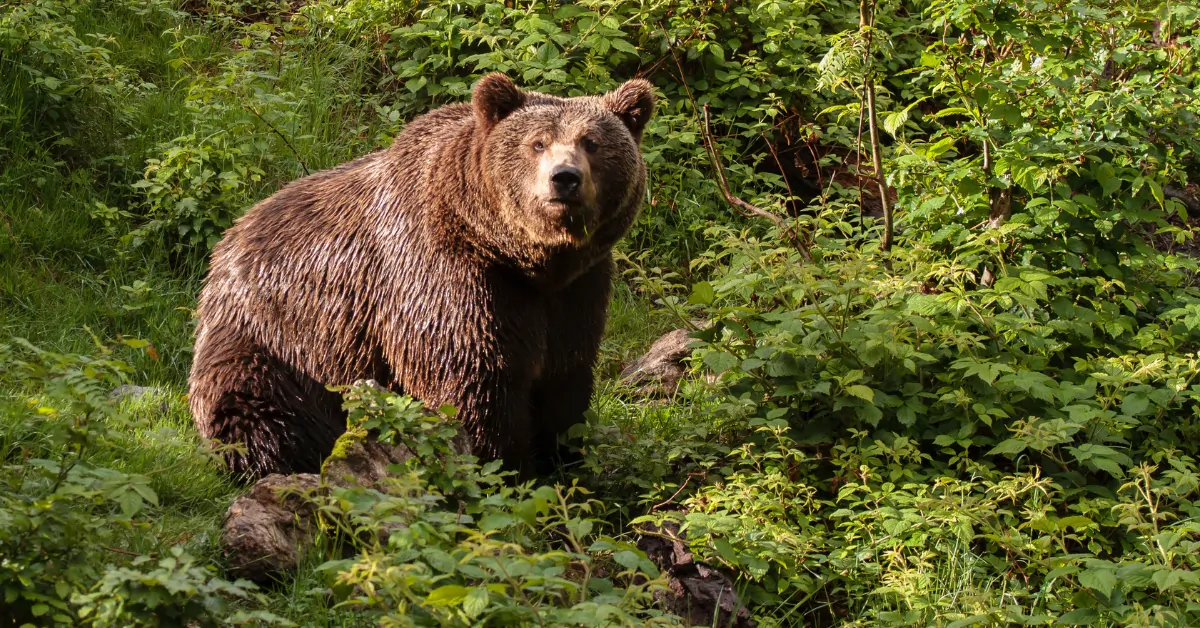
Romania and Slovakia, joined by Croatia, the Czech Republic, and Finland, have officially asked Brussels to roll back the protection level for the species, currently classified as “strictly protected” since 1992 under the Habitats Directive.
The Wolf Precedent: When an Exception Becomes the Rule
Three years into the wolf crisis, the European Union no longer protects it: it governs by killing. Romania and Slovakia have just crossed a new red line by seeking to ease the brown bear status, turning what were presented as exceptional exemptions into a regulatory cascade. On Monday, June 22, 2026, these two countries, joined by Croatia, the Czech Republic, and Finland, officially appealed to Brussels to reduce the protection level of the species, currently classified as “strictly protected” since 1992 under the Habitats Directive.
The loosening of the wolf status in 2025 provides the backbone for the current push. By moving the canid from “strictly protected” to “protected,” the European Union opened a breach into which seventeen member states are now rushing. The reclassification has facilitated legal culls, turning a measure presented as temporary into jurisprudence applicable to other large carnivores. Twelve countries expressed their support for the Romanian-Slovak move at the Agriculture Ministers’ meeting in Luxembourg on June 22, 2026, revealing a coalition far broader than the five initiators.
A coalition of 17 countries that redraws the boundaries of protection
The movement is not limited to terrestrial mammals. In May 2026, about a dozen countries also called for measures to curb populations of great cormorants, accused of threatening fish stocks. The logic repeats: identify a species, quantify economic damages, then seek regulatory easing. Environmental groups fear opening a “Pandora’s box,” the phrase used to describe this strategy of gradual erosion of protections. Each regulatory victory strengthens the arguments of those who follow, establishing a dynamic where conservation becomes negotiable on a case-by-case basis.
The rhetoric employed by the five initiators reveals an ambition. “As a predator with no natural enemies, this species requires effective management,” say Romania and Slovakia in their official request. The vocabulary shifts from conservation to demographic regulation. Vladimír Vnuk, State Secretary at Slovakia’s Ministry of Agriculture, underscores it: “For people in rural areas, this is no longer a question for debate; it’s a matter of daily security: will families still dare to walk in the forest?”.
The numbers backing the push are striking. Romania counts about 11,500 bears, nearly three times the 4,000-individual threshold it considers “optimal” for balancing ecology and public safety. Slovakia is home to roughly 2,500 brown bears, versus 800 by its own viability criteria. Sari Essayah, Finland’s Minister of Agriculture, adds: “This is very important for Finland, because our bear population is approaching 2,600 individuals. We must resort to preventive hunting.”
As for France, Paris has taken no official position on the matter, hampered by internal disagreements between ministries. Yet with about 90 bears in the Pyrenees, France remains a symbolic player in the conservation of the species in Western Europe. Its silence contrasts with Germany’s activism: Berlin has stated support for a “targeted exemption” enabling Romania to eliminate more individuals. While France is set to tighten deterrent shooting, the rest of Europe is tilting toward a logic of deliberate culling.
When “Effective Management” Becomes a Code for Elimination
Romania reintroduced the quota-based hunting principle in 2023, authorizing the slaughter of 480 bears. A year later, that ceiling rose to 900. Slovakia announced a target of 350 culls for 2025, provoking a response from a cross-party group of European lawmakers who accuse Bratislava of violating the Habitats Directive. Barna Tánczos, Romania’s Deputy Prime Minister, brushes off the criticism: “These aren’t horror movie titles.” He cites 14 deaths and 150 serious injuries in Romania over the past five years, 4 deaths and 64 injuries in Slovakia over the same period.
Economic data reinforce the picture. Claims for compensation for damage caused by large carnivores have exploded in Romania: from €150,000 in 2014 to €2.6 million in 2025. In Slovakia, the increase is equally striking, rising from €75,000 in 2020 to €550,000 in 2025. Between 2024 and 2026, 1,806 domestic animals (horses, cattle, sheep, goats, pigs) were killed by large carnivores in Romania. Governments are seizing on these losses to push for a broad overhaul of the regulatory framework.
What Environmental Groups Really Fear
Beyond the numbers of attacks and agricultural damage, environmental advocates point to a systemic fragility. The Habitats Directive, adopted in 1992, rests on a principle: strict protection of threatened species, paired with exceptional and justified exemptions. Turning these exemptions into a norm empties the text of its substance. The 30,000 emergency calls reporting bear presence in Romania over five years testify to a difficult coexistence, but also to increasing urbanization in forested areas. Rather than adjusting land-use planning, governments are choosing to adjust animal populations.
The strategy of gradual deregulation threatens the European ecological balance. Each species removed from strict protection weakens the overall coherence of the Natura 2000 network. Hunting quotas, pitched as regulatory tools, become instruments of massive demographic reduction. The question is no longer whether other species will follow, but which ones and at what pace. Cormorants are already in the crosshairs. Other large herbivores could follow if economic logic ultimately overrides conservation imperatives.
The European Union thus stands at a crossroads. Either it preserves the architecture of the Habitats Directive in the face of national pressures, or it accepts a reform that would turn biodiversity protection into management entrusted to hunters. The wolf precedent showed that exemptions quickly become the rule. With bears, then cormorants, Brussels is unintentionally building a model where wildlife subsists only as long as it does not disrupt the rural economy. The question remains whether European institutions will grasp the scale of this shift before it becomes irreversible.