
It’s an increasingly popular solution for renters and apartment owners alike. Or how to cut your electricity bill… without owning a roof of your own.
One or two solar panels
What if you turned your balcony into a real mini power plant? In most cases, this practice is allowed in France. But how does it work in practice?
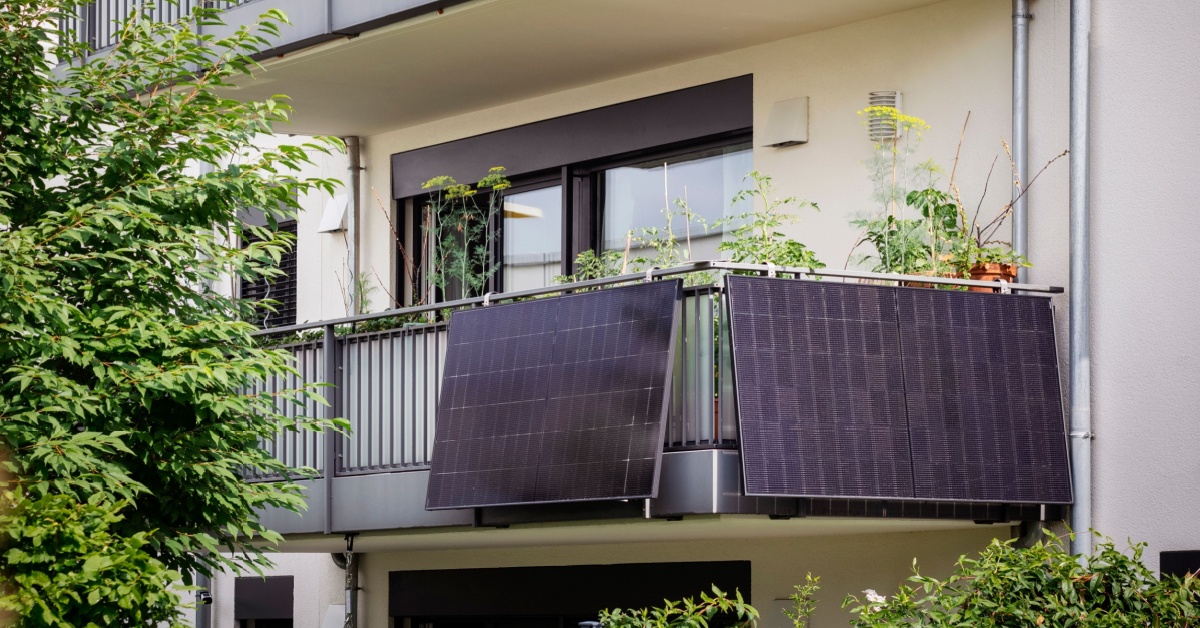
“Plug-and-play” solar kits let you generate electricity and inject it directly into your home, without heavy installation. The principle is simple: one or two solar panels mounted on the balcony railing, connected to a micro-inverter, then plugged into a standard outlet.
From an installation standpoint, everything is designed to be accessible: you simply secure the panels to the balustrade using secure mounts. The electricity produced is then injected into your home wiring and consumed first by continuous-load devices (refrigerator, internet modem/router, etc.).
What kind of actual production?
But is it really cost-effective? On average, a balcony solar kit pays for itself in about 4 to 7 years, depending on electricity prices and your level of consumption.
A balcony panel typically delivers between 300 W and 400 W of peak output. This is enough to cover part of the home’s basic needs, but not to power high-energy appliances like an oven or space heating. The result: a lighter bill, especially in a climate where energy prices are rising.
Before you dive in, a few cautions are in order. Exposure is crucial: your balcony should ideally face due south (or southeast/southwest). A north-facing orientation will significantly cut production. Similarly, a tree, a pole, or even the neighbor’s balcony above can cast shade and drive the yield down.
Another key factor: safety. Solar panels weigh between 11 and 44 pounds. Their mounting must therefore be absolutely secure to withstand wind and prevent any risk of falling.
A HOA dilemma
Even though these installations are described as “plug & play,” they do not exempt you from certain administrative steps. If the panel changes the building’s exterior appearance, a city permit or HOA approval may be required in some cases.
You would also need to coordinate with your local utility for interconnection and a net metering agreement, a straightforward and free process in many areas.
In practice, the main hurdle is often the HOA or building management. Since the installation alters the building’s exterior look, approval from the HOA—and possibly the landlord if you’re renting—is usually required. In this context, flexible, more discreet and lighter panels can help make the project easier to accept.