
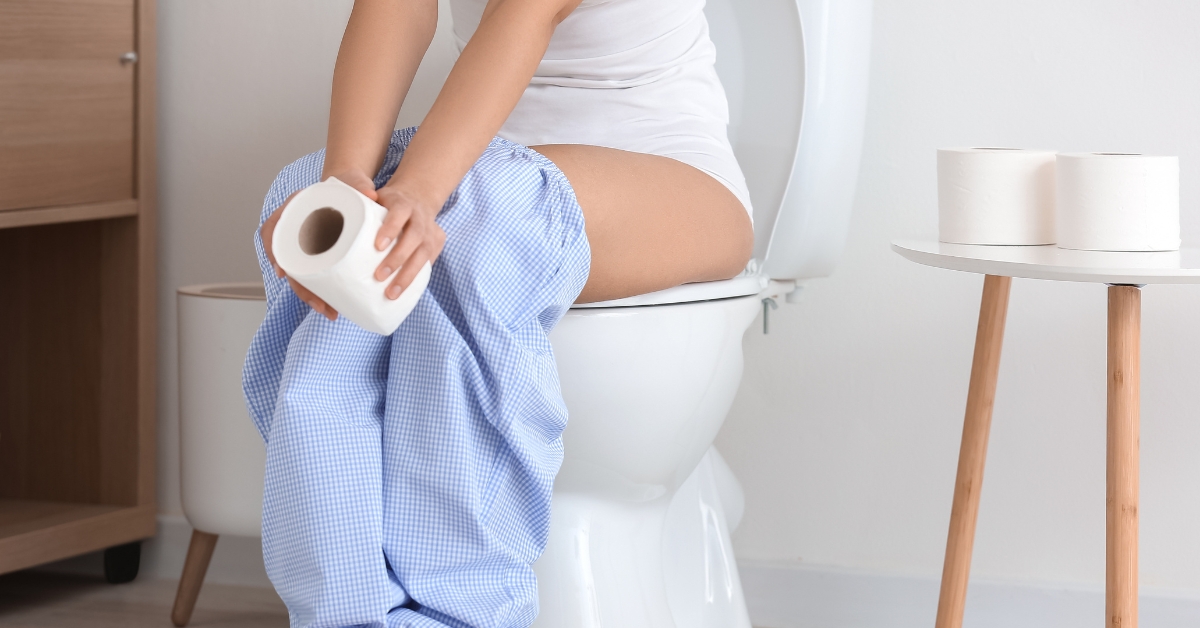
Constipation: a recurring problem that remains sadly taboo. Yet it should be talked about without shame—not only because many of us share this everyday concern, but also because putting words to the pain can be as effective a remedy as a laxative.
Chronic or temporary constipation?
Are you really constipated? If you didn’t make it to the bathroom this morning only because your routine was disrupted, you woke up at a different time, or you were stressed, you should not be categorized among people suffering from constipation.
Indeed, there is a medical definition of this term: “one may be considered constipated if they have a bowel movement fewer than three times per week.” In this case, we’re talking about chronic constipation.
Physical and psychological consequences
In addition to the physical discomfort that such a blockage inevitably causes, constipation also brings about a great deal of psychological distress too often overlooked. The person suffering may feel bloated, even dirty.
Self-esteem drops all the more when it is a problem that is hard to admit. Talking about bowel issues? Not a chance! So, we continue to suffer in silence rather than discuss our trouble and find solutions. Because they do exist.
Overcoming the shame: talking about it
Of course, this isn’t something to shout from the rooftops; that wouldn’t help. But there are specialists: proctologists. Not well known, yet they are the ones best suited to listen to you. Most importantly, they will intelligently guide you toward practical methods to improve your daily life.
Natural, practical steps to address constipation
Nutrition first: stay well hydrated, possibly drink magnesium-rich waters, recognized for having a mild laxative effect.
Consume fiber-rich foods such as whole grains, legumes, and vegetables. We should aim for about 25–38 g of fiber per day, a target that is often hard to reach in reality.

To easily boost your fiber intake, you can sprinkle a tablespoon of wheat or oat bran on salads or dairy products.
Psyllium has earned the laurels as a miracle, 100% natural dietary supplement. Available in natural foods stores, one teaspoon a day suffices for some people to make a difference: improvements in transit have been observed in record time. So, give it a try.
Don’t skip exercise!
Any physical activity will have positive effects on transit. The intestines themselves are surrounded by smooth muscle that drives spontaneous peristaltic movements, pushing the intestinal contents toward the rectum. And don’t forget that your abdominal wall plays a role during the push. Simply walking briskly already helps maintain abdominal muscle tone.
Maintain regular schedules.
It’s important to “train” your intestines and to get your digestive system into a routine by going to the toilet at a fixed time, ideally in the morning after breakfast—a kind of circadian rhythm that is often beneficial.


The Psyllium Blond Priméal is very rich in mucilage, a plant-based substance made of soluble fibers that swell when in contact with a liquid. This property can support bowel transit and influence satiety.
To discover on Bébé-au-naturel.com
Constipation: what NOT to do
If you don’t feel the urge within about ten minutes, give up. You’ll try again after the next meal: sitting posture indeed creates anal pressure that can promote hemorrhoids.
Don’t strain. There’s no point turning red as a lobster; if your gut is resistant, you won’t get anything out of it. While the rumors of strokes in the toilet are completely unfounded (no pun intended), pushing too hard creates a local hypertension, which is never good.
Don’t treat your intestines as enemies and make peace with yourself. Defecation is a natural act, but extremely sensitive to mood fluctuations, notably stress. The more you stigmatize this event that should be routine, the harder you’ll make it by associating it with a constant atmosphere of tension. You need to de-dramatize, not dread it too much, let it come. Don’t be in a rush; you aren’t a machine and have faith—the urge will come on its own.

And laxatives?
Caution, once again. Some products—such as bulking laxatives or osmotic laxatives—can be used long-term with relatively few risks, but others are truly harmful to the intestinal wall: stimulant laxatives like senna or Chinese rhubarb should be used only occasionally and truly as a last resort. Indeed, their effect is drastic, but that’s because they draw water into the stool.
In addition to fluid losses and possible electrolyte imbalances they can cause, laxatives damage the delicate intestinal lining. In any case, it’s best to seek medical advice before buying these products, even if they are available over the counter.
And remember that they are only a temporary aid to help you, but long-term use exposes you to laxative dependency: the intestines gradually become lazier and a vicious circle forms. From the product intended to relieve you temporarily, the laxative becomes “a drug” you cannot live without.
- Natural tip – Prunes are a friend to our guts, especially when they’re not flowing smoothly!
It’s important to understand that, outside of any pathological background, constipation mainly happens in the mind. You have to work to make it slide on its own. When combined with a healthy diet and regular physical activity, rebuilding self-confidence is essential—and the only truly valid remedy.

The prune (Prunus Domestica) is the dried fruit of a cultivated plum tree.
100% soft organic prunes*.
*From Organic Agriculture
To discover on Bébé-au-naturel.com