
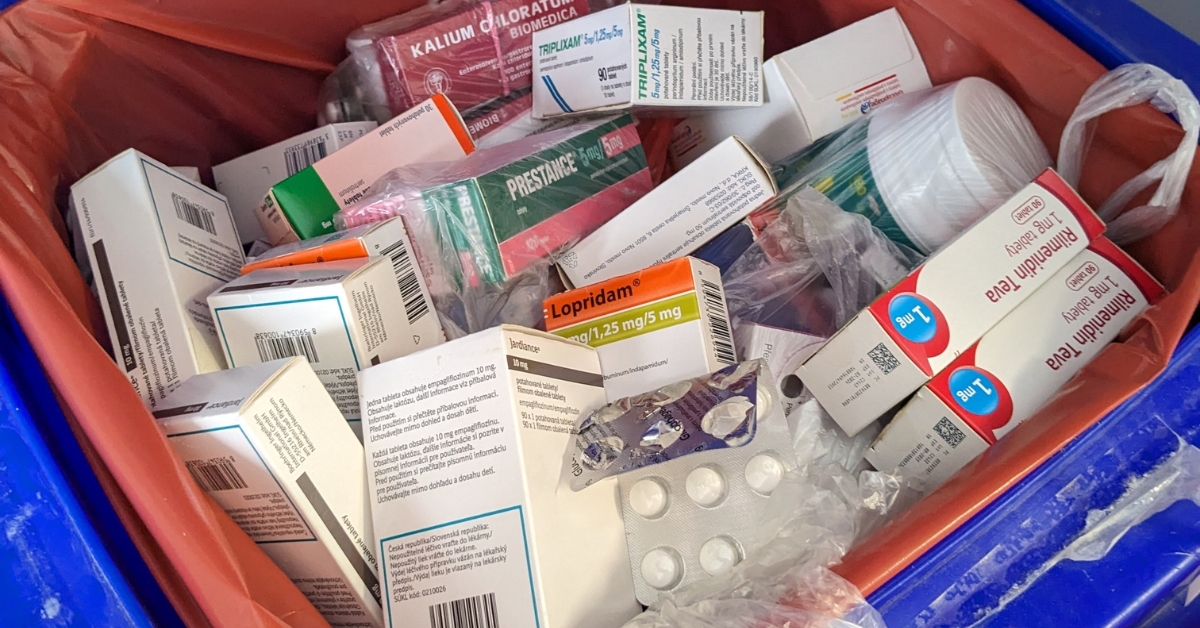
The health care system here faces a striking paradox: as prescription drug spending climbs to record highs, a portion of these products ends up in the trash.
More Than 8,500 Tons Collected
In 2023, France’s national health insurance reimbursed more than €25 billion worth of medications, and the average French person uses about 41 boxes per year. Yet behind these record figures lies a bleaker reality: between €560 million and €1.7 billion worth of medicines are destroyed each year without ever being used.
This waste represents a staggering amount. For instance, in a single year, the organization Cyclamed collected more than 8,500 tons of unused medicines from pharmacies. That’s roughly two boxes discarded per person. The waste is even harder to swallow for citizens as the country regularly experiences supply shortages. In 2023, nearly 5,000 stockout reports were recorded, creating an absurd situation where what some patients desperately need is destroyed in large quantities.
Intact Boxes, But Incinerated
Beyond the financial aspect, the environmental impact of such waste is equally profound. The health sector accounts for roughly 10% of greenhouse gas emissions in France, and drug production is the leading source of pollution. Throwing away a medication thus wastes the energy invested in its manufacture and worsens water pollution from chemical residues. A double burden for the environment that weighs increasingly on the national carbon tally.
In light of this, one may ask: why not redistribute intact boxes instead of burning them? Authorities’ response is primarily sanitary: once a medicine leaves the pharmacy, the safety chain is broken. It becomes impossible to guarantee that the product hasn’t been exposed to heat or humidity, or even that its contents haven’t been altered. To protect patients against potential counterfeit risks or degradation, the law therefore requires the systematic destruction of returned products.
Medicines Dispensed in Unit Doses?
Fortunately, concrete solutions are starting to emerge to curb this waste at the source. The Court of Auditors recommends, in particular, adjusting the size of packaging to match the actual duration of treatments to avoid surplus. Unit-dose dispensing, where the pharmacist provides the exact number of capsules needed, is also a serious option, widely practiced in other countries. Additionally, reusing expensive medical devices, such as wheelchairs or crutches, after refurbishment, could save millions of euros.
Ultimately, the fight against waste hinges on a collective awareness—from laboratories to patients and doctors alike. It also requires the government’s willingness to change the rules to curb waste. While medicine consumption has already fallen by about 40% since 2010, the effort must continue, particularly by wasting less.