
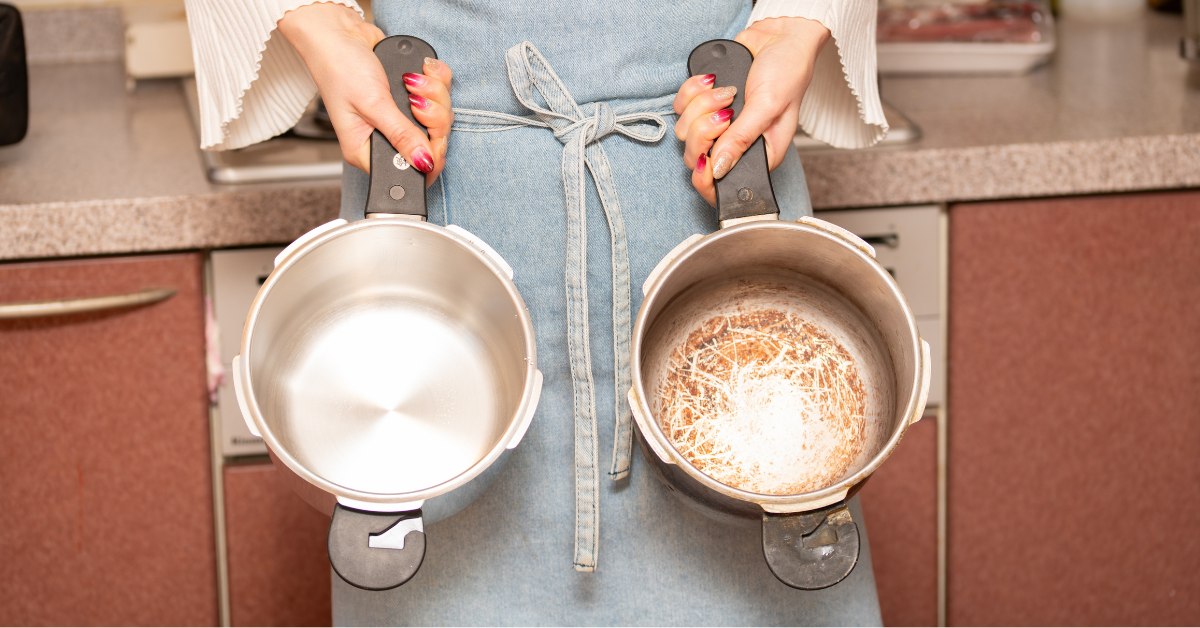
Every cook has already burned the bottom of their pan. This happens as soon as the water inside has evaporated due to the heat from the burners. Sometimes the sides get so black that you think the only option is the trash. Don’t be fooled! No matter how scorched it is, your utensil is likely salvageable. You just need to know which natural products work and how to use them.
Cleaning a Burned Pot? White Vinegar and Baking Soda, the Miracle Combo
Here are two staples you should know and reach for in many situations. White vinegar and baking soda have long been hailed as miracle products for household cleaning and maintenance. They also work to save a burned utensil, whether used separately or together.
- For white vinegar: pour some into the bottom of your pot. Heat on low until it boils. Let cool, then scrub with a sponge. The stubborn residue should come off easily. If some bits persist, don’t hesitate to repeat the process, adding a little dish soap.
- With baking soda, the process is the same. Sprinkle the white powder in the bottom of your burned pot, add water (about two to three inches deep) and bring to a boil. Let it sit for 30 minutes before giving it a scrub with a sponge.
- The white vinegar and baking soda combo for extra effectiveness: if your utensil is really badly burned, pair the two. Start by boiling one cup of water and one cup of white vinegar in your burned pot. Remove from heat and add the baking soda. The mixture will foam, which helps to loosen the burnt bottom deeply. Wait for the reaction to finish, then scrub with a sponge.
Citric Acid to Rescue a Burned Pot
Although its name might sound intimidating, rest assured: citric acid is a 100% natural product. It’s a compound you can find in citrus fruit, for example, and it’s sold commercially. It proves formidable for cleaning a burned pot.
To use it, pour two tablespoons of citric acid into your utensil and cover with boiling water. Let it sit for about ten minutes—or longer if the liquid is still hot—before scrubbing with a sponge and rinsing.
Note: citric acid should not be used on aluminum or enamel surfaces.
Sodium Carbonate Crystals
Just like citric acid, sodium carbonate crystals should not come into contact with aluminum. No problem for other surfaces. Simply sprinkle two tablespoons of sodium carbonate crystals into your burned pot, add boiling water to cover, and let soak overnight. Finish by scrubbing with a sponge and rinsing.
Table Salt
If you don’t have any of the natural products mentioned above, don’t panic! Fine table salt will do quite nicely.
Pour some into the bottom of the burned pot and let it sit for at least an hour (more if you can). Then wash the utensil by hand and the burnt residues and stains should come off.
Wood Ash
It isn’t something you always have on hand, but if you do, wood ash can rescue your burned utensils.
As with the other methods, use it the same way: place it at the bottom of the pot, add water, bring to a boil, and let it cool. A quick scrub with a sponge and you’re done.
It’s obviously possible to use chemical cleaning products to restore a burned pot. But since natural methods work perfectly, why not skip the harsh stuff?