
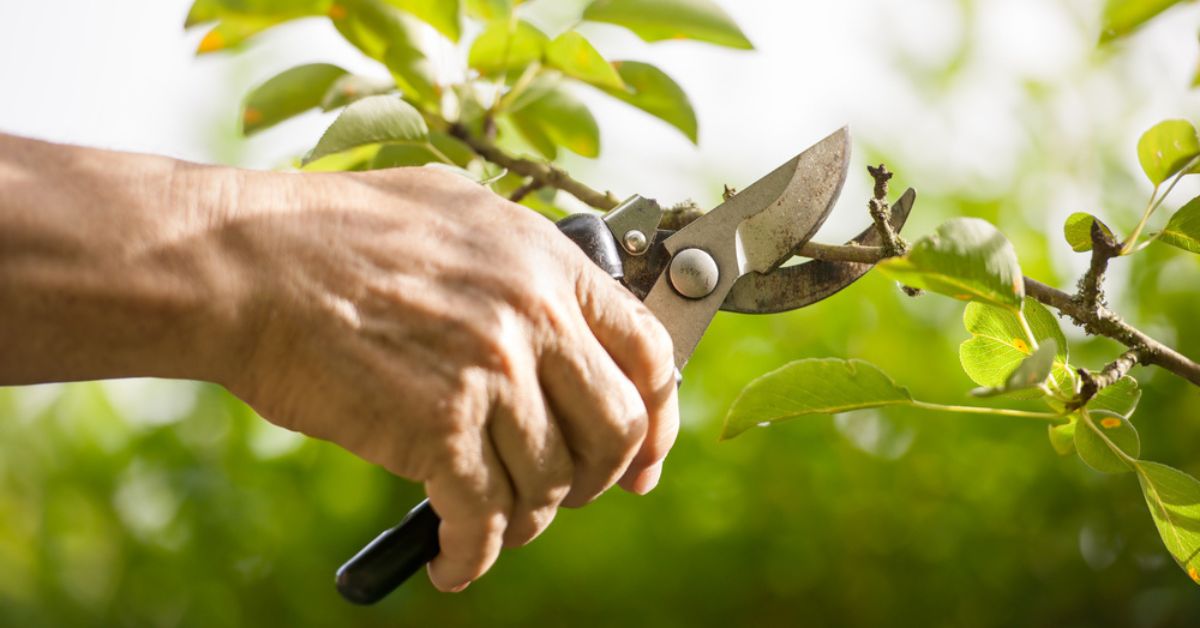
As spring gives way to warmer days, there’s still time to prep your garden for the upcoming summer. One of the main tasks not to overlook is a light pruning of certain trees. When done at the right moment, this light pruning helps keep your trees healthy and vigorous while enhancing their appearance.
Is summer pruning possible?
Although most plants are typically pruned in spring, pruning certain species can be done in early summer, especially in June. Be careful, drastic pruning during hot months is not recommended, as it could weaken your plantings. Opt instead for a light “maintenance” pruning, removing dead wood, weak branches, faded or dried flowers, and yellowed leaves. Do not prune during full bloom.
Which trees should be pruned before the scorching heat of summer?
The apple tree, the cherry tree, and other fruit trees
To ensure a bountiful fruit harvest, pruning fruit trees is an essential step. It helps stimulate the production of new buds and thus promotes fruiting. The ideal window for pruning fruit trees such as apples (pome) or cherries (stone fruit) generally falls between February and April. However, a brief refresh prune can be done in June, just before the peak heat, to stimulate summer growth and increase disease resistance.
For kumquat and the loquat, a short pruning can be done in June, after the first fruits are harvested.

The birch, the poplar, and other trees with thin bark
Thin-barked trees are particularly vulnerable to pruning-related injuries. By pruning these trees before summer, you reduce the risk of infection from fungi and other pests, since wounds have time to heal before the rainy season. Additionally, pruning these trees before the heat helps them conserve energy and better resist drought.
The conifers
While these trees require less maintenance than others, pruning conifers, such as the fir, cypress, or pine, is essential to maintain their shape and density. By pruning your conifers just before summer, you help them concentrate energy on new shoot growth rather than on healing pruning wounds.
The ornamental trees
For ornamental trees like the Japanese maple, flowering cherry, and magnolia, pruning before summer promotes flowering and growth, while helping prevent diseases. They should not be pruned after July, as that could weaken them.
The chestnut can be lightly pruned before July, without touching the foliage, to enjoy a vibrant, colorful canopy throughout the summer.

Trees not to prune in summer
If some trees can be pruned lightly before July and during the heat, others should not be pruned during the summer:
Oaks
It is best not to prune oaks during summer to prevent the spread of Ceratocystis fagacearum, the oak wilt disease. Pruning can create openings in the tree that allow this fungus to infiltrate.
Maples
Maples should be pruned in late winter or early spring, or even at the very start of summer, before the sap begins to flow. Pruning in mid-summer could trigger excessive sap loss, stressing the tree and slowing growth.
Ash trees
Like oaks, ashes are susceptible to diseases if pruned in full summer. It is better to prune them in winter, when trees are dormant and insects—often disease vectors—are less active.
Magnolias
Magnolias are spring-flowering trees. If you prune a magnolia in midsummer, you risk removing flower buds, which would reduce next year’s bloom. Pruning is therefore recommended right after flowering, in spring or at the very start of summer.
Fruit trees
Most fruit trees are pruned in late winter or early spring, or even at the very start of summer, to stimulate fruit production. Pruning in mid-summer can remove fruit buds, thereby reducing the harvest for the following year.

Tips and precautions when pruning
For a successful pruning, it’s important to equip yourself correctly and know the proper techniques. Poor pruning can weaken the tree and promote disease. Here are a few tips to perform this task correctly:
Use the right, sharp tools: pruning shears for small branches, a pruning saw for larger ones. Make sure your tools are clean to avoid spreading diseases.
Avoid pruning in direct sun: this can cause damage to the bark. It’s best to prune early in the morning or late in the evening.
Don’t prune too close to the trunk: risk of damaging the tree and making healing more difficult. Leave a small stub so the tree can recover properly.
Avoid pruning during drought (or freezing temperatures): extreme conditions make healing more difficult and leave the tree more vulnerable to diseases and pests.

Don’t forget after-pruning care
After pruning, make sure to water your trees well, especially during dry spells. This will help wounds heal and growth resume. If possible, also add a bit of compost or organic fertilizer at the base of your trees to help them recover.