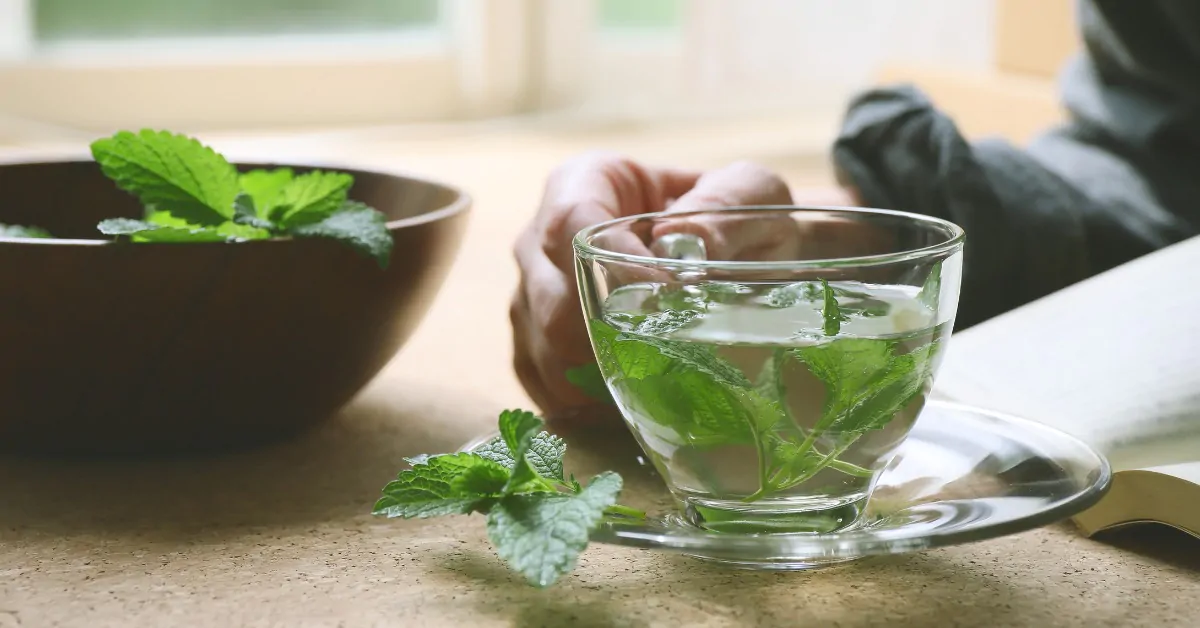
Commonly known as lemon balm, Melissa officinalis, this herb is a staple in many gardens. Its benefits for the digestive system have been recognized since ancient times. In fact, the name lemon balm derives from the Greek Melissa, meaning bee. Its bright lemon scent, instantly recognizable, attracts pollinators while subtly perfuming flower beds, vegetable patches, and balconies.
Key takeaways
- Lemon balm is known for its soothing effects on stress and mild sleep disturbances.
- It also helps relieve certain digestive discomforts such as cramps and bloating.
- Fresh leaves are used both in tea and in cooking.
- Easy to grow, it attracts pollinators while perfuming the garden.
Do you know how to identify lemon balm?
Lemon balm is a perennial plant that grows wild across Europe and is very easy to cultivate. Almost any soil will suit it, though it prefers moist, well-drained conditions. It grows in clumps about 12 to 20 inches tall and bears white or pink flowers in the warmer months.
Its oval leaves resemble those of mint. They can be visually mistaken at a glance. But simply approach the plant or rub a leaf between your fingers to recognize it by its citrusy aroma, which also earned it the name lemon balm. Not to be confused with true lemongrass!
It is the leaves of lemon balm that are harvested, preferably before or at flowering, then used in herbal medicine, in cooking, or as an infusion.
The benefits of lemon balm
At the dawn of the Common Era, lemon balm was already recognized for its traditional medical uses. In particular, lemon balm leaves were used to relieve digestive pains, spasms, mild colitis, and general abdominal discomfort.
Lemon balm is also widely known for its calming effects on the nervous system. As a relaxant, it is used in herbal medicine to support issues with
A plant rich in antioxidant compounds
Lemon balm naturally contains polyphenols, notably rosmarinic acid, studied for its antioxidant properties. These compounds help protect cells from oxidative stress. This is also why the plant appears in many traditional preparations, for both internal use and certain external applications.
Lemon balm is often paired with valerian, passionflower, or hawthorn in preparations designed to promote relaxation and sleep.

Furthermore, lemon balm is generally well tolerated. It can be consumed as an infusion by adults and, with caution, by children over 12 for internal use. Externally, it also appears in certain traditional preparations aimed at soothing minor skin discomforts.
Even though lemon balm is a gentle herb, people on medical treatment, pregnant or nursing women, and those with thyroid disorders should seek advice from a health professional before regular use in a concentrated form. Essential oils always require special precautions.
Lemon balm: virtues and recognition
The EMA, the European Medicines Agency, recognizes the traditional use of lemon balm to ease mild symptoms of mental stress and to promote sleep.
The traditional use of lemon balm is also linked to relief from mild digestive disturbances, particularly bloating sensations or spasms.
Research has also studied the usefulness of lemon balm in external use against cold sores. In this case, it involves specific preparations, not just a simple infusion.
How to use lemon balm in herbal medicine?
In herbal medicine, lemon balm is used in different forms. The choice depends on the intended use: tea for a gentle action, mother tincture for a more concentrated preparation, essential oil for a very targeted use and always with caution.
Lemon balm mother tincture
Mother tinctures are hydroalcoholic plant extracts with high concentration. The lemon balm mother tincture is typically used internally, diluted in a bit of water, following the manufacturer’s instructions or the guidance of a health professional. It can also be used externally, as a local rub, when the preparation allows it.
Lemon balm essential oil
The lemon balm essential oil is precious but potent. One drop diluted in a carrier oil can be used for a local massage, for example on the solar plexus or the back, to accompany a moment of relaxation. You can also gently massage the abdomen with an appropriate dilution in case of digestive discomfort.

The lemon balm essential oil can also be used in diffusion or for inhalation, but always with caution. It is not recommended for pregnant women, young children, or sensitive individuals without medical advice.
You can also consume lemon balm in the form of a macerate, according to the recommendations specific to each preparation.
The Carmes lemon balm water
This lemon balm-based preparation, invented in the 17th century, is still made today and sold in pharmacies. It is composed of various plants, spices, and alcohol. Traditionally used to relieve a range of minor ailments and to boost energy, its recipe is believed to have stayed close to the original.
Fresh lemon balm
Lemon balm is used in cooking and baking. Its lemony aroma pairs beautifully with fruit salads, light desserts, homemade beverages, yogurt sauces, marinades, or fresh herb pestos.
It can also be enjoyed as an herbal tea and paired with other plants to enhance its effects. Paired with valerian, it supports sleep problems. Paired with peppermint, it is interesting for difficult digestion.
A simple homemade tea to unwind in the evening
To enjoy its benefits, pour just-boiling water over a handful of fresh leaves or a tablespoon of dried leaves. Let steep for about ten minutes before straining.
This infusion can be enjoyed after dinner to support digestive comfort or in the evening to accompany a moment of relaxation. Its gently lemony taste makes it enjoyable on its own or with a drizzle of honey.
How to easily grow lemon balm in the garden?
Low-maintenance, lemon balm likes ordinary soil and a partly shaded to sunny exposure. Once established, it comes back year after year and can even become invasive if it self-seeds freely. To keep it in check, simply prune after flowering or grow it in a pot.
Its presence in the garden also has ecological benefits since it attracts bees and other pollinating insects. It’s a simple, useful, and generous plant, perfect for a herb corner or a natural border.

Lemon balm: an easy plant to reconnect with gentle remedies
Lemon balm belongs to those quiet plants that you rediscover with pleasure. Easy to grow, pleasant in tea, useful in cooking, and interesting in herbal medicine, it ticks many boxes for anyone who wants to take care of themselves with simple, thoughtful acts.
As with any medicinal plant, moderation remains the guiding rule. An infusion of lemon balm will never replace a proper medical treatment, but it can become a pleasant ritual to slow down, improve digestion, and prepare for sleep.