
Rosemary is a shrubby herb native to the Mediterranean basin. Rosmarinus officinalis grows wild in the maquis and calcareous garrigues of southern France. In fact, the plant plays a major role in the culinary identity of the Mediterranean. It is widely used in cooking to flavor grilled meats, vegetables, and sauces.
Rosemary, benefits that have left their mark on history
Rosemary has left many traces in our history. The Egyptians believed that placing sprigs of this aromatic herb in the tombs of the pharaohs helped fortify their souls before passing into the afterlife.
In Antiquity, Greek students made crowns of rosemary sprigs because the plant was believed to stimulate memory. This belief isn’t purely fanciful, since scientists have sought to determine whether it could actually boost intellect. Indeed, a study demonstrated that inhaling rosemary essential oil increased concentration. The aromas of rosemary and lavender essential oils affect cognition and mood differently in healthy adults.
Over the centuries, rosemary also acquired a sacred character. It was used in ceremonies such as weddings or funerals. It was also customary to use it to ward off evil spirits.
Finally, it has always been recognized as a fortifier: burning twigs to purify the air or inhaling the scent to help cure ailments. Likewise, infusing it in red wine yields a fortifying beverage that helps ease digestive issues.
Rosemary is today recognized for these beauty and health benefits
Whether in the kitchen, in cosmetics, or in phytotherapy, the leaves and the flowering tops of dried blossoms of the plant are used, which contain the highest concentration of active constituents. In aromatherapy, its essential oil is also extracted. Finally, the buds are also used in gemmotherapy.
Active constituents of rosemary and their benefits
The benefits of rosemary stem from its content of numerous active substances whose positive effects on the body are well recognized:
- Some flavonoids which are powerful antioxidants that neutralize free radicals and thus help prevent cardiovascular diseases and other aging-related illnesses
- It also contains diterpenes known for their antimicrobial and anti-inflammatory properties;
- Phenolic acids;
- Phytoestrogens that act like feminine hormones
- And also the essential oil rich in camphor, 1,8-cineole, alpha-pinene, borneol, and camphene.
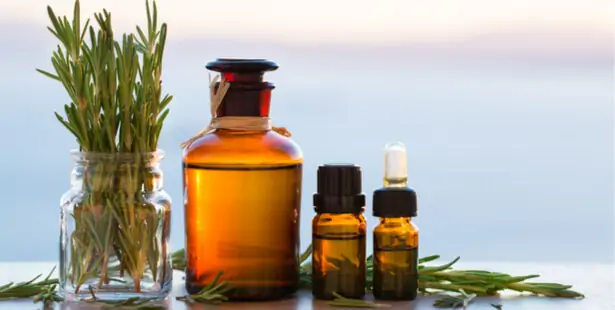
Rosemary is scientifically recognized for its beneficial effects on gastric disorders, rheumatic problems, blood circulation, liver function, and as a mild antiseptic. The Commission E (the panel of scientists who evaluate and approve therapeutic uses of plants) and the ESCOP (European Scientific Cooperative on Phytotherapy) acknowledge its effectiveness in relieving gastric troubles and its usefulness as a supplement to ease rheumatic and circulatory issues in the hands, feet, and legs. ESCOP also recommends rosemary to improve biliary and hepatic function and as a mild antiseptic for external use.
How to use rosemary for healing?
As we’ve seen, this aromatic plant is recommended for many ailments thanks to its active constituents. Here we explain how to use rosemary depending on the health and well-being goals you have:
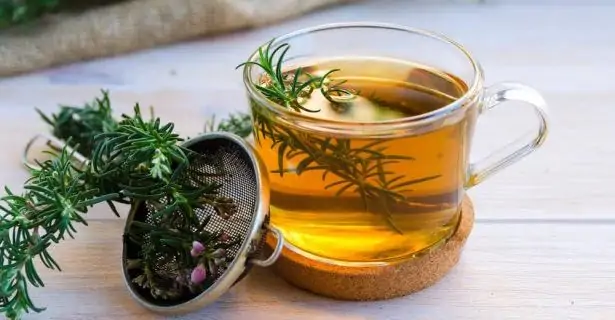
Rosemary as an infusion
In an infusion, rosemary stimulates the body. It is thus well suited for temporary fatigue, to bolster the body during winter, or in case of a mild weakness. It is also recommended for respiratory problems.
How to make a stimulating infusion
Bring to a boil a few dried rosemary sprigs and let steep for at least 10 minutes. Drink 3 or 4 cups per day.
Rosemary inhalations
Inhalation, rosemary is among remedies to relieve headaches. The effect is typically very rapid.
Prepare an inhalation for headache relief
Boil a handful of rosemary in one liter of water, then pour into a large mug. Cover your head with a towel and inhale the vapors as long as you can. Repeat until the migraine dissipates.
Rosemary essential oils for health
Rosemary in essential oil form is highly effective against digestive troubles and liver issues. It is even recommended to do a rosemary cleanse at the start of spring to detox the liver and stimulate bile production.
My detox cure
Take every morning 2 drops of rosemary essential oil on a sugar cube, for 3 weeks.
Rosemary decoctions for compresses or baths
Take advantage of rosemary’s benefits by using it externally. Rosemary soothes rheumatism and improves circulation. Simply apply a rosemary decoction with a saturated compress to the areas to be treated.
Prepare a decoction for rheumatism
- Simmer 50 g of rosemary in 1 liter of water for 10 minutes.
- Cool and filter.
- Apply as a compress on the areas to be treated.
You can also add this decoction to your bathwater along with 10 drops of rosemary essential oil for a fortifying effect.
Rosemary tincture
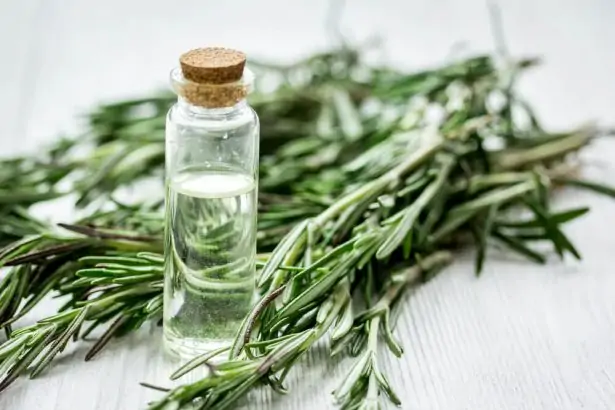
Rosemary tincture, used as a mouthwash, soothes toothache.
How to use rosemary in cosmetics?
The benefits of rosemary are also noticeable in the bathroom! Indeed, the rosemary lotion is renowned for bringing dynamism and beauty to the skin and hair.
Rosemary for refreshing and firming the skin
Applied to the face, the rosemary lotion refreshes and firms the skin, and reduces wrinkles. You can make this lotion yourself by following our recipe a little further below!
You can also use the rosemary hydrosol with verbenone, which is astringent and purifying.
Against hair loss
The rosemary lotion is a grandma’s remedy to slow hair loss and encourage regrowth, as it strengthens the scalp. Take advantage of rosemary’s benefits in your homemade cosmetics and treat yourself naturally!
For fragrance
Rosemary essential oil is used in the formulation of many perfumes, most notably in the famous eau de cologne. Its fresh, herbaceous, and lightly woody scent makes it a crisp and energetic note.
Rosemary is also used in ambient fragrances, such as scented candles, diffusers, and room sprays. Its invigorating scent helps create a pleasant and stimulating atmosphere in living spaces.
The rosemary lotion recipe
To easily make your rosemary lotion, it’s as simple as this:
- Boil a handful of rosemary in water for 10 minutes.
- Let it steep for a quarter of an hour.
- Allow to cool before pouring into a bottle.
Nourishing rosemary lip balm
In a heatproof bowl, mix 2 tablespoons coconut oil, 1 tablespoon beeswax, and 1 tablespoon shea butter.
Place the bowl over a pot of simmering water to melt the ingredients using a double boiler technique. Once everything is melted, remove the bowl from the heat.
Add a few drops of rosemary essential oil to the mixture and stir well.
Pour the mixture into small jars or lip balm tubes. Let the balm harden at room temperature before using.
Be sure to perform a patch test before using cosmetics on a larger area of your skin. If you experience any allergic reactions or irritation, discontinue use immediately.
- Moss, Cook et al. Aromas of rosemary and lavender essential oils differentially affect cognition and mood in healthy adults