
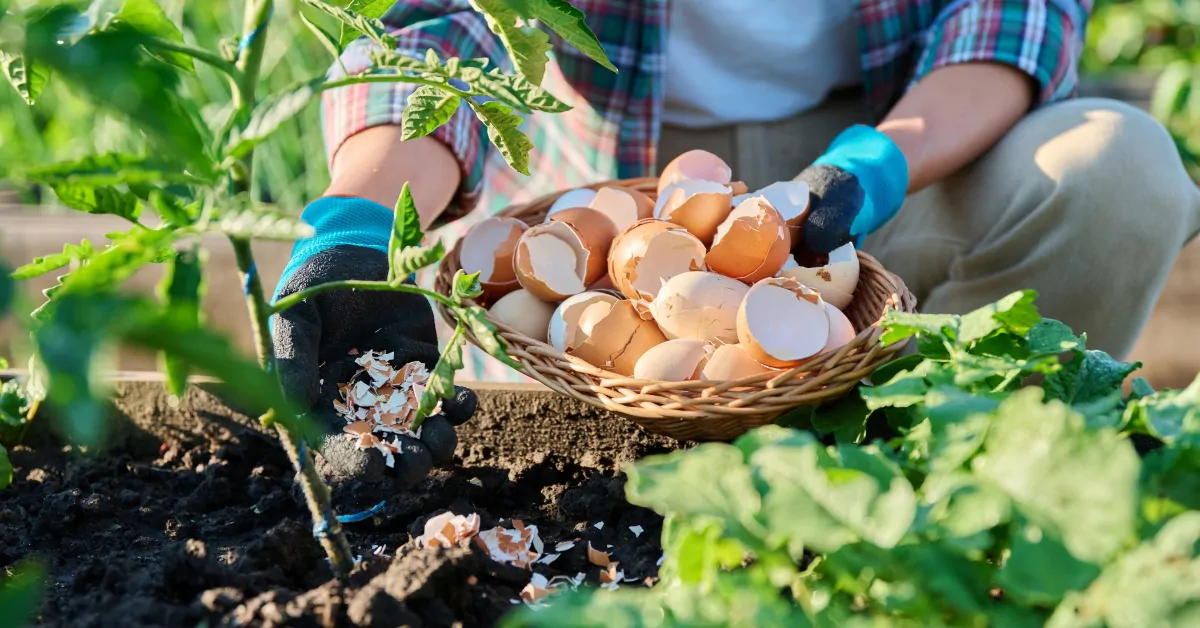
There are products on the market to solve a lot of small garden problems. Yet some kitchen scraps deserve a place in every organic gardener’s toolbox. Eggshells are one of them.
Rich in calcium carbonate, they can be reused in several ways in the vegetable garden, the orchard, or the compost. It’s not a miracle cure, but a true anti-waste gesture, provided you know how to use them.
- Eggshells compost very well, especially when crushed.
- They can serve as biodegradable seedling pots.
- In the garden, their calcium input is slow and gradual.
- Against slugs, their effectiveness is limited and requires regular renewal.
- For chickens, they should be well crushed and offered separately.
Why keep eggshells for the garden?
Throwing eggshells in the trash is giving up a free little resource. They won’t turn poor soil into dream soil. However, they can slowly enrich the compost, structure certain mixes, and reduce waste.
Before using them, let them dry for a few hours. You can also briefly bake them after cooking, especially if they’re intended for chickens. Then crush them to a finer or coarser consistency depending on the intended use.
The smaller the pieces, the faster they’ll decompose. This is especially true if you want to incorporate them into soil or compost.
Eggshells as seedling pots
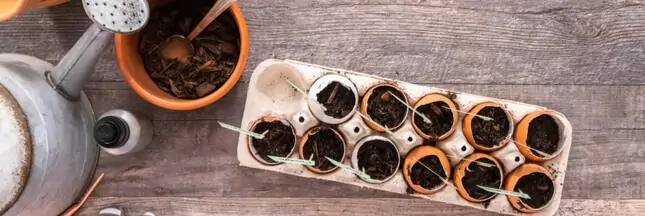
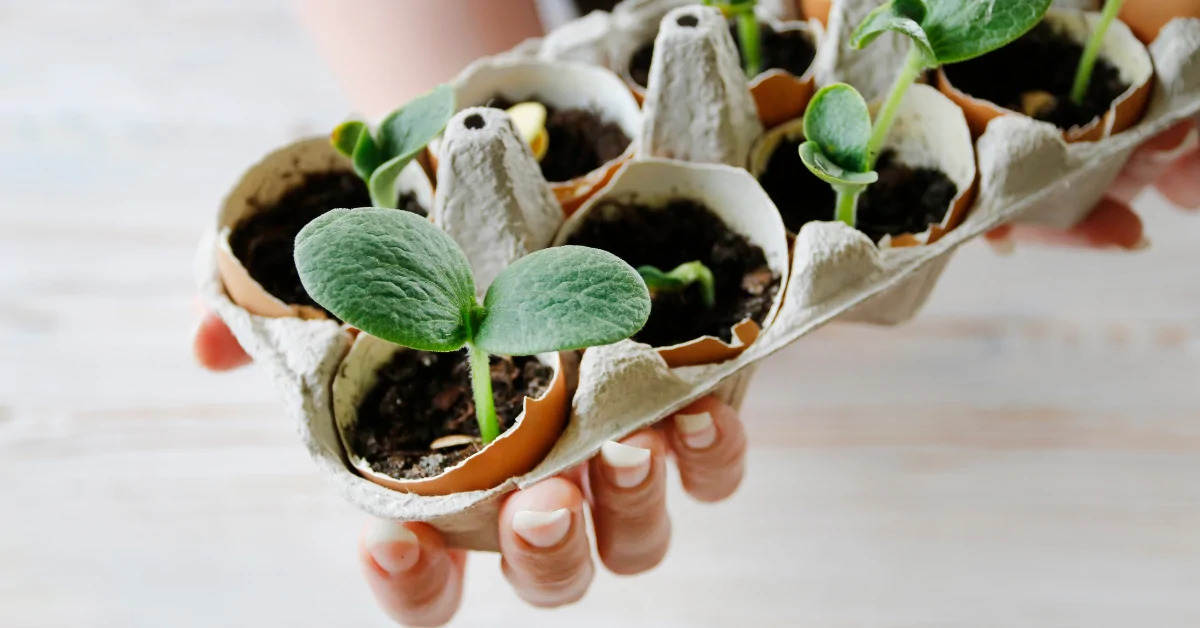
Simple and clever, this reuse is very popular with beginner gardeners. Use shells from which you’ve removed only the top third, like with a soft-boiled egg.
Fill them with a bit of potting mix, then sow your seeds inside. Then place the shells in an egg carton. This makes them easy to move around.
Puncture gently the bottom of each shell. Any excess water can drain away. When transplanting, lightly crack the shell before placing it in the ground. Young roots will take hold more easily.
Eggshells and peach tree leaf curl: a tip to handle with caution
Peach leaf curl is a dreaded disease in the orchard. It distorts leaves, weakens the tree, and can reduce yields. When it recurs yearly, the peach tree becomes markedly weaker.
A traditional trick is to hang unwashed eggshells in a small mesh bag, in the tree’s heart. Some gardeners believe this practice fosters useful micro-organisms. However, its effectiveness has not been solidly proven.
So it’s best to view it as a supplementary gesture. To limit leaf curl, pick up diseased leaves, air the canopy, and avoid excess humidity. When planting new trees, also favor varieties known for greater resistance.
If you test the eggshell bag, replace it several times during the season. Do not rely on it as the sole preventive measure.
Eggshells as a slug barrier
Once broken, eggshells have rough edges. They can impede the passage of slugs and snails around young plants.
Crush them coarsely, then form a circle around lettuce, zucchini, or tender sprouts. This barrier works best in dry weather. After rain, its effectiveness quickly wanes.
You’ll need to renew it regularly. For stronger protection, combine this trick with other practices. Water in the morning, remove damp shelters, and set up trap boards to lift at dawn.
Eggshells for chickens
In nature, nothing goes to waste. If you have chickens, shells can complete the loop. They provide calcium, which is useful for forming strong new shells.
However, be careful: never feed them large, recognizable shell pieces. Your hens might develop a habit of pecking their own eggs. Dry them, then crush them into small fragments or coarse powder.
Offer them in a separate dish, not mixed into the whole ration. The hens can consume them as needed.
Eggshells against tomato necrosis
Also called blossom-end rot, tomato necrosis is easily recognized. The bottom of the fruit darkens, hardens, and becomes inedible.
It is often linked to a calcium shortage. Yet the problem often stems from the plant’s poor calcium uptake. Irregular watering, drought, or root stress can be enough.
Crushed eggshells can enrich the soil over the long term. However, they do not act as an emergency treatment. They decompose slowly, especially if the pieces are large.
To prevent this issue, start at planting. Mix a small handful of fine powder into the soil, then water regularly. Mulch the base of the tomatoes to keep the soil cool.
Homemade recipe: eggshell powder for the garden
To make an easy-to-use homemade amendment, keep your shells after cooking. Rinse them quickly if needed, then let them dry for several days in an open container.
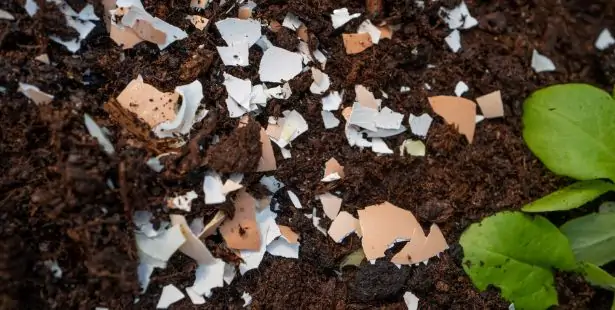
When they’re thoroughly dry, crush them with a rolling pin. You can also use a mortar and pestle or a small garden-focused blender. The goal is to obtain a fine powder, easier to mix into the soil.
Use this powder at the base of tomatoes, zucchini, potted plants, or young trees. A small amount is enough. The idea isn’t to overdo it, but to support the soil’s life over time.
Eggshells for compost
Eggshells have a rightful place in the compost pile. They bring minerals and mix well with peels, dead leaves, and plant scraps.
Their decomposition is slow. Crush them before adding, or you risk finding them almost intact several months later.
Add them in small quantities, with brown materials like dry leaves or unscented cardboard. Your compost will gain balance, without excess moisture.
Eggshells as a natural fertilizer: yes, but in moderation
Eggshells mainly contain calcium. They also hold small amounts of other minerals. They can contribute to soil fertility, but their action is slow.
Use them once or twice a year, preferably in powder form. Lightly incorporate into the soil, then water. They’ll integrate better than simply leaving them on the surface.
However, they do not replace good compost, regular mulching, or crop rotation. In organic gardening, it’s the combination of these practices that makes the difference.
Eggshells in the garden: mistakes to avoid
First common mistake: thinking shells immediately fix all deficiencies. They act slowly and should be seen as a small supplement.
Second pitfall: using them as large chunks all around the garden. In that case, they decompose poorly. It’s better to crush them according to the intended use.
Finally, avoid putting too many in pots. Plants grown in containers have limited soil. An excess of inputs, even natural ones, can imbalance the substrate.
The simple method remains: recycle, observe, dose. A nice way to turn kitchen waste into a discreet ally for the organic gardener.