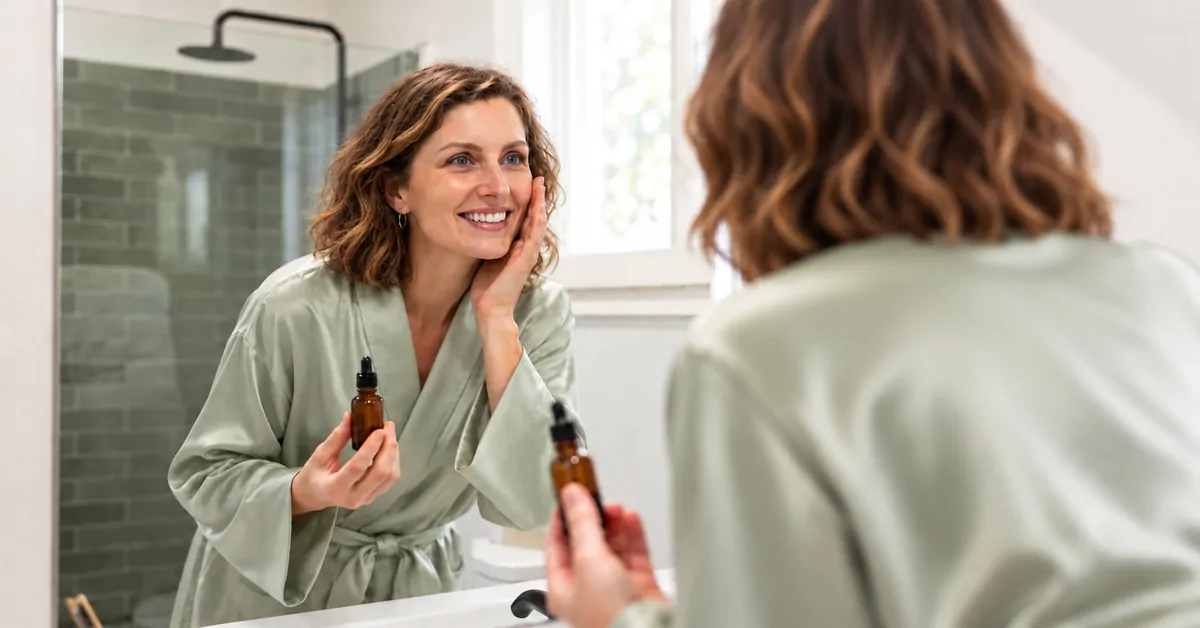
Marketed in spas for up to $50, this skincare serum stars can be made at home in 10 minutes for just a few dollars. The recipe, and the one step you must not skip.
Sold at premium prices in clinics or in drugstores, the hyaluronic acid serum promises plump and deeply hydrated skin. Good news: you can make it yourself, at a fraction of the cost, with a plant-based active ingredient and a few simple ingredients. Here’s the recipe.
Why is Hyaluronic Acid So Popular?
Hyaluronic acid is a molecule naturally present in the skin, capable of holding up to 1000 times its weight in water. With age and external aggressors (pollution, UV, heating), its production decreases, which promotes sagging and skin dehydration. When applied topically, it acts as a true water reservoir at the skin’s surface, giving a plump and radiant look.
For a homemade version, use plant-based hyaluronic acid in powder form (fermentation-derived, not animal-based), available in organic shops, pharmacies, or from cosmetic raw-material suppliers. A very small amount is enough: it’s a highly concentrated active.
The Homemade Serum Recipe
Ingredients (for about 50 ml):
- 45 ml mineral water or hydrosol (rose water, cornflower water, or orange blossom water)
- 0.25 g plant-based hyaluronic acid powder (fermentation-derived, non-animal)
- 5 ml vegetable glycerin (helps with dilution and strengthens the hydrating effect)
- 5 to 10 drops of a natural cosmetic preservative (essential)
- Optional: 2-3 drops of lavender or geranium essential oil for fragrance
Attention with essential oils: they can irritate the skin or trigger allergies. In your homemade cosmetics, respect the dosages and precautions for each oil. Avoid contact with eyes and mucous membranes. Their use is not recommended for children, pregnant or nursing women.
Equipment:
- A glass bottle with a pump or dropper, pre-disinfected with 70° alcohol
- A small whisk or mini electric whisk
- A precision scale (essential to weigh 0.25 g)
Step-by-step Preparation
- Thoroughly disinfect all your equipment with 70° alcohol—an essential step to prevent any serum contamination.
- Pour the water or hydrosol into a clean container.
- Sift the hyaluronic acid powder onto the surface in a fine shower, not all at once in one spot (that would form lumps that are hard to dissolve).
- Let rest for 30 minutes to 1 hour without touching: the powder will start to gel on contact with the water.
- Solve gently whisk until you obtain a smooth gel, free of lumps. This can take several minutes, since hyaluronic acid dissolves slowly.
- Add the glycerin and mix.
- Incorporate the preservative following the dosage indicated by the manufacturer, then the essential oil if you’re using it.
- Transfer into the disinfected bottle using a clean funnel.
Why the Preservative Isn’t Optional
Unlike a clay mask that’s used up in one sitting, a serum is kept for several weeks in a damp bathroom environment that invites bacteria and mold. Without a proper preservative, a homemade water-based serum typically becomes contaminated within a matter of days, even if there are no visible signs. Use a recognized cosmetic preservative (Geogard or Cosgard, available at natural-food stores), and strictly follow the dosage on the label.
How to Use
Apply a few drops of serum to clean skin, while slightly damp for better penetration, in the morning and/or at night, before your regular moisturizer.
Tip: never apply hyaluronic acid to completely dry skin in a very dry environment (airplane, strong heating), because the molecule may draw water from deeper layers of the skin rather than from the surrounding air, which can worsen the taut feeling. Always finish with a moisturizing cream to seal in the hydration provided by the serum.
Storage and Shelf Life
Stored in an opaque bottle, away from light and heat, this serum lasts about 1–2 months with a suitable preservative. Note the manufacture date on the bottle to keep track of its freshness.
The Anti-Waste Verdict
A commercial hyaluronic acid serum typically costs between $25 and $50 for 1 oz (30 ml). The homemade version costs only a few dollars for 1.7 oz (50 ml), once you’ve amortized the initial investment in the hyaluronic acid powder (one sachet lets you make many dozens of bottles). A beauty move that’s economical, eco-friendly, and free of extra packaging.