
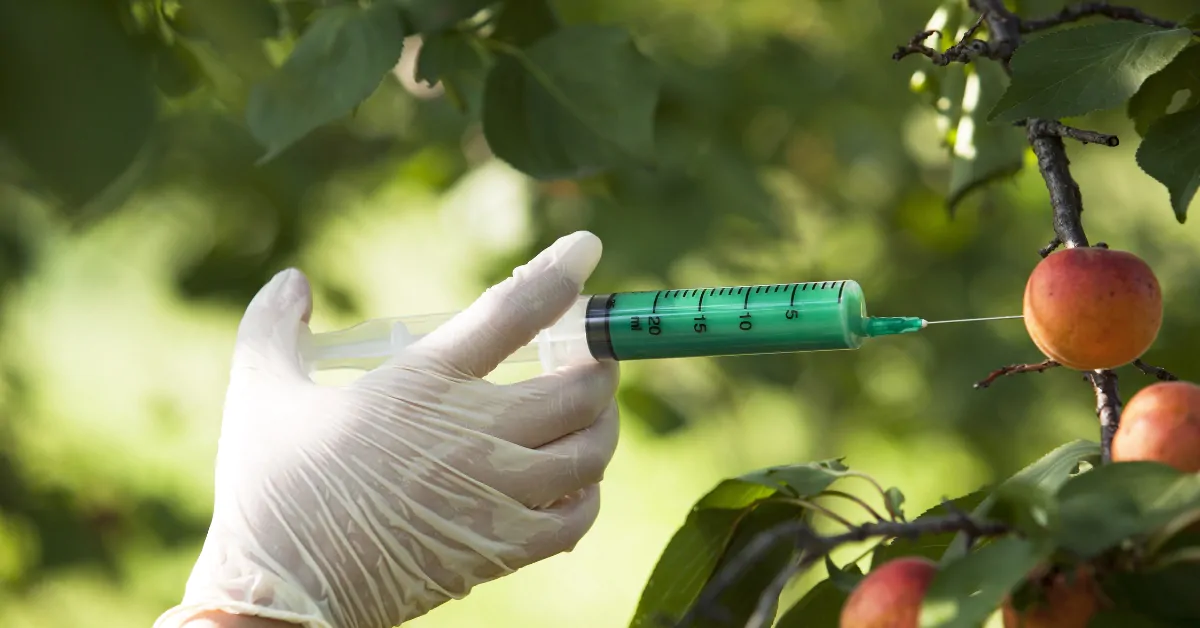
Behind the promises of climate adaptation and higher yields, ecologists point to a glaring lack of assessment of ecosystem impacts. For while science now masters genomic editing, it still struggles to anticipate its effects on pollinators, soil life, and the stability of food chains.
Intragenesis vs Transgenesis: Why the Technological Distinction Does Not Guarantee Ecological Safety
New Genomic Techniques rest on intragenesis, i.e., rewriting an organism’s DNA without adding foreign genes. By contrast, conventional GMOs operate via transgenesis, inserting sequences from other species. This technical distinction convinced the European Commission to propose, as early as July 2023, regulatory loosening. Category 1 plants modified by NGTs would escape labeling and monitoring requirements applicable to transgenics.
Yet modifying a genome without importing external DNA does not mean the resulting organism behaves like its wild-type counterpart. A targeted mutation can disable a regulatory gene, alter a metabolic pathway, or disturb complex biochemical interactions that scientists are only beginning to map. The absence of a transgene does not shield against off-target effects or unforeseen biological cascades.
How a Category 1 Mutation Can Alter Plant Chemical Signals
Plants constantly emit volatile organic compounds that regulate their defenses against herbivores, attract pollinators, and signal their status to neighboring plants. A single genetic alteration, even minor, can disrupt this chemical signature. A study published in 2025 in Nature Plants showed that a single-point mutation in a flowering gene of rapeseed reduced honey bee attraction by 30%, with no visible effect on the plant itself.
However, European policy classifies plants arising from simple mutations as Category 1, exempting them from thorough evaluation. No mandatory protocol requires analysis of secondary metabolic profiles, nor their influence on beneficial insects. Tests primarily focus on nutritional composition and the absence of new allergens. Indirect effects on ecosystems remain a blind spot in regulatory assessment.
Pollinators and Soil Life: The Indirect Effects Assessments Miss
Plants engineered to resist drought sometimes produce different root exudates, those cocktails of sugars, amino acids, and phenolic compounds that feed soil microbial communities. A 2024 INRAE study found that a gene-edited wheat tailored to tolerate water stress altered the diversity of its rhizosphere bacteria, reducing the presence of symbiotic arbuscular mycorrhizal fungi by 18%.
These fungi play a key role in phosphorus uptake and crop resilience. Their decline weakens soils and increases dependence on mineral fertilizers. Yet approval tests do not systematically include metagenomic analyses of the root microbiome, nor long-term ecological monitoring across multiple crop cycles. European regulations focus on the plant in isolation, overlooking its interactions with surrounding living systems.
The 20-Mutation Threshold: An Arbitrary Cutoff?
The compromise reached in December 2025 establishes a clear boundary: beyond 20 genomic modifications, plants shift to Category 2 and become subject to traceability, labeling, and prior authorization. Below that, they follow the simplified regime of conventional varieties. This numeric threshold reassures policymakers but leaves part of the scientific community puzzled.
Nothing in molecular biology justifies that a 19th mutation is deemed innocuous while a 21st would become problematic. The ecological impact of a modification depends on its nature, its location in the genome, and its effect on the expression of neighboring genes. A single mutation in a strong promoter can trigger more metabolic dysregulation than 30 silent changes in non-coding regions.
This numeric cut is more the outcome of a diplomatic compromise among member states than a risk assessment grounded in evidence. Industry lobbies sought a high threshold to maximize Category 1, while environmental NGOs demanded universal oversight. The number 20 emerged as a political compromise, without robust biological validation.
Why Category 2 Remains Insufficiently Monitored
Even plants categorized as Category 2 do not undergo systematic post-commercialization ecological monitoring. The regulation requires labeling and traceability, but does not provide environmental observatories to measure real impacts on insect populations, microbial diversity, or the structure of wild plant communities adjacent to cultivated fields.
The experience with classic GM crops reveals the limits of this approach. Approved in the United States since 1996, herbicide-tolerant corn and soybeans led to a 90% drop in monarch butterfly populations in the American Midwest between 1999 and 2015. The disappearance of milkweed, their host plant, resulted from the intensification of chemical treatments enabled by glyphosate-tolerant crops.
No impact assessment had anticipated this collapse before commercialization. Tests focused on the direct toxicity of transgenic proteins, ignoring changes in farming practices induced by the technology. The European NGTs framework reproduces this myopia: it evaluates the plant, not the agricultural system it promotes.
Climate Adaptation vs Ecological Stability: Do We Really Have to Choose?
Proponents of New Genomic Techniques emphasize the climate imperative. Genomically edited varieties can rapidly deliver plants that resist heat waves, tolerate salinity, or use water more efficiently. In the face of accelerating climate change, these tools appear to be pragmatic solutions to sustain food production.
Yet adapting crops to climate stress should not come at the expense of overall ecological resilience. A drought-tolerant wheat that depletes the soil microbiome weakens the ecosystem services on which farming itself relies—natural fertility, pollination, and pest regulation by beneficial organisms. Prioritizing short-term adaptation without assessing ecosystem stability is like winning a battle but losing the war.
There are alternatives. Agroecology has shown for decades that diversifying crops, improving soil structure, and reintegrating functional biodiversity strengthen the resilience of farming systems. These approaches require time, agronomic research, and political support that industry lobbying often diverts toward patentable technological solutions.
New Genomic Techniques: What We Know About Long-Term Impacts (and What We Do Not Know)
Research on transgenerational ecological effects of genetically modified plants remains in its infancy. Studies rarely follow crops beyond three growing cycles. Yet some impacts manifest only after many years: genetic erosion of local varieties via gene flow, the emergence of resistant pests, and trophic imbalances in food webs.
A 2024 meta-analysis published in Ecological Applications compiled 127 studies on agricultural GMOs. The result: only 12% of the studies analyzed data beyond five years, and none measured both agronomic impacts and functional biodiversity simultaneously. The current methodological gaps prevent a scientific verdict on the ecological safety of genomic modifications, whether they involve older or newer techniques.
In light of these uncertainties, the precautionary principle should prevail. Allowing large-scale deployment of modified organisms without a robust ecological surveillance mechanism amounts to a real-world experiment in which European citizens become unwitting guinea pigs, despite calls to protest from fifty organizations.