
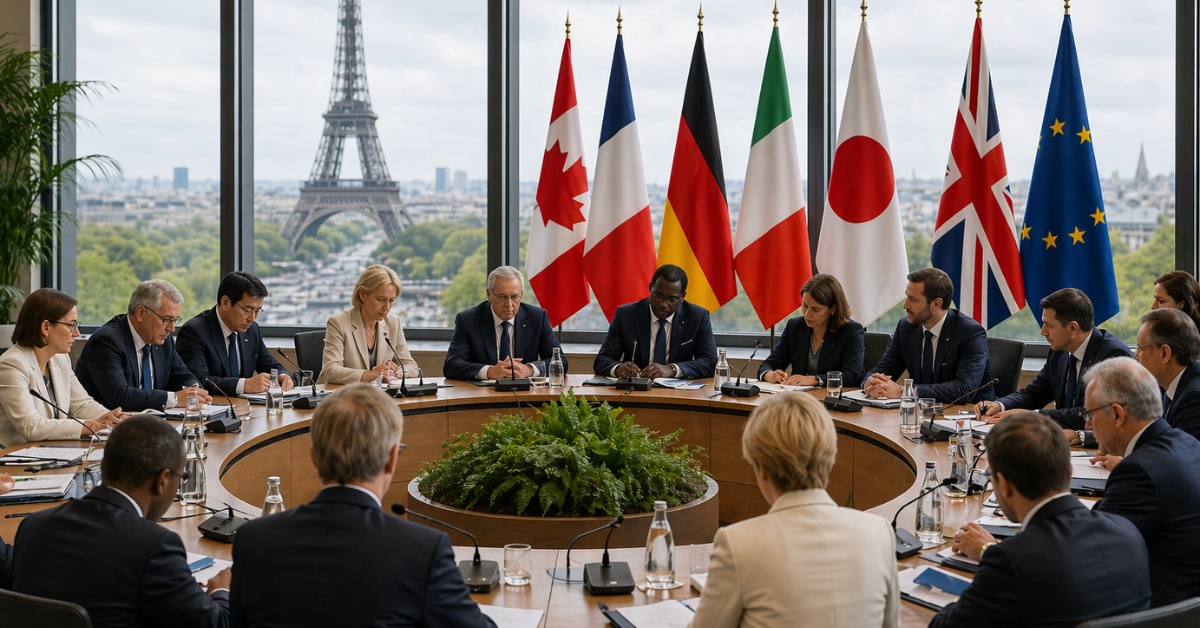
G7 environment ministers are welcomed in Paris for two days of discussions on natural resources and biodiversity.
Climate Change Left Out of the Talks
Under the aegis of France’s Minister of Ecological Transition, Monique Barbut, this summit aims to send a strong signal of determination and international unity. Yet the diplomatic context currently underscores how environmental protection has seemingly lost its top priority on the world’s agenda.
To foster cohesion, France deliberately chose to sideline climate and the phase-out of fossil fuels from the agenda, focusing on topics deemed less contentious. This was done to avoid tensions with the United States. A choice strongly criticized by environmental organizations, which contend that a G7 that ignores the climate crisis loses all credibility and its role as a driver of collective action.
A Financial Alliance for Nature
Rather than addressing the climate emergency, this Paris summit centers on five priority axes: financing biodiversity, protecting the oceans, securing water resources, fighting desertification, and resilience of territories. France would like to mobilize its partners around a financial alliance for nature, aiming to unlock 800 million dollars to protect natural parks, especially in Africa, while calling for a political declaration on the links between desertification and security.
The stakes of this summit foreshadow future international milestones, notably the next G7 leaders summit to be held in Évian. While initiatives on marine protected areas and forests at Fontainebleau demonstrate a willingness to act on specific niches, the absence of a climate consensus underscores the fragility of current global environmental governance. Observers, such as WWF, remain vigilant about the reality of promised funding, fearing they will merely mask a retreat by states, France included, from action.