
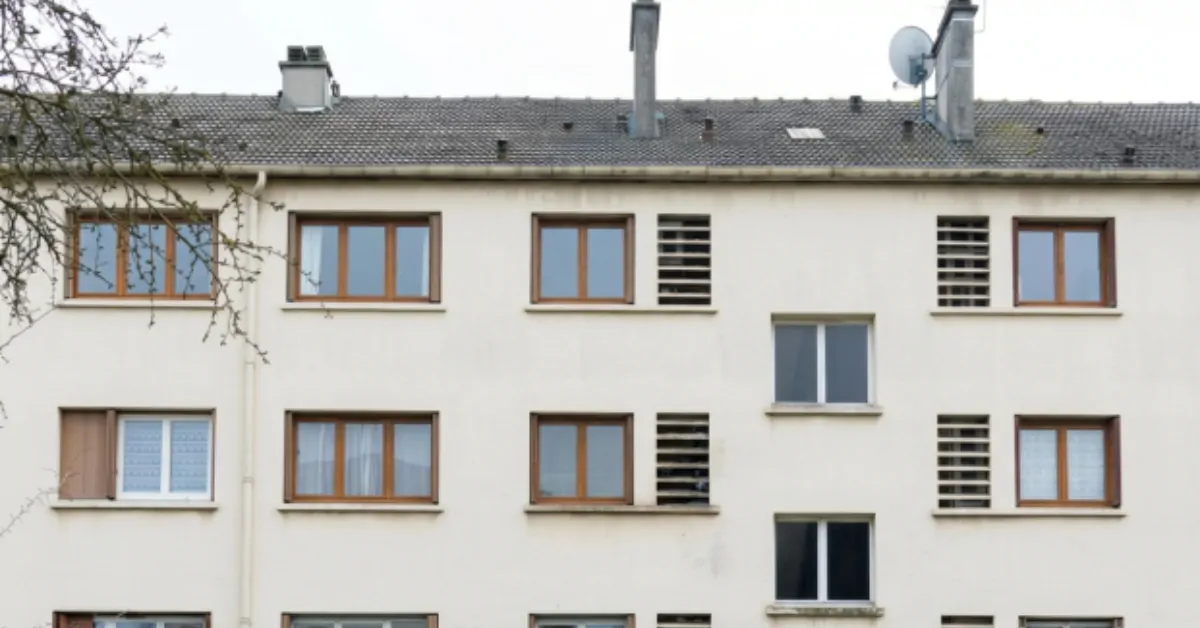
This U-turn raises questions: is France sacrificing its climate targets in the name of social urgency, or is it a shaky compromise that fails to solve both the housing crisis and the environmental emergency?
Reauthorization of the “thermally leaky” homes: France’s climate commitments for 2030 in question?
The Climate Resilience Law, passed in 2021, marked a turning point: it mandated gradually prohibiting the rental of the most energy-hungry homes to push owners to renovate. No new lease can currently be signed for a property rated “G” on the Energy Performance Diagnosis (EPD) since January 1, 2025, as long as the owner does not carry out the work to lift it out of that category. For properties rated “F,” the same ban was to take effect on January 1, 2028. But the bill put forward by Housing Minister Vincent Jeanbrun, which the Senate is slated to discuss on July 7–8, 2026, could redraw the map. It would temporarily put these homes back on the market, provided the owner commits to insulation and other improvements to boost energy efficiency.
In an interview on France Info, Vincent Jeanbrun, Minister of Urban Affairs and Housing, defended the move as a “win-win partnership.” “It’s better to have a roof over your head 12 months a year, even if a few days are scorching, than no roof at all,” the minister argued. This phrasing captures the tension between social urgency and climate urgency, but it also minimizes the health impact of extreme heat in poorly insulated homes.
The 700,000 affected homes represent a substantial stock of thermally deficient buildings. Keeping them on the rental market, even temporarily, raises questions about France’s 2030 climate commitments. Keeping these homes on the rental market for five more years would delay reductions in CO2 emissions from the residential sector. In Île-de-France, 24% of residents living in heat-leaky homes leave their dwelling during heat waves, seeking refuge elsewhere to escape the furnace. Allowing their rental would knowingly expose thousands of households to degraded living conditions, both in summer and in winter. Heat waves become deadly, and France still chooses to temporarily legalize dwellings ill-suited to current climate realities.
Energy Renovation: Climate Urgency vs Social Urgency
The text requires owners to sign a contract with a renovation company and pay a deposit. On paper, the scheme seems stringent. In practice, nothing guarantees the completion of the work within the deadlines. Energy renovation projects often take longer than planned: shortages of skilled labor, budget overruns, administrative complexity. The risk is that this delay becomes the new norm, a permanent loosening dressed up as a transitional measure. Tenant advocacy groups, gathered within the Logement pour TouTEs platform, denounce a measure whose “goal is to protect landlords’ rent by sacrificing exposed tenants, with little regard for human harm.”
It must be said that the situation is far from simple. France faces simultaneously a housing crisis and a climate emergency. With 2.9 million households on the waiting list for social housing (up 4% year over year), pressure on the rental market has reached new heights. Removing 700,000 homes would mechanically worsen the shortage. Yet, maintaining thermally deficient housing undermines the country’s carbon neutrality goals and exposes occupants to health risks. The government promises 2 million additional homes by 2030 and 125,000 social housing units per year, but these commitments remain vague.
The real question remains: why wasn’t this situation anticipated in 2021? Five years after the initial ban, no large-scale renovation plan has been deployed to meet the need. The result is a shaky compromise that temporarily satisfies landlords without solving either the housing crisis or the climate emergency in a structural way. Senators broadly back the measure, described as a “courageous decision” by some lawmakers. But true political courage would be to massively fund energy renovation while rapidly building new, durable housing, rather than temporarily legalizing thermally indecent housing.