
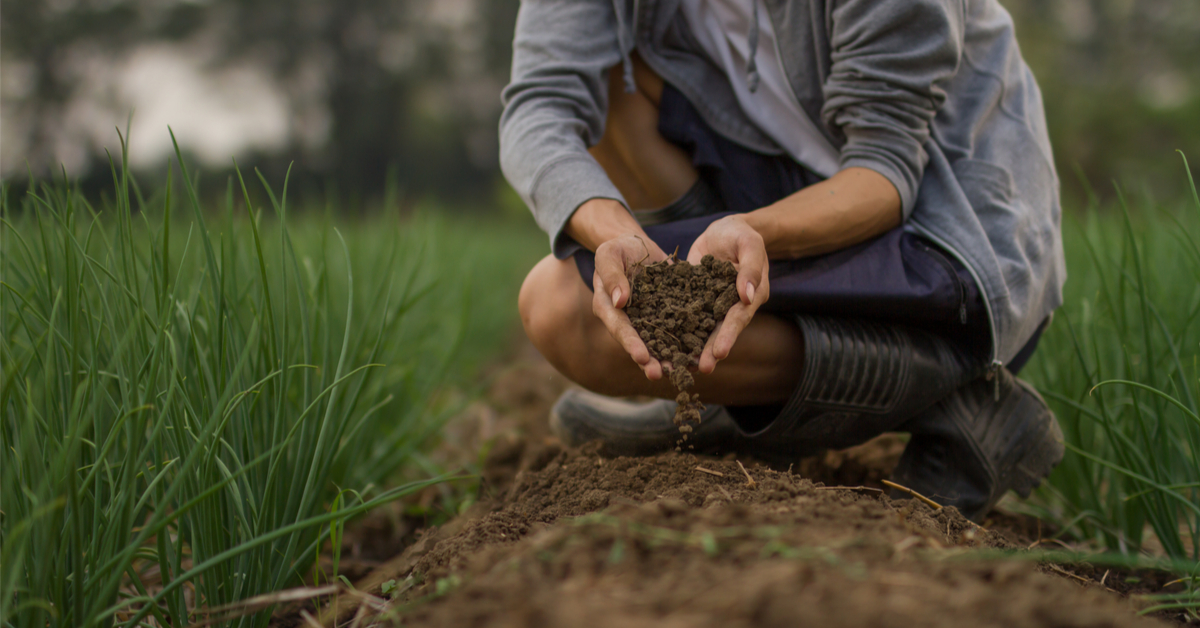
Getting your hands dirty in the soil and tending a garden can feel good, but the science behind this phenomenon isn’t straightforward: there is a whole chemical mechanism at work.
The Mycobacterium vaccae, an innocuous bacterium that benefits us
If so many people love to garden themselves, rather than hire a gardener and simply admire the result at the end, it may be thanks to a bacterium we inhale while turning the soil. The one we might call the “happiness bacteria” is actually named “Mycobacterium vaccae.” Unlike many other bacteria, it is harmless. And it even has benefits.
Once inhaled, the Mycobacterium vaccae triggers the release of serotonin, the hormone that regulates our moods and prevents our brain from taking on more risks than necessary. Serotonin also nudges us to stay in a state that feels comfortable. And above all, it is associated with well-being.
The Mycobacterium vaccae, a valuable defense for our body
The benefits of the Mycobacterium vaccae don’t stop there. This bacterium plays a role in our immune response by reducing inflammatory processes in our body. In this sense, it echoes allergy theories: living among nature or, at least, in rural settings for most of human history, people have always accumulated a wide diversity of bacteria in their bodies and lived with them.
To put it differently, like the Mycobacterium vaccae, these other bacteria protected us against numerous health hazards. But, having largely embraced an urban lifestyle, humans have since lost these “good friends” who protected them in the past.
The Mycobacterium vaccae has also been studied in mouse populations. Mice that inhaled these bacteria performed better in mazes, across multiple levels of difficulty. They finished the course faster, and the success rate was higher as well.
“There’s more in a garden than the gardener sows,” goes the proverb! So, here’s a tip: head to the garden…