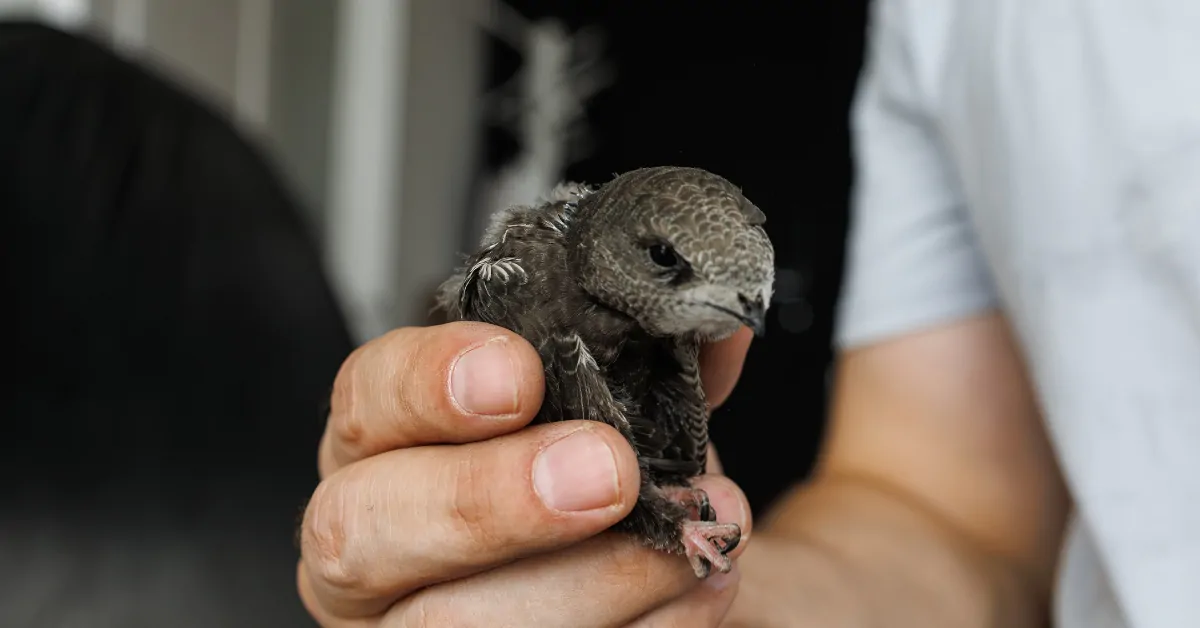
An emblematic species of the European skies, the European common swift is perfectly adapted to life in the air, but far less suited to the heatwaves that are becoming more frequent. Wildlife rescue centers, overwhelmed by the influx of distressed nestlings, warn about the consequences of climate warming for this migratory bird.
“They Die of Heat Under the Roofs”: Heatwaves Decimate Birds in Attics
For several days now, wildlife rescue centers have been reporting an unprecedented surge of young European common swifts. The trigger: the exceptional heatwave that has affected a large portion of France since the end of June. Under the roofs, where these birds nest, temperatures reach unbearable levels. According to the French bird-conservation group LPO, they can exceed 50 °C, turning attics into veritable furnaces. In the face of this extreme heat, the fledglings often have only one escape route: to fling themselves into the void. Too young to fly, they crash to the ground before being found by passersby or quickly succumbing to injuries, dehydration, or predation.
In the Alpes-Maritimes, in Gironde, in Alsace, in Auvergne, but also in many other regions of France, care centers take in every day dozens, sometimes hundreds, of young swifts. The LPO notes, for example, that around 200 swifts were simultaneously in care at its Provence-Alpes-C Côte d’Azur rescue center during one of the heat peaks. In Alsace, more than 170 swifts and swallows were being treated at the same time, while the Clermont-Ferrand center hosted more than 110 birds from these two species.
This crisis goes far beyond a handful of facilities. The seven care centers run by the LPO had already treated nearly 20,000 wild animals in 2025. According to the association, 14% of them were direct victims of extreme climate events, a share expected to rise with the growing frequency of heat waves.
The caregivers describe the same scenario across the board. In the attics, young swifts desperately seek a bit of coolness. When they can no longer tolerate the temperature, they crawl to the edge of the nest before falling. Once on the ground, their parents can hardly help them. Unlike many other birds, swifts feed their young exclusively in the nest. A nestling found on the ground is therefore almost always in immediate danger and requires rapid intake by a specialized center.
The mobilization is immense. Keepers, veterinarians, volunteers and associations are working around the clock to feed these young birds several times a day, hydrate them, and wait for their wings to develop enough for release. The president of the LPO, Allain Bougrain-Dubourg, has praised the dedication of the thousands of people mobilized in care centers facing this exceptional situation.
The Birds and the Heat: Why European Common Swifts Are Particularly Vulnerable
The tragedy is all the more striking because the European common swift is regarded as one of the best-adapted birds to aerial life. Its streamlined body, its long scythe-like wings, and its extremely light weight make it an exceptional glider able to ride air currents for hours. This bird spends almost its entire life in the sky. Experts note that it feeds in flight, catches the insects it eats without ever landing, drinks by skimming the surface of water, and can even sleep partially during long flights thanks to intermittent sleep. Outside of reproduction, it rarely touches the ground.
Every spring, swifts return from sub-Saharan Africa after thousands of kilometers of migration. They typically arrive in France from late April to early May to reconnect, sometimes for many years, with exactly the same cavity where they nested before. They mainly seek cracks in old buildings, cavities under the tiles, attics, or the interstices of ancient monuments. These places usually offer effective protection against the elements and predators. Yet, during extreme heat events, they become thermal traps.
Young swifts stay in their nest for several weeks before their first flight. As long as their feathers are not fully developed, they are unable to fly. When the temperature climbs sharply under the roof, they leave the nest far too early. This behavior is more of an ultimate survival reflex than an attempt to fly. Adults, for their part, possess an astonishing capacity to adapt. In bad weather or when insects are scarce, they can travel hundreds of kilometers to find more favorable conditions. The nestlings, however, remain trapped in the nest and depend entirely on their parents until their first flight, which is why they are the first victims of heat waves.