
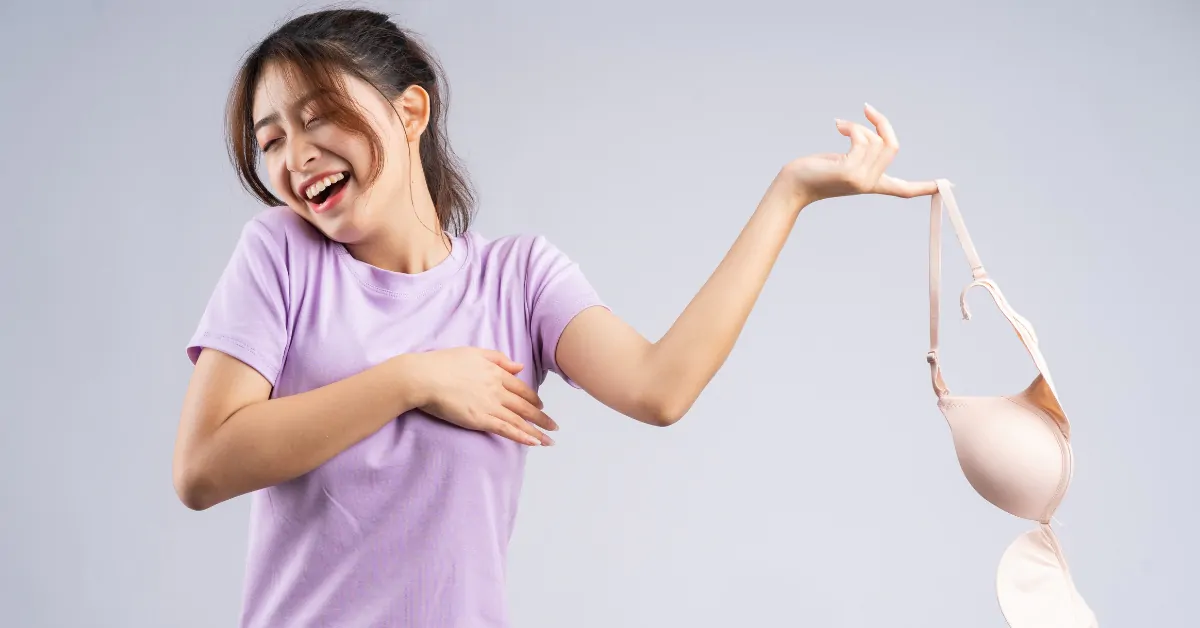
No bra, is it really a heresy? For health, for comfort, for freedom, or simply for personal choice, more and more women are choosing not to wear this undergarment on a daily basis. Long regarded as essential for support and elegance, the bra deserves to be questioned.
Should you really wear one every day? Is it bad for the breasts? Can you go without it without discomfort? In 2026, the answer is simpler than it seems: a bra is neither an enemy nor an obligation. It all depends on your body, your activities, and your comfort.
What to take away
- A bra alone does not prevent the natural sagging of the breasts.
- A bra model that is too tight or ill-fitting can cause marks, chafing, and discomfort.
- Going without a bra can improve everyday comfort, but it is not suitable for every situation.
- For sports, larger breasts, or breast pain, good support remains often preferable.
No bra: an obligation that isn’t one
Many women have grown up with the idea that without a bra, the chest would sag more quickly. Yet, there is no solid evidence that wearing a bra permanently prevents sagging.
The chest mainly changes with age, weight fluctuations, pregnancies, genetics, skin quality, and breast volume. A bra can support and shape when worn. However, it does not stop the natural aging of the tissues.
A French study led by Professor Jean-Denis Rouillon drew a lot of attention in 2013. It suggested that some young women could gain tone by stopping the bra. But these results should be interpreted with caution. They do not apply to all body types or all life stages.
In other words, giving up the bra isn’t a fault. But wearing one isn’t a problem either, if the model is comfortable.
Comfort, skin, circulation: what we can really say
Who hasn’t sighed with relief at removing a bra at the end of the day? Red marks, straps digging into the shoulders, underwires compressing, cups digging in… These signals often show that the model is ill-fitting.
A bra that is too tight can promote:
- friction under the bust;
- redness or irritation;
- a feeling of oppression;
- shoulder or back pain;
- discomfort in hot weather.
However, it’s important to avoid alarming shortcuts. Scientific data do not show that wearing a bra increases the risk of breast cancer. The hypothesis of lymphatic blockage by underwires has not been proven.
The simple right reflex is therefore: listen to your body. If a bra leaves deep marks, hinders breathing, or causes pain, you should change size, change shape, or go braless more often.
Breasts also have their own natural support system
Breasts do not contain muscles. They rely on skin, connective tissues, and Cooper’s ligaments. These structures contribute to the natural support of the chest.
That’s why some women feel more comfortable with their breasts free. Others, on the contrary, prefer gentle support. Both choices are valid.
To transition to no-bra, it’s best to proceed gradually. The breast, posture, and clothing habits may require an adaptation period.
Not wearing a bra: a move that’s also more eco-friendly
Beyond comfort, going braless also raises questions about consumption. A lingerie drawer is often stuffed with rarely worn, poorly fitting, or out-of-season pieces bought for a specific look.
And lingerie is often made from synthetic fibers, such as polyester, nylon, or elastane. These fibers require energy to produce and can shed microfibers when washed.
Reducing the number of bras you buy, choosing more durable pieces, and taking better care of them helps limit your textile footprint.
For a more responsible approach, favor certified materials, transparent brands, and repairable designs. Simple sports bras without underwires and well-cut shapes can also last longer.
Gentle routine: how to try no-bra without rushing
There’s no need to overhaul everything overnight. The goal isn’t to swap one constraint for another. The most important thing is to find what works for you.
Here’s a simple routine to test bralessness gradually:
- Day 1 and 2: start at home for only a few hours.
- Day 3 and 4: try a loose-fitting outfit or a thick tank top.
- Day 5: test a soft bra, without underwires.
- Day 6: go out braless if you feel comfortable.
- Day 7: assess your real comfort, without pressure.
You can also play with clothing. Textured fabrics, loose cuts, double-lined tops, or prints can often help you feel more free.
No bra or bra: it all depends on the moment
Giving up the bra daily does not necessarily mean abandoning it everywhere. In certain situations, good support remains useful, even essential.
This is especially true for:
- running and impact sports;
- bigger breasts;
- cyclic breast pain;
- pregnancy or breastfeeding;
- post-surgical recovery;
- very active days.
In these cases, a well-fitted sports bra limits breast movement. It can also reduce pain during physical activity.
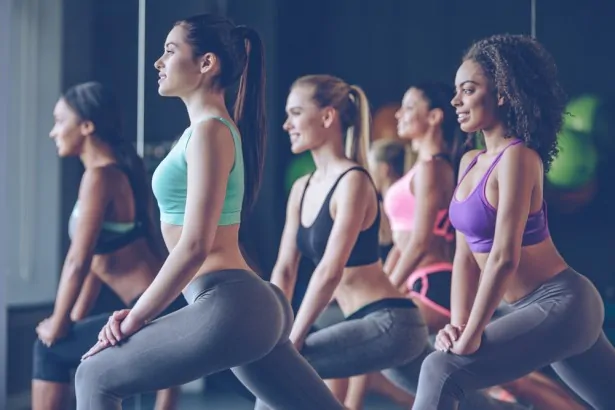
If you wear a bra, choose it really well
An uncomfortable bra isn’t a fate. It’s often simply poorly chosen. Many women wear an approximate size for years.
A few pointers can help:
- The band should stay horizontal around the back;
- The straps should not dig into the shoulders;
- The underwires should never press on the breast;
- The cup should enclose the breast without cutting it;
- The material should let the skin breathe.
For calm days, a cotton organic or natural-fiber bralette can be enough. For sport, choose a model suited to the activity’s intensity.
Other women also enjoy the aesthetic dimension of lingerie. Again, the goal isn’t to ban it. It’s about choosing freely.
No bra: a freedom, not a mandate
Going braless can bring a sense of freedom, comfort, and simplicity. It can also lighten the lingerie budget and reduce unnecessary purchases. But it should never become a new imposed norm.
Wearing a bra, a bralette, a bandeau, or nothing at all is primarily a personal choice. Every body has its needs, its history, and its preferences.
The right decision is the one that makes you feel good, without pain, without discomfort, and without guilt-tripping looks.