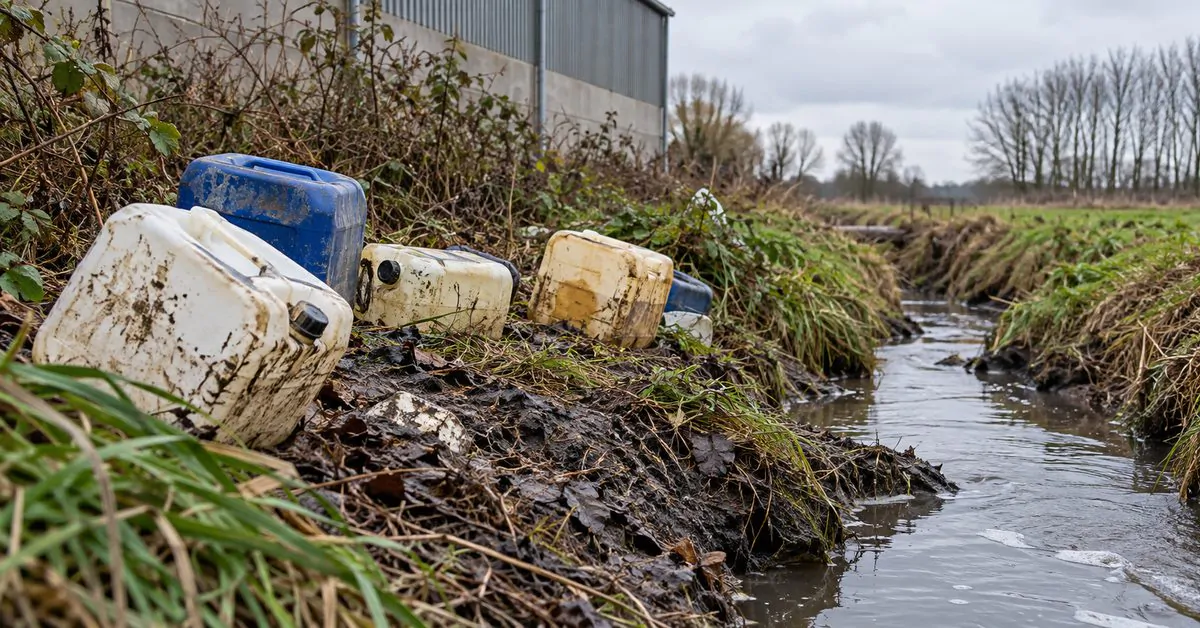
According to a recent publication, clandestine production of synthetic drugs generates five to thirty times their volume in chemical waste.
A Double Contamination
It’s a little-known facet of synthetic drugs: their alarming ecological consequences. In a recent publication, France’s Observatoire Français des Drogues et Tendances Addictives (OFDT) warns about the ravages caused by the production and use of substances such as amphetamines, MDMA, or ketamine. An underground industry that generates five to thirty times their volume in highly toxic chemical waste, escaping all environmental standards. Dumped untreated into soils, air, and waterways, these solvents and precursors durably pollute ecosystems.
This ecological cost worsens during manufacturing processes and extends far beyond clandestine labs, notably in Belgium and the Netherlands. Indeed, human consumption also directly contributes to this contamination: once excreted, chemical residues join sewage systems. Yet conventional wastewater treatment plants are not equipped to remove these complex molecules. This issue overlaps with pharmaceutical residues that contaminate soils and waters. It affects multiple aquatic environments, where exposure to these toxic substances eventually triggers a dreaded “cocktail effect,” characterized by strong chemical persistence.
What are synthetic drugs?
Synthetic drugs are psychoactive substances manufactured by chemical transformation. They act on the brain, but do not form a single family: they are also categorized by their effects. Amphetamines are stimulants; MDMA, found notably in ecstasy tablets, has stimulant and empathogenic effects. Ketamine is an anesthetic used in medicine, whose misuse can produce dissociative effects. The term “new psychoactive substances” designates, in turn, a more specific category of substances that emerged on the market to imitate the effects of known drugs.
Why doesn’t the polluter-pays principle work here? Synthetic drug laboratories operate in secrecy. When their waste contaminates a site or building, identifying the responsible party and making them pay for cleanup becomes difficult. According to the OFDT, this situation shifts the financial burden onto municipalities or private property owners. The polluter-pays principle applied to PFAS industrial discharges illustrates what can be put in place when the responsible parties are identifiable. (1)
A financial cost for communities
The effects on wildlife are dramatic, even at very low concentrations. Scientific studies reveal genetic alterations, embryonic malformations, locomotion disorders, and reduced fertility in various aquatic species such as fish, oysters, and sharks. Another ConsoGlobe article describes the effects of cocaine present in water on salmon. Additionally, the bioaccumulation of these toxins within the food chain poses a direct potential risk to human health. This risk is heightened by the possibility of involuntary exposure to residues through water or food.
Facing these grave harms whose financial cost ultimately falls on communities, OFDT and the MILDECA urge moving beyond a purely punitive approach to trafficking, in order to put environmental justice and public health at the heart of public policy. By revealing these contamination dynamics that remain underestimated, experts hope to mobilize political debate to illuminate the real ecological cost of illicit drugs.
Read also
Emerging pollutant, cocaine alters the migratory behavior of salmon
- https://www.ofdt.fr/publication/2026/impact-environnemental-des-drogues-de-synthese-etat-des-connaissance-et-questions