
Not long ago, tracking your health in the United States meant booking appointments weeks in advance, waiting in a sterile exam room, and letting a clinician monitor your vitals with bulky equipment. Today, the landscape has changed entirely. We live in a fast-paced era where medical technology has left hospital wards behind and landed directly in our living rooms, in our pockets, and right into our everyday routines.
Today, health tech isn’t just about counting steps and calories. It’s fundamentally about well-being, prevention, and precision health management that fits with modern eco-friendly lifestyles. Let’s explore how current innovations are quietly reshaping our lives behind the scenes.
Smart devices that do more than count steps
When connected devices first appeared, they felt a bit like a novelty. People wore a plastic bracelet that tracked distance and awarded a digital badge when an objective was reached. Today, they function as continuous, highly advanced health monitors.
The modern smartwatches from global leaders like Apple and Samsung aren’t just about telling time; they come equipped with advanced sensors capable of recording real-time data that would formerly have required expensive equipment in a specialty clinic.
- Cardiac health monitoring: Devices can now perform an electrocardiogram (ECG) directly from the wrist and detect irregular heart rhythms such as atrial fibrillation.
- Blood oxygen levels: Continuous SpO2 tracking helps monitor respiratory health during sleep and provides early clues about potential issues like sleep apnea.
- Blood pressure trends: Emerging sensor tech allows some watches to measure blood pressure variations without the need for a cuff, cuffless monitoring.
Putting this data directly in our hands makes us active managers of our own health rather than passive patients. If an indicator stays off for several days, you’ll have clear, numbers-backed information to share with your doctor at your next appointment.
Alternative wellness and advanced inhalation devices
Technological advances in health also cover alternative and therapeutic wellness methods. In many cases, managing stress, aiding muscle recovery, or relieving pain involves botanicals or aromatherapy. The way we consume these components has evolved—from burning materials to thermal extraction—offering a much cleaner approach for wellness enthusiasts in the United States.
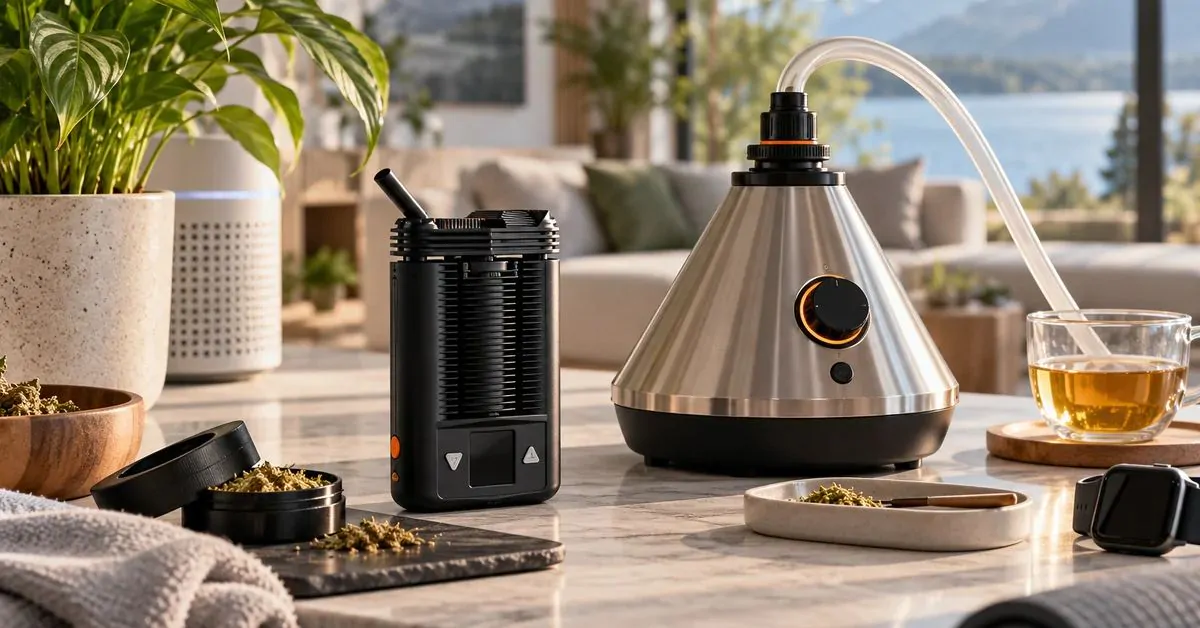
A prime example of this technological shift is the range of modern botanical office systems, such as the Storz & Bickel vaporizers. Whereas older methods relied on combustion — producing smoke, ash, and unwanted toxins — these engineered units use a highly precise hybrid heating system. By combining convection (hot air passing through the material) and conduction (direct heat from the chamber walls), the device heats materials to exactly the temperature required to release pure, active vapors without burning them.
For those taking charge of their health through wellness practices and for individuals who need to keep their airways clear for medical reasons, this level of control changes the game. Temperature tuning, accessible via a digital touch interface or a smartphone app, allows targeted extraction of specific plant compounds. This kind of technology makes it easier for everyone to enjoy the natural benefits of plants safely and effectively.
The rise of connected-home wellness solutions
Our living spaces are becoming active players in our health journey. Beyond what we wear on our wrists, the everyday devices we interact with are getting significant health upgrades in modern American homes.
Take the evolution of the connected bathroom. Companies like Withings, a pioneer founded in France, have developed advanced smart scales that do far more than measure weight. When you step on these scales, they send a safe, low-level electrical current through your feet to gauge body composition, vascular age, and even nerve activity in your feet. This kind of data provides a holistic view of cardiovascular fitness and metabolic health.
Even our kitchens are evolving. High-tech mixers and Wi‑Fi-connected kitchen scales feed data into nutrition apps, helping you break down precisely the vitamins, minerals, and calories you consume. This level of granular information is especially helpful for people managing conditions like diabetes or hypertension.
Sleep technologies: transforming the one-third of our lives we often overlook
Although we spend about a third of our lives asleep, sleep is the most neglected pillar of good health. Inadequate sleep weakens the immune system, impairs cognitive performance, and increases the risk of chronic heart disease. Fortunately, sleep tech has come a long way since the early days of smartphone apps that only detected snoring.
Today, connected mattresses and specialized sleep-tracking devices provide a deep, actionable analysis of our nightly rest:
- Environmental adjustments: Connected beds dynamically modify firmness and temperature throughout the night based on your movements and biometric signals, helping you spend more time in deep sleep.
- Biometric tracking: Specialized sleep rings like the Oura Ring monitor resting heart rate, heart-rate variability (HRV), and temperature changes during sleep.
- Actionable insights: By synthesizing these data points, these devices deliver a daily readiness score that tells you when your body is primed for a tough workout or when it needs a proper rest day.
Instead of waking up groggy and wondering why, you get precise data to improve your sleep hygiene and daily routines.
Conclusion: A personalized, proactive future
The overarching theme of today’s health technology is the shift from a reactive system to a proactive one. We no longer need to wait until we feel ill to check in on our bodies. From the wristwatch that tracks heart rate during a morning jog along the Seine to home devices that ensure precise, toxin-free well-being, technology has made health management deeply personal and continuous.