
Back acne doesn’t only affect the face. Common among teens and for 20% of adults, these pimples can become very bothersome, especially when they spread to the back. Less accessible, back acne is tougher to treat and takes longer to heal—unless you change a few habits in the shower…
Having pimples isn’t a sign of poor hygiene, and suffering from back acne can be a real insecurity, especially in summer. But this skin condition isn’t hopeless, and a few simple habits are all it takes.
Back acne: a distinctive condition
Non-contagious dermatological condition, acne is characterized by oily skin and pimples. But when these papules and pustules appear on the back, deeper lesions can sometimes develop—tending toward cysts—that may eventually scar.
Acne results from an excessive production of sebum, which clogs the excretory canal of the pilosebaceous follicle. This skin reaction promotes the formation of comedones and the proliferation of bacteria known as Propionibacterium acnes, themselves responsible for inflammations, the dreaded red pimples. Other clinical forms of acne (microcysts or blackheads) appear when the follicle becomes excessively dilated and blocked.
A back acne outbreak generally appears on the scalp, face, neck, shoulders, chest, and even the back. Whether late-onset or not, back acne results from the same factors as facial acne, and the symptoms are identical: blackheads, inflammatory red or white pustules, nodules, and sometimes cysts. Yet this form of acne is often painful and more difficult to treat.
Treating back acne: simple daily habits
If you suffer from back acne, avoid especially:
- touching the acne pimples,
- any sun exposure,
- exfoliating scrubs,
- sauna sessions.
To reduce the risk of superinfection, opt for loose clothing, and wear clean underwear daily. If you need a bra, prefer strapless.
Wash your sheets regularly. After physical activity to reduce the risk of skin breakouts due to sweating, opt for a cold shower, avoiding the use of rich soaps.
Ending back acne by changing shower habits!
Under the shower, some hair-care products aren’t innocuous for people prone to back acne, notably the conditioners according to some dermatologists.
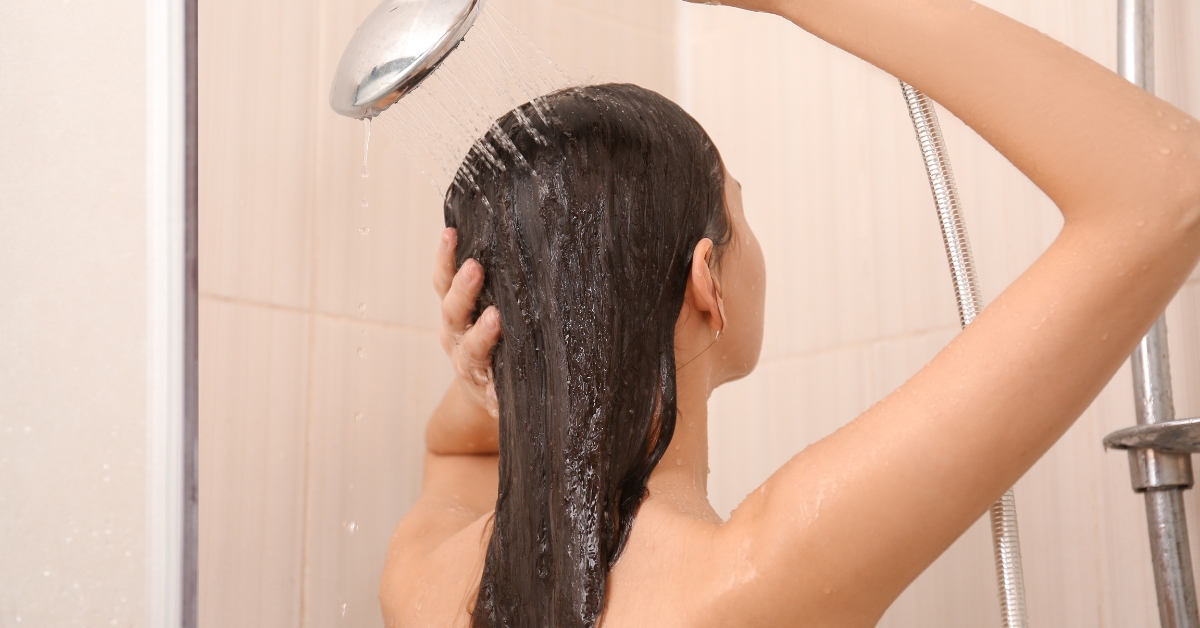
Generally, under the shower, we start by washing the hair, before washing the body while the conditioner works on the head. However, rinsing the conditioner after the shower leaves an oily residue on the back that coats and penetrates the skin: the oil in the conditioner enters through pores that are opened by a hot shower. This process clogs the sebaceous glands, promoting the activity of skin bacteria that can trigger acne.
To avoid this, it’s wise to rinse the conditioner before washing the body: once hair care is finished, tie your hair up with a clip before continuing the shower.
If you want to leave the conditioner on for a few minutes, you can also tie your hair back and wear a shower cap before washing your body. After the shower, simply rinse your hair, head tilted backward, to prevent water from touching the back.


An indulgent conditioner that adds shine to your hair and rehydrates in just a few minutes. A thicker, more luxurious formula!
Formulated to align with Slow Cosmétique principles, without silicones or synthetic ingredients. Very gentle.
To discover on Slow-Cosmetique.com