
Nature is right at your doorstep. France’s biodiversity is broad enough to spark wonder from season to season.
What Animals Can You Spot in Fall?
A magnifying glass, a pair of binoculars, sturdy shoes, a warm jacket, a big dose of patience, and that’s all you need for a whole autumn world to unfold before you. Discover which animals you might be lucky enough to observe this fall.
The Eurasian Eagle-Owl
Raptor whose females can reach up to 190 cm wingspan and about 2.5 kg, the Eurasian eagle-owl is a large owl you can spot in the fall as it finishes stocking up for the winter.
An opportunistic hunter, the Eurasian eagle-owl can be observed when it hunts from a perch, preparing to strike prey while it’s on a low branch or a rock. You’ll have a better chance of spotting it late in the day.
The Hedgehog

The hedgehog is a garden favorite and, above all, an excellent indicator of soil and crop health because it is highly sensitive to chemicals. A big eater of insects and slugs, in autumn the hedgehog starts looking for a place to spend the winter!
At the end of the day, simply listening can reveal the hedgehog rummaging through the fallen leaves, as it searches for food and for a spot to hunker down for the winter.
The Red Deer

Our European red deer, with males weighing up to 300 kg, is iconic of fall in our forests. It’s during this season that the males begin mating after starting to change their diet to prepare for winter.
It’s arguably the easiest animal to notice in autumn thanks to its calls, the rut, which it uses to challenge other males and protect its females.
The Stoat (Ermine)

The stoat is a mustelid (ferrets, badgers, weasels, etc.), particularly quick and playful. An excellent rodent hunter, it can also take on rabbits much larger than itself!
With winter approaching, the stoat begins to switch its coat to white to blend in with the snow. This is the moment to spot a little white fur ball streaking about.
The Black Redstart

This beautiful migrant has arrived in large numbers around here. The Black Redstart is a relatively fearless bird that frequents a variety of habitats, including human dwellings, their roofs, walls, and other ledges.
Insectivorous, the Black Redstart is often perched on something open, like a wire or a post, from which it surveys the ground around to find its food. That’s where you’ll have the best chance to observe it!
The Painted Lady

The Painted Lady is a butterfly of decent size, reaching more than 6 cm of wingspan, which makes it relatively easy to spot.
The Painted Lady is mainly found on certain nettles. If you’ve left nettles in your garden to boost biodiversity or to brew your own nettle tea fertilizer, you’ll see it.
The Brown Bear

Here is a majestic, noble animal that still roams our beloved Pyrenean mountains. Omnivore, the male bear can weigh between 80 and 230 kg and can stand up to about 2 meters tall on its hind legs. Observe from a distance.
Most active during dawn or dusk, in fall the bear prepares for winter by seeking a den; it will move much less, staying at its overwintering site, the ideal moment to observe it from afar.
The Red Squirrel

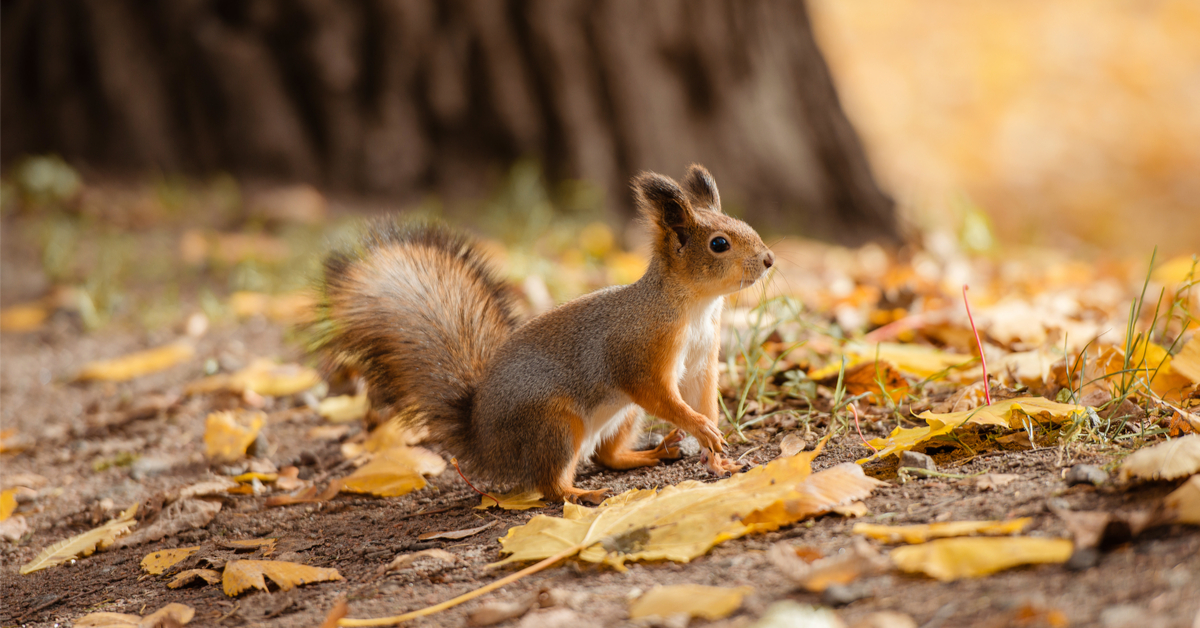
In autumn the red squirrel finishes stocking up for winter. It’s at this moment, burying acorns all around, that it plays its gardener role by dispersing tree seeds: some of them will be forgotten and grow into trees!
Often all you need to do is listen for a squirrel scolding you because you’re too close to “its” tree.
The Greylag Goose

Originating from northern Europe, greylag geese soar over France by the thousands in the fall. To expend less energy during flight, they fly in V-formations of 50 to 200 individuals.
Along their route, the greylag geese pause in wetlands to rest and feed before continuing.
The Dormouse

Here’s a small, very lively and clever rodent with a coat that’s lighter underneath and has a darker ring around the eyes. Quite sociable and often living in groups of dozens of individuals, the dormouse has now taken to living under our roofs.
Once autumn settles in, it enjoys apples to stock up fat reserves that will help it through winter; a great sight to observe quietly.


