
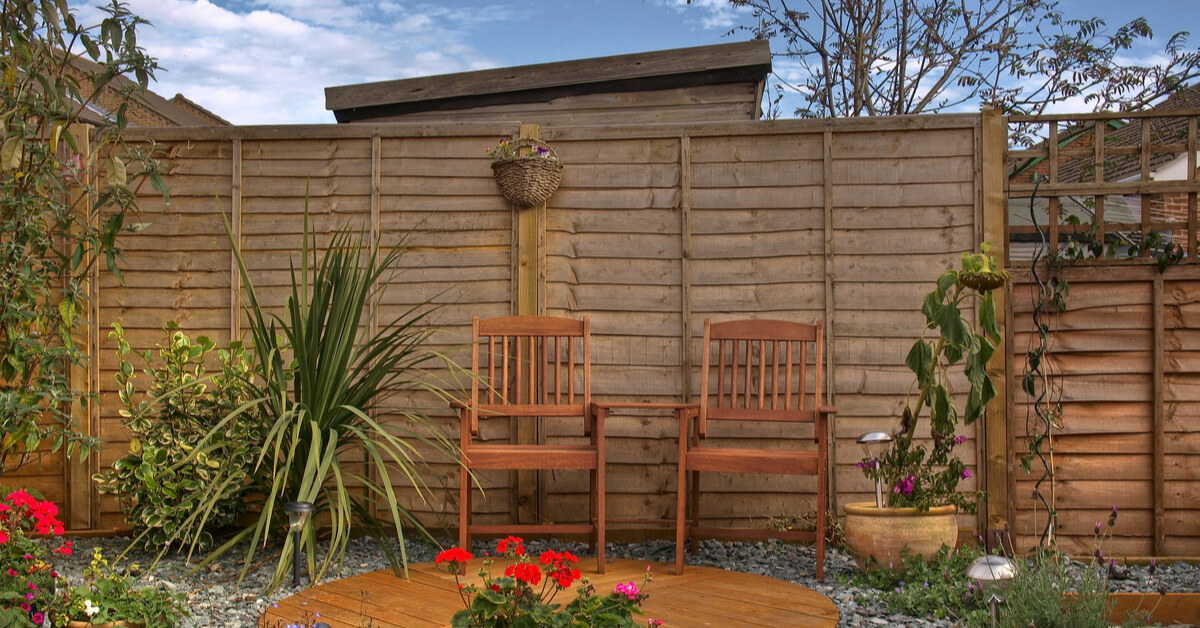
There are many ways to shield yourself from prying eyes. The most radical is to build a wall that blocks 100% of the view, but it isn’t always very aesthetic. The most natural option remains vegetation: hedges or climbing plants (preferably with evergreen foliage) along a fence will protect you effectively, but will require patience and maintenance. So, if you’re looking for a quick, effective, and eco-friendly solution, a privacy screen for isolating from view is ideal.
Our tips for choosing a privacy screen
There are privacy screens in all materials, shapes, and for all budgets. Here are our tips to help you navigate and beautify your garden, deck, or balcony.
Synthetic privacy screens
Synthetic privacy screens have plenty to offer. Manufacturers abound with ideas to fit every need and garden style: PVC lattice screens, synthetic hedges mimicking the natural look, polyethylene weaving, designer composite screens—the choices are wide.
They are also durable and easy to maintain, as they are chemically treated to withstand weather, fire, mold and other fungi.
Yet, the vast majority of synthetic privacy screens are made from PVC. Polluting during production, dangerous for people and the environment when burned, PVC is also nearly impossible to recycle completely.
It’s therefore better to choose natural solutions.
Privacy screens: natural solutions
For a discreet and natural aesthetic, opt for reed screens or heather brush bundles, which will shield you from nosy neighbors while blending gracefully into the arrangement of privacy-plants. They are sold as rolls to be laid against an existing structure and will last about 2 to 5 years.
Reed screens
Whether made from reeds, wicker, or pine bark, reed screens are a bundle of stalks held together by wire. The material choice will depend on the desired ambiance (lighter for reed, darker for wicker), but also on its location. Indeed, very fine reed will not withstand strong wind exposure. Reed screens provide medium opacity and let light through.
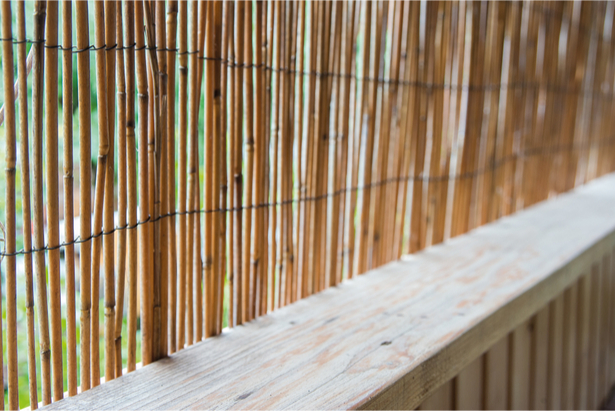
It’s the most economical solution, with rolls measuring 1 m by 5 m.
In the past, this material was used mainly in southern France as a cage for drying figs or for silkworm breeding.
Heather brush bundles and bamboo
If you want better opacity or if your privacy screen is exposed to stronger winds, it’s best to opt for a more resistant natural solution like heather brush bundles or bamboo. The system of stems linked together by wire is the same as reed screens, but the thickness of the stems gives greater robustness.
More eco-friendly, heather brush bundles are typically made from shoots gathered in forests. Bamboo, on the other hand, adds a touch of exotism and near-total privacy thanks to its tighter mesh.

Thanks to this practical guide, transform your terrace, balcony, or even a windowsill in an urban setting into a true living space welcoming flowers, birds, insects…
This very accessible and richly illustrated work guides you step by step.
Discover it on Cultura
Installing a natural privacy screen
Reed screens, heather brush bundles, and bamboo privacy screens are relatively simple to install, but they require the beforehand installation of a solid frame. This could be posts with taut wires for a balcony, or a mesh or a fence for a larger area in a garden.
For mounting against a mesh, fasten a wire every ~50 cm (in height and width). For a more natural look, choose a wire color that matches your privacy screen.
Natural privacy screens thus offer a varied range to suit every situation. They require no special maintenance, are economical and easy to install. But they are more sensitive to weather and have a relatively short lifespan. They therefore need to be replaced regularly.