
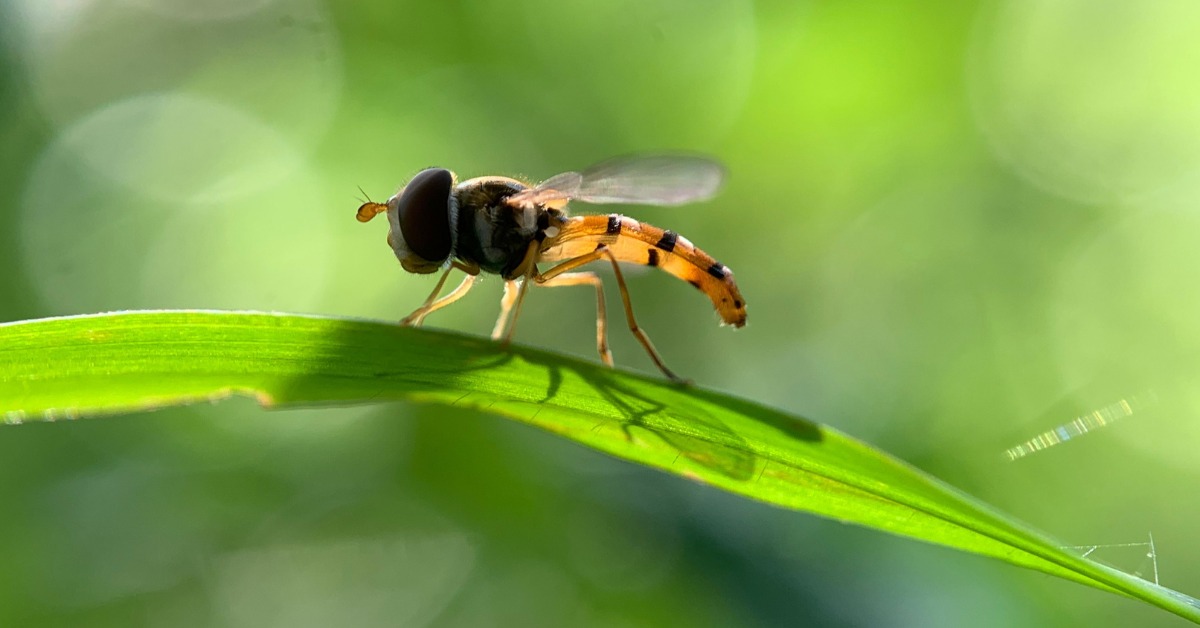
Inspired by the British program “Bugs Matter,” this device aims to fill a crucial data gap on flying insects, essential to the proper functioning of ecosystems.
“Insects Matter!” A National Mobilization
The progressive disappearance of flying insects, documented in numerous studies, worries scientists as well as public authorities. In France, the National Museum of Natural History is launching an unprecedented program called “Insects Matter!” with the aim of reliably measuring the evolution of flying insect populations. This initiative takes place against an international backdrop of repeated warnings about insect declines. Some estimates suggest declines of up to 50% in Europe over several decades. Yet data remain fragmented, underscoring the need for standardized protocols accessible to the general public.
The “Insects Matter!” program rests on a simple principle: involve citizens in collecting scientific data. Specifically, participants are invited to conduct standardized observations, notably during car journeys, to measure the impact of insects on defined surfaces. This approach yields homogeneous and comparable data over time. The methodological choice is not trivial. Indeed, the lack of long-running series is one of the main obstacles to understanding insect declines. By mobilizing a broad public, the program hopes to multiply measurement points and cover the entire French territory. The double objective is to refine scientific knowledge and raise public awareness of the importance of insects in ecosystems.
The Legacy of the British program “Bugs Matter”
The French initiative directly draws inspiration from the British program “Bugs Matter,” regarded as a pioneer in the field. Launched by the Buglife organization with the support of the Kent Wildlife Trust, this system uses plaques mounted on vehicles to measure the number of insects struck during trips. The results obtained in the United Kingdom highlighted concerning trends: by comparing data collected over several years, researchers observed a significant decline in flying insect abundance. These valuable data helped alert public opinion and decision-makers to the urgency of the situation.
This British experience represents a real open-air laboratory. It demonstrates that high-quality scientific data can be produced at scale, provided that simple and rigorous protocols are in place. This approach could eventually be deployed in other countries.
Flying Insects Provide Essential Ecosystem Services
Beyond measuring their abundance, the main challenge lies in the crucial roles insects play in ecosystems. Flying insects indeed perform indispensable functions, notably pollination: nearly 75% of agricultural crops depend at least in part on animal pollination.
This contribution is far from marginal. It directly underpins global food production and the diversity of crops. Without pollinating insects, many plants could not reproduce, leading to cascading consequences across all food chains.
But their role does not end there. Insects also participate in the decomposition of organic matter, nutrient recycling, and the control of pest populations. They also serve as a vital food source for many species, including birds and small mammals.
In this context, their decline represents a systemic threat. The gradual disappearance of insects could lead to a deep ecosystem imbalance, with major economic and health repercussions. Moreover, insect biodiversity is vast: more than one million species have been described to date.