
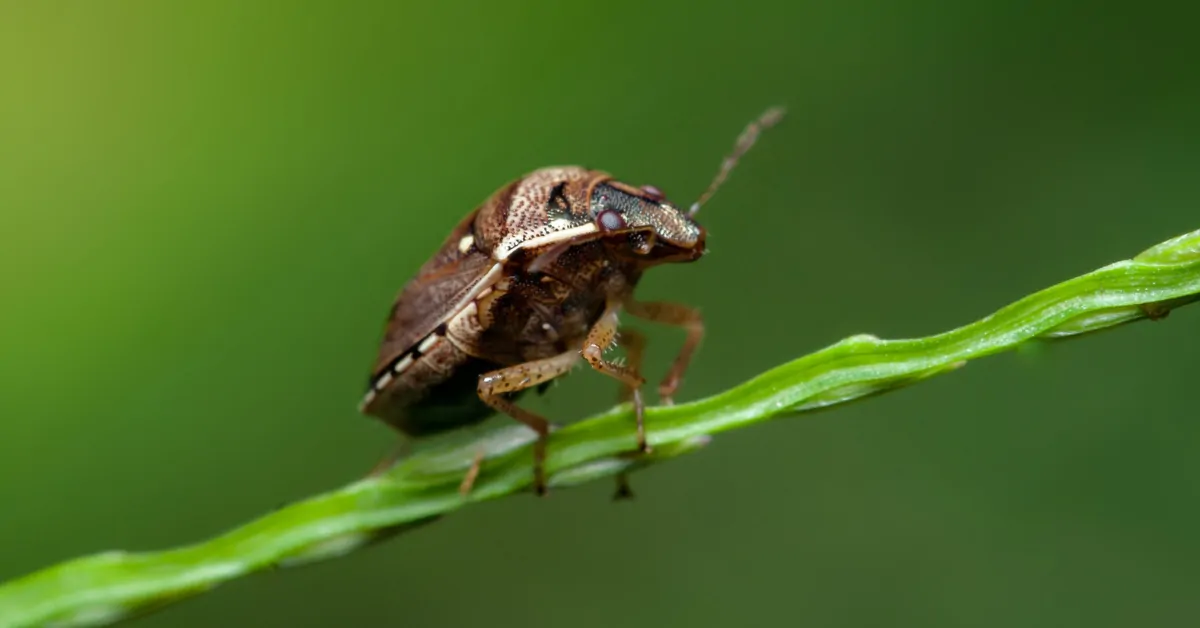
With climate change and the increasing movement of people and goods, animals and plants are establishing themselves in environments where they did not exist before. This is the case with the brown marmorated stink bug, which has taken hold in Europe and in France.
Here, it does nothing more than what all living beings do: feed and multiply. And that naturally raises certain problems… So how can we limit its damage in the garden, but also prevent it from entering the house?
Who is the brown marmorated stink bug, or Asian stink bug?
If we talk about “getting rid of” an animal, the first thing to know is who we’re talking about. And why should we get rid of it?
The brown marmorated stink bug is not a native bug: it hails from Asia and is an invasive exotic species. By contrast, unlike the bed bug, which can bite, it does not feed on blood.
Also called the Asian stink bug, it was detected in Europe as early as 2004, and in France in 2012. The brown marmorated stink bug (Halyomorpha halys) has the unfortunate habit of seeking refuge in our homes to spend the winter.
The adult measures about 12 to 17 mm and displays a brown marbled coloration. Its antennae bear light bands, while the edges of its abdomen alternate light and dark bands.
These cues aren’t always enough to identify it. To avoid confusion, discover the differences between clouded and diabolical bugs: the first is a native species.
But make no mistake, it does not bite and does not transmit known human diseases. It also does not fly off with food from the fridge. However, it can emit an unpleasant odor when threatened or when crushed.
What makes the brown marmorated stink bug truly troublesome is its impact on crops such as grapevines, corn, and fruit trees. It can cause damage that would anger even the most peaceful farmer.
How to limit the damage of the brown marmorated stink bug in the garden?
That’s arguably the most tangible problem: garden damage. Like other plant-feeding bugs, the brown marmorated stink bug simply feeds. But their piercing-sucking actions can cause blemishes and deformities on fruit.
Moreover, it feeds alongside other pests that typically show up on site… When added together, these damages become problematic.
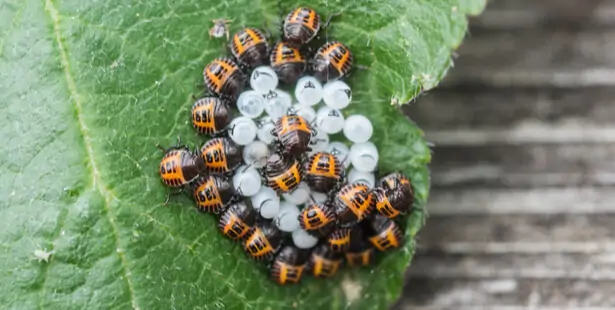
On a small plot, targeted hand-picking is a first step. Regularly inspect the plants and the undersides of leaves. Remove adults, nymphs, and eggs only after proper identification: not all garden bugs are harmful.
You can drop the identified bugs into a container with a little soapy water, placed under the branch. This method avoids spraying all the plants.
Soap soaps are often recommended, but they are not a miracle solution for adult bugs. Insecticidal soaps mainly affect the younger stages directly touched. Therefore, avoid repeated, indiscriminate sprays, which can also harm beneficial insects or damage plants.
A properly installed insect mesh can also protect sensitive crops. Check that no stink bug is trapped underneath, and adapt its use to the pollination needs of the plants.
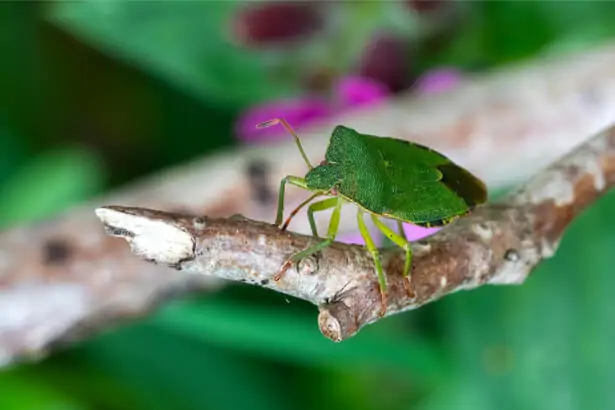
If you’re more certain you’re looking at a native species, check out our tips for keeping wood-boring bugs away.
How is the organic farming world arming itself?
While garden stings account for many species, some of them even help us. Predatory stink bugs can be allies in biological control: they feed on other insects. The brown marmorated stink bug, however, tends to complicate the picture.
The agricultural sector is not spared by this invasive insect and is looking for control methods compatible with organic farming. Among the avenues studied are protective nets and parasitoid insects, which develop by attacking the eggs of stink bugs.
This is notably the case for Anastatus bifasciatus and several species in the genus Trissolcus. The “samurai wasp,” Trissolcus japonicus, has been identified in Nouvelle-Aquitaine after collections in 2022 and 2023.
This approach is promising, but it does not by itself guarantee the disappearance of the pest. Releases are part of supervised programs: it is not a good idea to introduce an exotic insect into your own garden.
What to do to keep the brown marmorated stink bug out of your home?
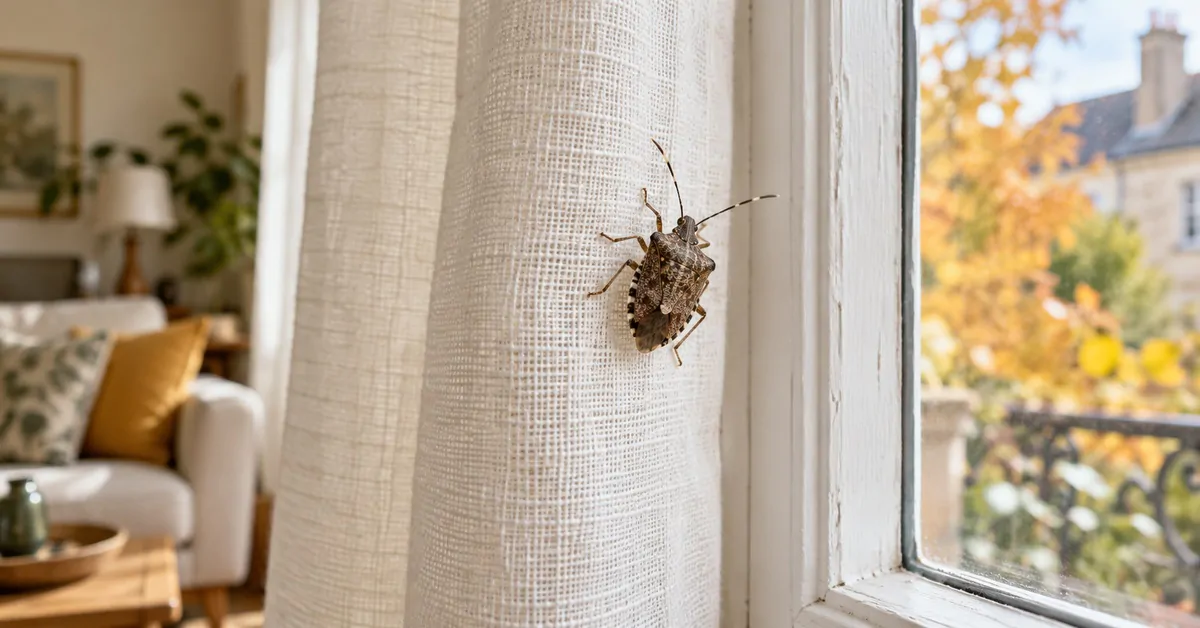
If you’re in a place where diabolical stink bugs are abundant, you can easily find dozens, or even hundreds of specimens inside your home. They’re seeking shelter to overwinter. There, their presence becomes a problem!
The simplest solution is to equip your windows with well-fitted screens. Also check the seals around doors and windows, as well as cracks and cable entries. Do not seal off the ventilation openings essential to the home.
For a deeper approach, find detailed steps to block stink bug entries in the autumn.
Essential oils of peppermint or crushed garlic are often recommended. Their effectiveness as a lasting barrier, however, has not been firmly established: it’s better to start by closing the access points.
Adults overwintering in your home typically do not reproduce there. Their presence does not automatically mean that eggs will overwhelm your furniture or curtains.
If you instead observe nocturnal bites, don’t conclude that you are dealing with brown marmorated stink bugs. Our guide explains when to call a professional for bed bugs.
Good to know: avoid crushing them
Crushing a stink bug can trigger the release of odoriferous compounds. The brown marmorated stink bug is no exception!
For a few individuals, use a glass and a card to capture them without crushing. If there are many, a vacuum can remove them, but its bag or canister may retain their odor.
Avoid flushing them down the toilet: pouring gallons of potable water to eliminate a bug isn’t very effective. For a few bugs inside the home, it’s also unnecessary to pile on insecticides: focus on removal and closing access points.
Key takeaways
- The brown marmorated stink bug is an invasive species that can damage fruits and vegetables.
- It does not bite and does not transmit known diseases to humans, but it can emit an unpleasant odor.
- In the garden, prioritize identification, targeted removal, and physical protections rather than broad-spectrum spraying.
- In the home, well-fitting screens and good seals help limit entries in the fall.
House pests: can they lay eggs and multiply in your home?