

A fly buzzing around the table, landing on food or hovering near your ears quickly becomes irritating. Yet, there’s no need to reach for an insecticide bomb right away. The best strategy is to remove what attracts flies, then block their entry.
Screens, clean trash cans, protected fruit, well-balanced compost… Several simple actions can limit their presence. Some aromatic plants can complement this prevention, provided you don’t treat them as miracle cures.
Why do flies enter the house?
Flies mainly seek food and places suitable for laying eggs. They’re drawn to ripe fruit, sugary drinks, food scraps, trash, and certain moist organic matter.
Larvae typically develop in decomposing matter. Depending on the species, they can proliferate in a trash can, an overly damp compost pile, a clogged drain, or soil that remains constantly wet.
Beyond the nuisance, house flies can carry microorganisms between waste, excrement, and food. So it’s best to cover dishes and clean surfaces where they have landed.
The most effective actions to prevent an invasion
Before testing a natural repellent, start by removing attraction sources. This approach requires little equipment and avoids dispersing insecticides inside the home.
- Clean up crumbs and spilled liquids promptly, especially fruit juice, soda, wine, or beer.
- Don’t leave dirty dishes out in the open for several hours.
- Store foods in sealed containers or under a cloche.
- Keep very ripe fruit in the fridge or cook it promptly.
- Regularly empty the trash and clean its lid and walls.
- Rinse bottles, cans, and packaging destined for recycling.
- Promptly pick up pet waste in the yard.
- Clean drains and fix leaks that maintain persistent humidity.
These preventive measures take priority. Insecticides rarely become necessary once breeding sites and food sources have been removed.
Install screens in strategic places
Screens provide a simple, durable, non-toxic barrier. Prioritize installing them on kitchen, bedroom, and rooms near a compost bin.
Regularly check their condition. A small tear is enough to allow several insects inside. You can also hang a screen door curtain in front of a frequently opened doorway.
In the evening, avoid leaving a well-lit window wide open without protection. Many insects can be drawn to indoor light.
Use a fan during meals
Flies dislike steady air movement. A fan directed over the table can discourage them from landing during a meal.
This solution doesn’t fix the underlying cause of an invasion, but it’s useful on a patio or in a well-ventilated kitchen.
Compost: how to avoid attracting flies?
A well-managed compost should not emit a strong putrid odor. If flies are multiplying around the bin, the mixture is often too damp or too rich in kitchen waste.
After each addition, cover scraps with a dry layer. Use, for example, dry leaves, wood chips, unprinted brown cardboard, or small branches.
Also consider:
- shred waste into small pieces;
- stir the materials regularly;
- avoid large piles of very ripe fruit;
- check the moisture level of the mix;
- keep the lid securely closed.
Place the compost bin a reasonable distance from doors and windows, without relegating it to the far end of the yard. It should remain accessible for monitoring and turning.
Identify the small flies to trace their origin
Not all “little flies” come from the same place. Identifying where they concentrate helps you act more effectively.
- Around the fruit bowl: check for overly ripe fruit, bottles, and the recycling bin.
- Near the sink: clean the drain, trap, and residues in the piping.
- Around plants: let the soil surface dry between waterings.
- Near a trash can: wash the bin, its lid, and the floor underneath.
The right reflex
If insects reappear despite cleaning, look for a hidden source: food fallen behind furniture, forgotten bag of potatoes, dirty litter, or a clogged waste line.
How to chase flies away naturally?
Once attraction sources are removed, a few natural solutions can reinforce prevention. Their effectiveness, however, varies by species, room, and the level of invasion.
Basil and mint by the windows
Place a pot of basil on a windowsill or near the kitchen table. Its strong scent can bother certain flies.
You can also try mint. Crumple a few leaves to release their aroma, then replace them when they start to dry.
These plants won’t be enough to stop a true infestation. They offer a pleasant, decorative, and chemical-free option.

Lemon and cloves
Cut a lemon in two and stud the pulp with a few cloves. Place it near a window or on the table, away from children and pets.
This traditional trick can help mask food odors. Its repellent effect, however, remains variable. Replace the lemon as it dries out or begins to mold.
Lemon geranium and marigolds
Lemon-scented geranium can be set on a balcony or windowsill. Its fragrant foliage pairs well with a screen.
Marigolds also provide a strong smell and color. Yet again, these plants should be considered as a complement to proper hygiene.
Fresh tansy, with caution
The insect-repellent properties of tansy have traditionally been used to repel certain insects.
A small fresh bouquet can be placed near a window, out of reach of children and animals. However, do not ingest the plant and do not make concentrated preparations yourself.
Does white vinegar really scare flies away?
White vinegar remains useful for cleaning surfaces, trash cans, and some food residue. However, its effectiveness as a repellent isn’t guaranteed.
Heating vinegar in a closed room is discouraged. The vapors can be unpleasant and irritating. It’s best to use it diluted for cleaning, then ventilate the room.
Be careful not to confuse uses. Fruited vinegars can, on the other hand, attract fruit flies when used as bait in a trap.
Make a trap for fruit flies
If small fruit flies swirl around fruit, start by discarding or cooking overly ripe foods. Then clean the bowl and recycling containers.
You can then make a quick trap:
- Pour a small amount of apple cider vinegar into a small jar.
- Add a drop of dishwashing liquid.
- Cover the container with a piece of paper pierced with a few small holes.
- Place it near the affected area, out of reach of children and pets.
This trap mainly targets fruit flies. It will be less effective against larger houseflies. Do not leave it out permanently, as its odor may attract other insects.
Essential oils against flies: precautions
Peppermint, lavender, or citronella essential oils are sometimes marketed as natural repellents. Yet, “natural” does not mean harmless.
The Anses agency reminds that some essential oils can cause respiratory or skin irritations. Their diffusion requires genuine caution.
Precautions with essential oils
Avoid diffusion in the presence of a baby, a pregnant woman, someone with asthma, or an animal. Always follow the product instructions and consult a professional.
Never apply a pure essential oil on an animal’s skin or fur. Do not spray it on its bedding, litter, or in a closed space without veterinary advice.
Sticky traps, fly swatters, or carnivorous plants: which to choose?
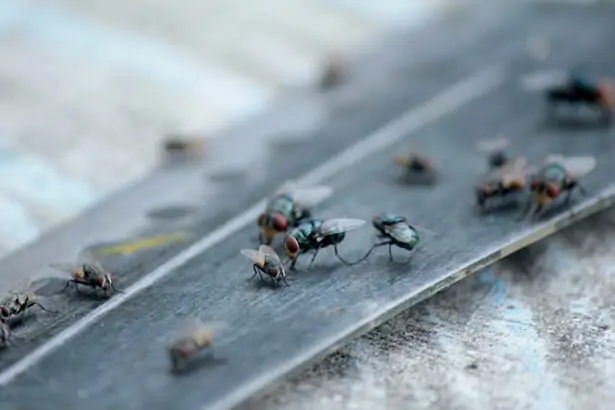
Sticky paper can capture a few flies, but it’s often not aesthetic and is non-selective. Place it away from foods and out of reach of children.
For a single fly, a glass and a rigid sheet can often trap it and release it outside. A fly swatter remains a simple mechanical solution when the insect just won’t exit.
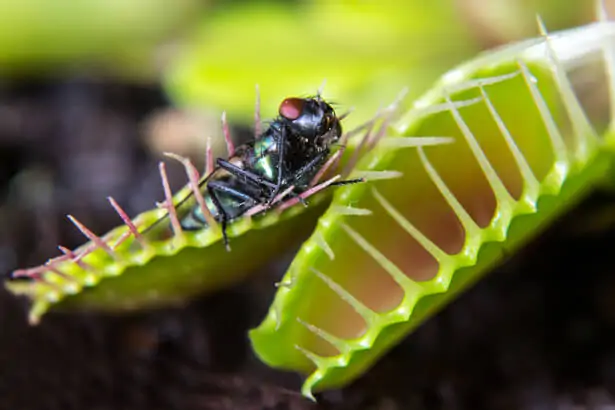
As for carnivorous plants, they attract certain insects to supplement their nutrients. They are fascinating, but they do not consume enough flies to sanitize a room.
If flies remain numerous despite all these measures, locate their breeding site. A persistent infestation can reveal a faulty drain, an inaccessible waste, or a sanitation issue.
Updated July 2026
- https://www.anses.fr/fr/system/files/MIC2012sa0005Fi.pdf
- https://www.epa.gov/sites/default/files/documents/Module08.pdf
- https://www.anses.fr/fr/content/huiles-essentielles-risques-et-precautions
- https://www.anses.fr/fr/content/sprays-et-diffuseurs-base-dhuiles-essentielles-lanses-appelle-la-vigilance