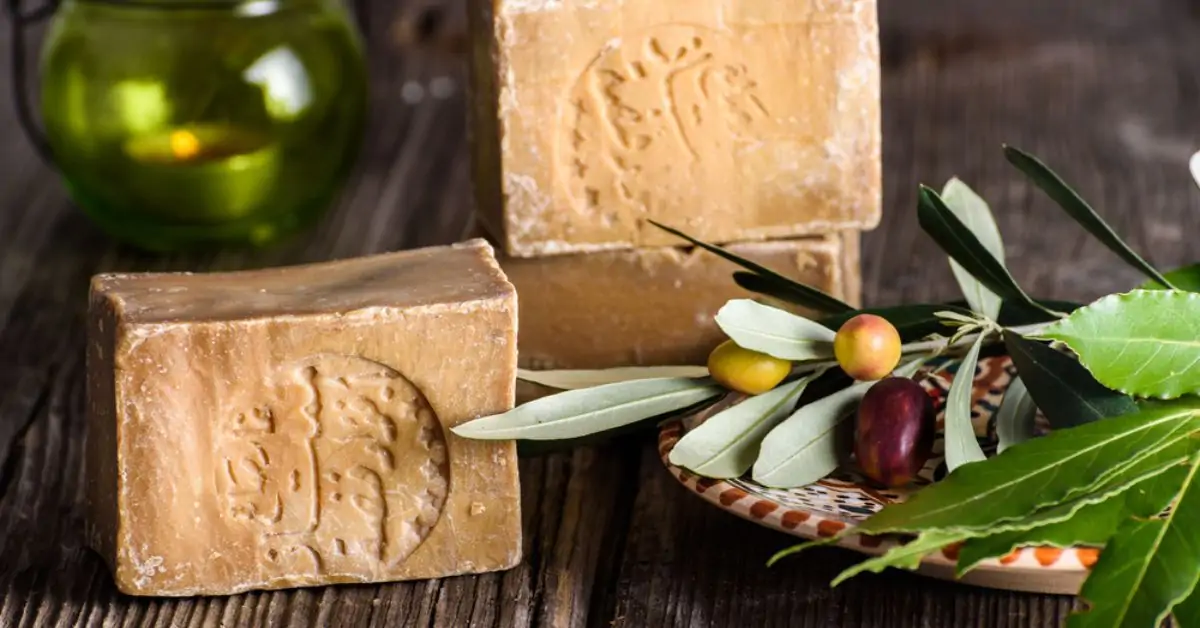
Aleppo soap captivates with its short ingredient list, its solid bar format, and its centuries-long history. But not all products bearing this name respect the traditional recipe. To avoid imitations and soaps enriched with superfluous ingredients, it’s best to learn to read the label rather than rely on color, price, or seal.
Key takeaways
- A traditional Aleppo soap combines mainly olive oil and laurel berry oil.
- A high percentage of laurel does not automatically guarantee superior quality.
- The seal, the color, and the ability to float are not enough to prove authenticity.
- The ingredient list and the producer’s traceability remain the most reliable criteria.
Aleppo Soap, an Ancient Craft
Originating from Syria, Aleppo soap is crafted according to a traditional method passed down through generations. This know‑how around the Aleppo soap craft was inscribed in 2024 on the UNESCO list of intangible cultural heritage.
Its production relies on the saponification of vegetable oils with an alkaline agent. The historic recipe combines mainly olive oil, laurel berry oil, and water.
After cooking, the dough is poured, cut into bars, and stamped. The soaps then dry for several months. This drying period causes them to lose part of their water and explains their brown exterior. When cut, the center may remain greener.
This traditional product is valued for cleansing, but also for certain household uses. You can find its various applications in this practical sheet devoted to Aleppo soap.
Aleppo Soap: True or False — Start by Reading the Label
The product’s success has driven the marketing of soaps far from the traditional recipe. Some contain other vegetable oils, fragrances, colorants, or various additives.
They are not necessarily dangerous when they comply with regulations. However, their presentation can foster confusion with the soap made using the Aleppo method.
As short a formula as possible
The first instinct is to look for the INCI list, the regulatory ingredient list. For a cosmetic soap sold in the European Union, it must appear on the packaging or be accessible before purchase online.
Depending on how the manufacturer reports the ingredients, you may find designations such as:
- olive oil or saponified olive oil;
- laurel berry oil or its saponified form;
- water;
- the alkali used for saponification;
- optionally the salt used during production.
A traditional recipe normally requires neither added fragrance nor color. A vivid green color or a strongly scented aroma should prompt you to examine the composition carefully.
The presence of palm oil, coconut, or copra indicates a different recipe. These oils can yield a perfectly functional soap, but it no longer matches the traditional Aleppo formulation.
To better understand the qualities of the original recipe, also consult the uses and features of Aleppo soap.
Lye is not a criterion to assess with a simple percentage
The old advice to look for less than 0.5% lye is too simplistic. Lye is used to transform oils into soap during saponification. In a properly formulated and sufficiently refined product, it should not remain in a form that could irritate the skin.
Its presence in the list of ingredients does not necessarily mean the soap contains free caustic lye. Conversely, a consumer cannot gauge the quality of saponification by looking at the label alone.
Favor a product that complies with European regulations, with a batch number, the identity of the person responsible, and clearly indicated contact details.
What Laurel Oil Percentage Should You Choose?
Contrary to a commonly repeated idea, a soap containing less than 15% laurel oil is not necessarily an imitation. The laurel oil percentage varies depending on the recipe and the intended uses.
A higher percentage often increases the product’s price, since this oil is more expensive. It does not, however, guarantee better tolerance or higher medical efficacy.
For daily use, a low to medium laurel content may suffice. Formulations richer in laurel often emit a stronger fragrance. They may not be suitable for more reactive skin.
Do the Seal and Color Prove Authenticity?
The traditional loaf typically bears an Arabic stamp corresponding to the soapmaker or workshop. This seal is a helpful clue, but it can be reproduced. It never replaces a careful label review.
Similarly, a bronze-gold surface and a green core can be compatible with traditional drying. However, the shade depends on the composition, the refining duration, and storage conditions.
Finally, the famous “float test” for soap is not an absolute proof. Its density depends on moisture content, aging, and formulation.
The Right Criteria for Choosing an Aleppo Soap
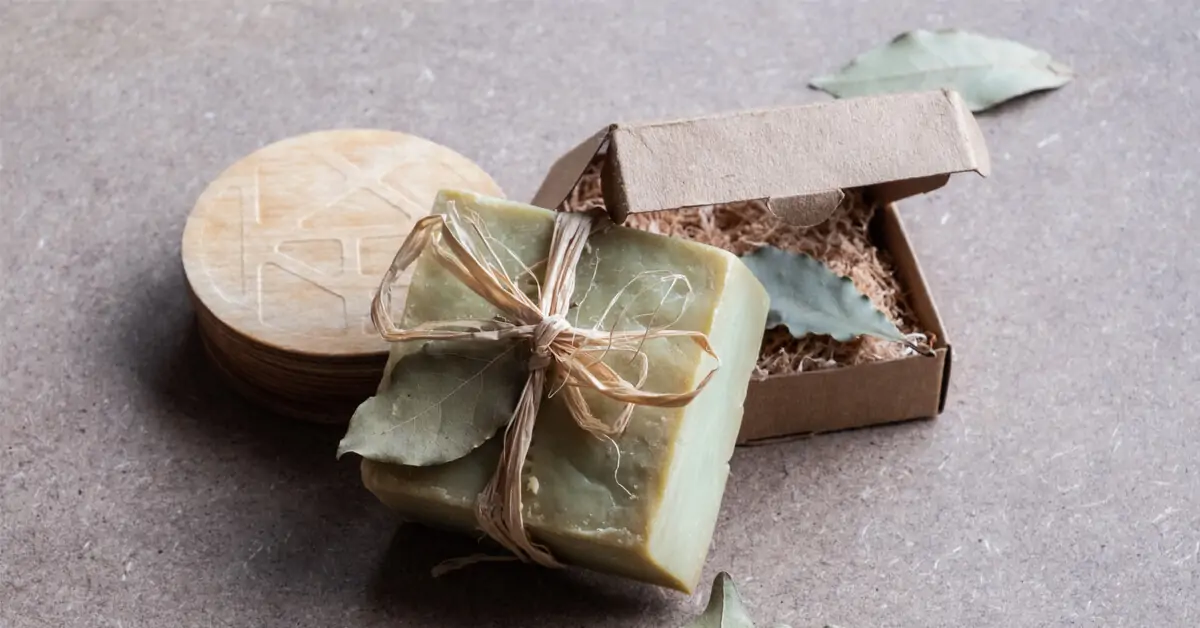
When purchasing, check several additional elements:
- a short, understandable ingredient list;
- the actual presence of olive oil and laurel berry oil;
- the country of origin and, if possible, the exact place of manufacture;
- the name and contact details of the manufacturer or the European responsible party;
- a batch number to ensure traceability;
- a clearly stated laurel percentage when it’s used as a selling point;
- the absence of fragrance or dye if you are seeking the traditional recipe.
A price that is unusually low should also raise your awareness, though it does not by itself prove counterfeiting. Cost depends on weight, laurel content, drying time, and distribution chain.
The “organic” label also deserves verification. It should be backed by identifiable certification. An organic ingredient does not automatically mean the entire soap is certified.
Aleppo Soap and Sensitive Skin: A Few Precautions
Natural does not mean hypoallergenic. Laurel oil may not suit every skin type. Before first use, test the soap on a small area and space out washing if your skin feels tight.
Avoid eye contact and rinse thoroughly. For very dry, mature, atopic, or baby skin, a gentle fragrance-free cleanser may be preferable. Seek advice from a doctor or pharmacist if in doubt.
Do not leave the soap on the face for several minutes like a mask. This practice risks increasing dryness without proven benefit.
Good to know: For acne-prone skin, it is recommended to choose an Aleppo soap containing laurel oil concentration of at least 20% to 35%. Used daily for facial cleansing, it leaves the skin clean, soothed and visibly healthier over weeks.
A Solid Soap with Multiple Uses
A well-chosen Aleppo soap can serve for hand and body washing, if your skin tolerates it. Some people also use it for shaving or occasionally as a shampoo. Its alkaline pH can, however, make hair feel coarse or irritate the scalp.
At home, it can be grated in small quantities to wash certain textiles or remove stains from clothes. Always test the product on a less visible area, especially with wool, silk, and fragile colors.
It should not be marketed as a disinfectant. For situations requiring real disinfection, use a product designed for that purpose.
Its solid format generally helps limit packaging and makes it easy to portion the amount used. Its environmental footprint, however, depends on the origin of the oils, manufacturing, transportation, and packaging.
Compared with an authentic Marseille soap, you can also turn to Aleppo soap. Both products have distinct recipes and traditions.
The right move
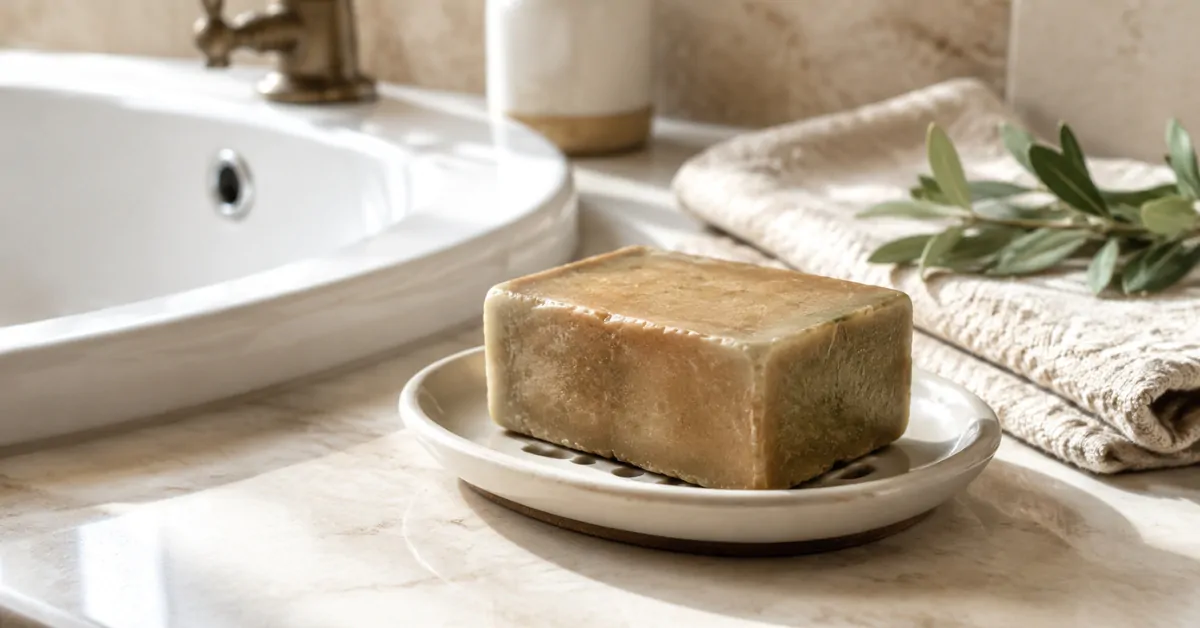
After each use, let the bar dry on a well-drained soap dish. It will last longer and maintain a pleasant texture.
To go further, also discover the benefits, uses, and tips around Aleppo soap.