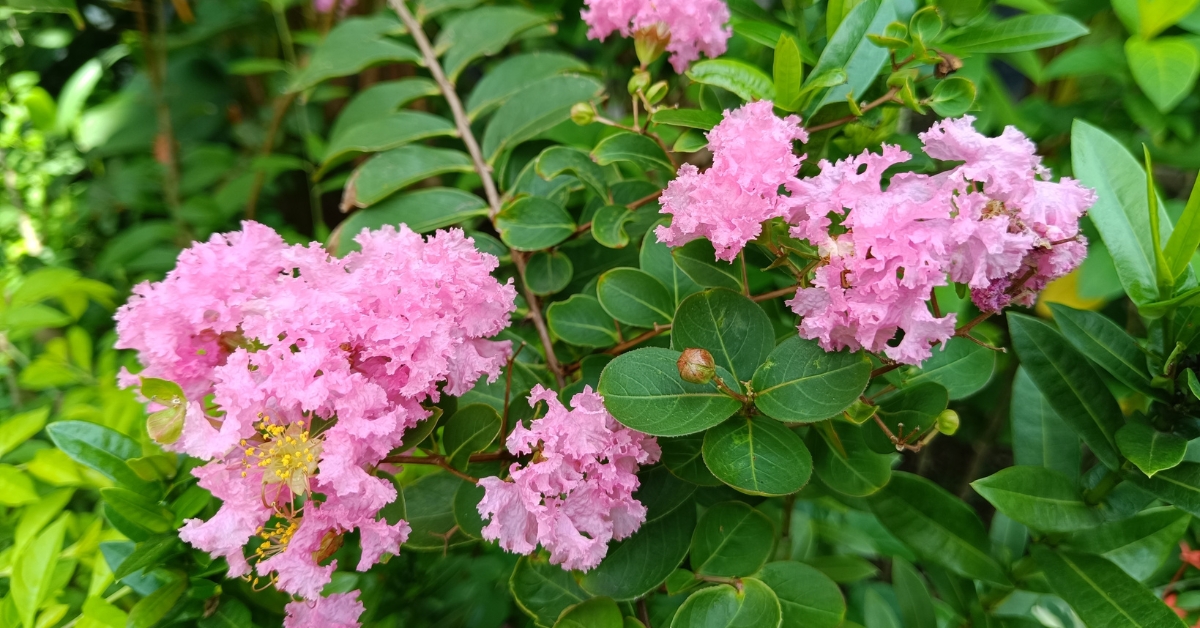
Crepe myrtle isn’t really a lilac, but its blooms are just as spectacular. Easy to live with, sturdy, and highly decorative, this shrub has everything to win over gardeners craving a colorful, low-maintenance garden.
If you’re after a hardy shrub, easy to prune, and offering a generous flowering, the crepe myrtle, also known as summer lilac, ticks all the boxes.
Crepe Myrtle: A Beautiful, Tough Shrub
The Lagerstroemia indica stands out for its remarkable adaptability. It tolerates winter lows down to about 14°F, and in exceptionally mild winters it can occasionally withstand lows around the mid- to low single digits below freezing.
It also tolerates coastal exposures, which makes it a valuable ally in many regions. However, to fully enjoy its bloom, it must be planted in full sun.
Not picky about soil type, but hates soils that are very calcareous. Good news: its moderately deep root system allows container growing, ideal for balconies and small gardens.
How to Plant Crepe Myrtle Successfully
Planting is a key step to ensure a beautiful bloom. Plant your shrub in spring or fall, in a location sheltered from wind and bright with sun.
Well-drained soil is essential: if your soil is heavy, add sand or compost to improve structure. Mulching at the base helps retain moisture and protect roots in winter.
Crepe Myrtle Pruning: The Move That Makes All the Difference
Pruning is decisive for achieving abundant flowering. It’s done in March or April, before new leaves appear.
You can prune the shrub back by two-thirds without fear: this stimulates new flowering shoots. An alternative is to prune above the 5th or 6th bud, with just as satisfying a result.
In summer, a light pruning helps air out the center of the shrub, improving growth and reducing disease.
A Colorful Show All Summer Long
Crepe Myrtle offers an impressive palette: white, pink, red, purple… Its blooms extend from July through September, bringing an exotic touch to the summer garden.
In autumn, the show continues with foliage shifting from deep green to fiery hues. A true decorative asset across multiple seasons.
Natural Tip: Boost Bloom Without Chemical Fertilizers
To encourage even more generous blooms, there’s no need to resort to synthetic fertilizers. A simple application of mature compost in spring will feed the shrub for the long term.
Another effective option: mulch with fallen leaves or shredded branches. It gently enriches the soil while limiting water evaporation.
Finally, regular watering during the first year is crucial to ensure a good establishment. Once well established, crepe myrtle becomes particularly drought-tolerant.