

Jellyfish can be a bane for beachgoers, often causing very painful injuries. In most cases, the reaction stays localized. However, certain symptoms should prompt you to call emergency services immediately.
After a jellyfish sting, the right reflexes help limit venom release and ease the pain. Conversely, freshwater, rubbing, or improvised remedies can worsen the reaction.
Jellyfish Sting: What to Do Right Away?
The burning sensation is caused by tiny stinging cells on the tentacles. Some may remain attached to the skin after contact. You should therefore act gently to avoid releasing more venom.
Get Out of the Water and Seek Help
Move away immediately from the area where the jellyfish are. If the pain is intense, ask for help to exit the water. A sudden reaction can trigger panic and increase the risk of drowning.
At a guarded beach, head to the lifeguard station. Lifeguards are usually familiar with the species present and the appropriate first aid steps.
Rinse Only with Seawater
Rinse the area thoroughly with seawater, if possible warm, or with saline solution. Do not direct a strong jet onto the skin.
Freshwater should be avoided. It can cause the still-intact stinging cells to rupture and release more venom.
Remove Tentacles Without Rubbing
Carefully remove the visible filaments with tweezers. You can also use the edge of a rigid card. Wear gloves if you have them, and never touch the fragments with bare hands.
If necessary, sprinkle dry sand on the area. Let it dry for a moment, then very gently scrape with a rigid cardboard. Rinse again with seawater afterward.
Using Heat to Ease Pain
Once the tentacles are removed, immerse the area in warm water that is tolerable to touch, or apply a warm compress. Do this for about 20–30 minutes.
The water should never be hot enough to burn the skin. If you don’t have access to warm water, continue to rinse gently with seawater.
After the initial care, seek advice from a pharmacist or a physician if pain persists. Avoid applying creams, ointments, essential oils, or antiseptics without professional guidance.
Call 911 or your local emergency number if you have trouble breathing, feel faint or dizzy, start vomiting, lose consciousness, have palpitations, or experience very intense pain. A sting that is widespread, affects the face, mouth, or areas near the eyes also requires urgent medical attention.
Jellyfish Sting: What Not To Do
Some reflexes can promote venom release, irritate the skin further, or trigger an infection. After a sting, avoid:
- rinsing the area with freshwater;
- rubbing the skin with a hand, towel, or clothing;
- touching the tentacles with bare hands;
- incising the wound or attempting to make it bleed;
- sucking the wound to remove venom;
- placing a tourniquet;
- applying alcohol, hand sanitizer, bleach, or lemon;
- placing ice directly on the skin;
- using a home remedy without knowing the responsible species.
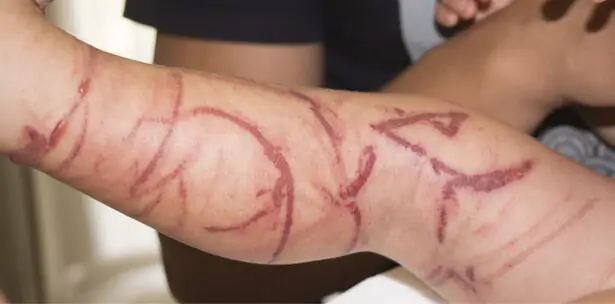
Vinegar and Urine: Two Remedies to Handle Very Differently
Should you put vinegar on a jellyfish sting?
The effectiveness of white vinegar depends on the animal responsible. It can be recommended for certain species, notably the Physalia physalis (Portuguese man o’ war), according to local health guidelines.
Conversely, its use can stimulate venom release for other jellyfish found along American coastlines. Do not apply vinegar without the advice of a lifeguard or health professional.
If in doubt, the safest approach is to rinse with seawater.
Urinating on a jellyfish sting: a false good idea
This cinema-inspired tip is discouraged. The composition of urine varies and can promote the discharge of stinging cells. It can also contaminate the injured skin.
Better to use clean seawater and seek guidance from a lifeguard or health professional.
Can a Dead Jellyfish Still Sting?
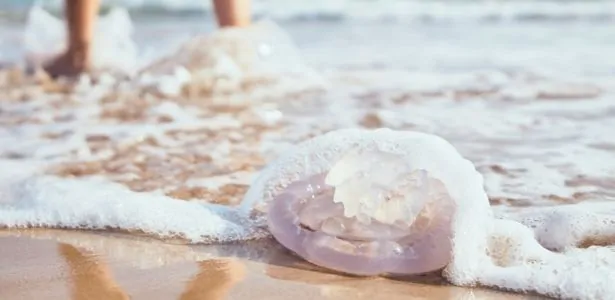
A washed-up or dead jellyfish can still sting. Its tentacles and fragments can retain active cells for a period of time.
Never touch it, even with your foot. Also watch children and pets, who may be tempted to approach. An almost invisible filament can still cause a painful lesion.
The same precautions apply to Physalia. Recognizable by their blue float, they have very long filaments that are particularly venomous.
How to Avoid Jellyfish Stings?
Before you swim, check the flags and information boards at the entrance of the beach. Respect temporary closures and favor guarded areas.
If jellyfish are reported:
- Avoid swimming, even if you don’t see any nearby;
- Do not pick up any stranded marine organisms;
- Wear a full-coverage wetsuit when engaging in water activities;
- Keep children and pets away from jellyfish on the sand;
- Notify the lifeguard if you spot a jellyfish or a physalia.
Finally, monitor the stung area for several hours. See a doctor if the pain does not lessen after 30 minutes, if the lesions spread, or if new symptoms appear.