
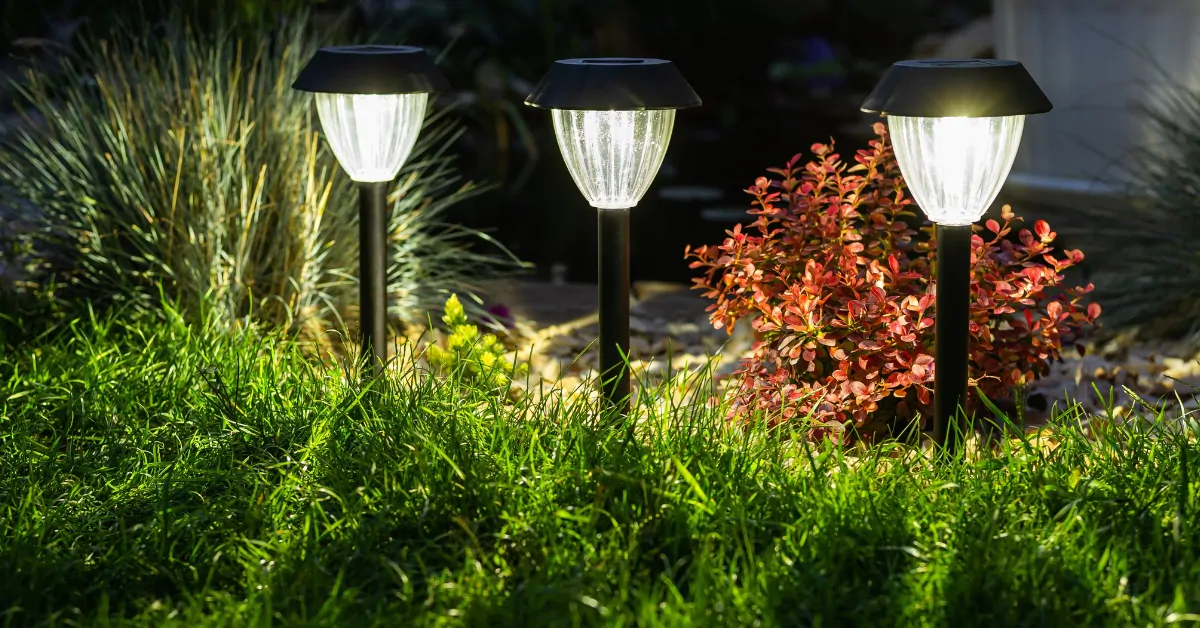
This weekend, you’re hosting friends for an outdoor happy hour in the backyard. You haul out your solar lanterns only to be met with a disappointing sight: after a sunny day, not a single LED comes on.
Before tossing these lights, a few simple checks can often fix the problem. A dirty panel, a tired battery, or a misaligned sensor are often to blame.
What to remember
– Clean the solar panel with water and a soft cloth.
– Check the power switch, the dusk sensor, and the placement.
– Replace only the battery with a compatible model.
– Never reuse a swollen, rusty, or damaged battery.
– Dispose of spent batteries and lamps at an appropriate collection point.
Garden solar lamp not working: 7 simple checks
No need to be an electrician to run a first diagnosis. In most cases, these checks take only a few minutes and very little tools.
[Image: Réparer une lampe solaire de jardin en panne]
1. Thoroughly clean the solar panel
Dust, pollen, bird droppings, and rain spots reduce the amount of light reaching the photovoltaic cell.
Clean it with a soft sponge or a slightly damp microfiber cloth. Use only clear water, then gently dry the surface.
When the clear plastic has become cloudy, a simple cleaning may not be enough. Aging can then prevent the panel from properly capturing light.
2. Check the power switch
After several months in storage, the switch may have remained in the OFF position. Internal contacts may also be slightly oxidized or sticky.
Toggle from ON to OFF several times. Then set the lamp to ON before letting it recharge.
On a new model, look for an insulating tab near the battery as well. It should be removed before the first use.
3. Test the dusk sensor
A solar lamp usually only lights up when it detects darkness. To test its operation, completely cover the panel with your hand or an opaque cloth.
Wait a few seconds. If the LED lights up, the lamp is likely working. The problem may be its placement or a nearby light source.
A streetlamp, a bright window, or an exterior wall light can fool the sensor. It may think it’s still daytime.
4. Let the battery recharge sufficiently
After a winter stored in a box, the battery can be deeply discharged. A single cloudy day isn’t always enough to wake it up.
Place the lamp in a very bright spot for several hours. One or two well-lit days may be necessary after extended storage.
Some manufacturers recommend an initial recharge with the switch in the OFF position. Check your model’s manual before choosing this method.
5. Inspect and replace the rechargeable battery
Garden solar lamps use a battery to store the energy collected during the day. It wears out gradually over cycles.
A cover sometimes allows direct access. On other models, you’ll need to remove a few screws. Work on a dry surface and keep track of small parts.
Before replacing, note the information printed on the old battery:
– its technology: NiMH, lithium-ion, or LiFePO4, for example;
– its voltage, expressed in volts;
– its capacity, expressed in milliamp-hours (mAh);
– its size and polarity orientation.
Choose a battery of the same technology and the same voltage. An ordinary disposable alkaline cell should never replace a rechargeable battery.
Only use an external charger for a removable and compatible battery. The charger must be suited to its technology, voltage, and form factor.
(1)
[Image: Batteries for a garden solar lamp]
6. Inspect the contacts, wires, and sealing
Remove the battery when possible. Then check the metal contacts. A light oxidation can prevent current from flowing.
Gently clean them with a dry cloth or a soft brush. Do not use water inside the compartment.
Take the opportunity to check that no wire is cut or desoldered. Also inspect the gasket and the casing for moisture ingress.
If there is condensation, let the lamp dry open in a dry place. Do not expose components directly to a strong heat source.
7. Choose a truly bright location
A lamp installed under a tree, an overhang, or a roof extension may not receive enough light. The problem becomes worse as days shorten.
Place the panel in an open area facing the brightest exposure. Check the movement of shadows throughout the day.
Also clean or prune foliage that gradually hides the panel. Diffused light can recharge the battery, but less efficiently than direct sun.
At night, keep the lamp away from other lighting. You’ll also reduce light pollution that can disturb biodiversity.
What to do if the solar lamp still doesn’t work?
After these checks, the fault may come from the photovoltaic panel, the LED, or the electronics. Repair becomes more tricky.
If the lamp can be disassembled without breaking the housing, a repair technician or an experienced hobbyist may be able to replace the defective component.
If not, don’t throw the device in the trash. Remove the battery if it’s easily accessible, without forcing or damaging the housing.
Batteries should be taken to a dedicated collection point. The lamp can go to a collection point for small electrical devices.
(2)
(3)
How to prevent another failure after summer?
A few simple habits can extend the life of your solar lighting:
– regularly clean the panel and housing;
– don’t leave the lamp in a consistently damp area;
– set the switch to OFF before long storage;
– remove the battery if the manual recommends it;
– store the lamp in a dry, temperate, and ventilated place;
– inspect seals before reinstalling in spring.
Choosing a more durable solar lamp
When shopping again, favor a modular model. A replaceable battery and a screw-on housing greatly ease repair.
Also check for availability of spare parts. A warm light and a motion sensor reduce unnecessary lighting at night.
These criteria may add a few extra dollars, but they help avoid replacing the entire lamp as soon as the battery reaches the end of life.
Article republished and updated in July 2026.
References
References:
– https://www.corepile.fr/securite/
– https://www.ecosystem.eco/donner-recycler/equipement/piles-et-batteries
– https://www.service-public.fr/particuliers/vosdroits/R56009