
Korean cosmetics, TikTok stars and top-sellers in France, hide problematic ingredients: hydroquinone, phthalates and heavy metals, according to the media outlet Vert. A dangerous regulatory gap exposes European consumers to documented health risks.
Hydroquinone, phthalates, heavy metals… Behind the seductive marketing of the “natural beauty,” Korean cosmetics flooding TikTok and European store shelves conceal problematic ingredients. Vert’s investigation reveals a troubling regulatory gap between Korean and European standards, directly exposing French consumers, the leading buyers of K-Beauty in Europe, to documented health risks.
Toxic Substances Behind the “Natural Beauty” Marketing
The Vert investigation highlights a major contradiction: Korean products, massively promoted on social media as gentle and natural solutions, contain chemical molecules with proven deleterious effects. South Korea, the third-largest cosmetics exporter worldwide with $11.43 billion in exports in 2025, built its success on rapid innovation rather than regulatory rigor. TikTok influencers amplify this trend without disclosing the true composition of formulas. France, as the largest European market for K-Beauty, bears particularly high exposure to problematic substances.
Hydroquinone and Depigmentation: The Silent Danger of Korean Skin-Whitening Products
Hydroquinone ranks among the most worrying molecules detected in certain Korean skin-lightening products, according to Vert’s analysis. Banned in Europe in cosmetics since 2001 due to its cancer-causing potential and nephrotoxicity, this substance remains permitted in South Korea at limited concentrations. Hydroquinone blocks melanin production by inhibiting the enzyme tyrosinase, causing progressive depigmentation. Side effects include exogenous ochronosis, an irreversible blue-black discoloration of the skin, as well as chronic irritations. European consumers buy these products without understanding the risks, attracted by the promise of an even, radiant complexion.
Phthalates and Endocrine Disruptors: How Korean Cosmetics Bypass Standards
Phthalates, used as fragrance fixatives and texture agents, represent another category of problematic ingredients highlighted by Vert’s investigation. The dibutyl phthalate (DBP) and diethyl phthalate (DEP) disrupt the endocrine system by mimicking natural hormones. These molecules interfere with reproduction, fetal development and metabolic regulation. Although the European Union has restricted several phthalates since 2005, some products imported from Korea slip through systematic controls. Korean formulations exploit regulatory gray areas, notably by using chemically related derivatives not yet classified as hazardous, but with similar mechanisms of action.
Heavy Metals and Microplastics: The Toxic Legacy of Korean Innovation
The Vert investigation also reveals traces of heavy metals (lead, arsenic, cadmium) in certain Korean pigments and mineral powders. These contaminants accumulate in the body, causing neurotoxicity, kidney disorders and cardiovascular risks. Lead, even at low doses, impairs cognitive development in children and pregnant women. Simultaneously, microplastics (polyethylene, methyl methacrylate) used as exfoliants and texture agents pose a double health and environmental problem. These particles penetrate the compromised skin barrier, potentially carrying other toxins, while durably polluting aquatic ecosystems. The cosmetics industry joins other sectors in facing the challenge of plastic micropollutants.
South Korean Standards Less Strict than European Standards
The Korean regulatory framework permits 1,200 substances banned in Europe, according to Vert’s data. The Korean approach prioritizes accelerated innovation with post-market controls, while Europe relies on precautionary pre-market assessment under Cosmetic Regulation (EC) No 1223/2009. Industrial players can thus rapidly bring new formulas to market without extensive toxicological testing. European authorities struggle to monitor all imports, particularly direct online purchases that bypass traditional distribution channels. E-commerce platforms amplify this gap by hosting third-party sellers not compliant with European standards.
French consumers represent the leading K-Beauty market in Europe, with demand rising since 2023. Recently increased American tariffs are pushing Korean exporters to redirect flows toward Europe, intensifying exposure to problematic ingredients. Large specialty retailers (Sephora, Nocibé) and online shops multiply Korean ranges without systematically verifying regulatory compliance. The Vert investigation emphasizes that conformity testing remains sporadic, allowing non-compliant products to circulate for months before detection. As with other personal care products, transparency about the actual composition remains lacking.
Skin Reactions, Allergies and Documented Long-Term Effects
According to Vert’s investigation, the problematic ingredients found in Korean cosmetics have a particular impact on sensitive and reactive skin. Dermatologists report an increase in allergic contact dermatitis linked to preservatives (methylisothiazolinone, phenoxyethanol) and synthetic fragrances present in these formulations. Symptoms include redness, itching, flaking, and in severe cases chronic eczema. Atopic individuals, representing 15-20% of the European population, face heightened vulnerability. Long-term effects of endocrine disruptors remain a concern: fertility disorders, risks of hormone-dependent cancers, and metabolic alterations. Repeated exposure to low doses, typical of daily cosmetic use, poses an emerging public health issue.
This Vert investigation calls for urgent strengthening of European border controls. Health authorities should impose systematic analyses of imported cosmetics, especially those sold online. International regulatory harmonization, while ideal, remains illusory in the short term. Consumers can consult independent databases (INCI Beauty, Yuka) to check the composition before purchase, prefer European organic certifications (Ecocert, Cosmebio), and report adverse reactions to pharmacovigilance centers. Dermatologists recommend preliminary skin tests for sensitive skin. This investigation serves as a warning: behind the marketing appeal of K-Beauty lies a toxicological reality that European authorities must confront with resolve.
The Problematic K-beauty Products
According to the cited investigation, several K-beauty brands sold in France warrant special caution, not because all their products are dangerous, but because some references contain controversial substances.
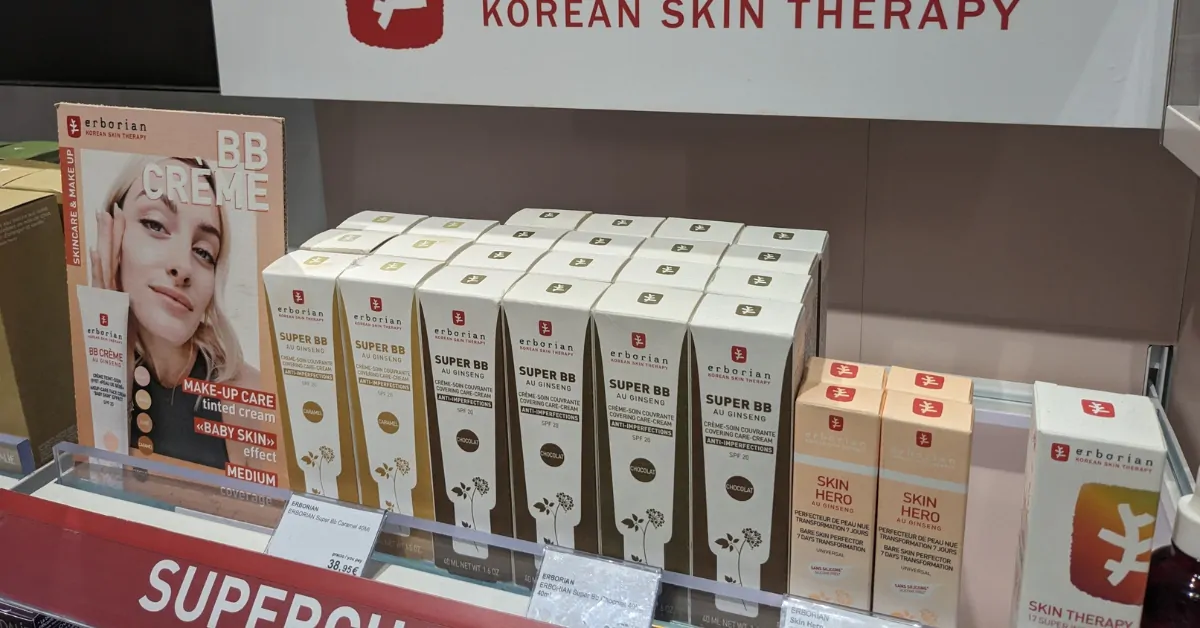
- Erborian : several CC and BB creams are flagged for the presence of controversial UV filters, silicones or butyloctyl salicylate.
- Torriden and Beauty of Joseon : some sunscreens would contain butyloctyl salicylate, a debated ingredient.
- Some By Mi : an eye contour cream is cited for the presence of BHA and BHT.
- Laneige : a night mask is mentioned for the presence of BHT.
- COSRX and Dr. Jart+ : some popular care products contain phenoxyethanol.
- Eliza Jones and Skin Bliss, brands sold at Action, are also listed for the presence of phenoxyethanol.
Right move: check the INCI list, avoid stacking multiple layers of products, and be especially cautious for children, teens, pregnant women, and those with sensitive skin.
source: Vert investigation