
We’ll start with the annual pruning of the raspberries, typically in March or April. We leave about 10 new canes per meter and tidy up the bush. Then we add very well-decomposed compost before mulching.
This step is far from trivial: a well-executed pruning opens up the plant, helps prevent diseases, and above all concentrates energy on the future productive canes. The result: more raspberries, and often tastier ones.
In April and May, mulch strawberries and raspberries
Mulching is ideal to help keep the plants clean and vigorous, with no weeds. Of course, you can weed regularly by hand, but this work can be greatly facilitated by a good natural mulch at the base of the plants.
But that’s not all: mulching also acts as a true thermal shield. It limits soil temperature fluctuations, protects the roots from heat, and preserves moisture. In dry periods, it’s a decisive advantage to avoid watering too often.
The raspberry mulch: as soon as you can
We mulch the raspberry around the months of April or May, depending on the temperature, i.e., when winter has passed and the soil warms up. Better late than never, so don’t hesitate to do it even if you’ve passed the usual mulching period. The same timeframe applies to strawberries.
A good indicator? If the soil feels loose and slightly warm to the touch, that’s the right moment. Mulching too early on cold soil can slow down the plants’ recovery.
How to mulch a strawberry or a raspberry?
First, you must weed around the base of the plants carefully, taking care to preserve the raspberry roots. We water carefully. You create the mulch proper, about 5 cm thick. For strawberries, it’s the same routine, but you’ll want to consider cutting the runners, which unnecessarily weaken the plants.
Be sure not to press the mulch directly against the crown of the plant: leave a small gap to avoid excess moisture and the risk of rot, especially with strawberries.
What materials to use for raspberry mulch?
A bit of everything! Dry grass clippings, wood chips, bark, straw, dead leaves, pine needles, etc. It also depends on the stage of your raspberry; for example, when you decide to plant one in the garden, you’ll need to ensure seed germination, which is much trickier with straw. Don’t hesitate to use wood chips. Raspberries also like ash.
Simple tip: mix several types of materials (dry and a bit moistened). This blend promotes slower decomposition and nourishes the soil more durably than a single mulch.

What materials for the mulch of a strawberry?
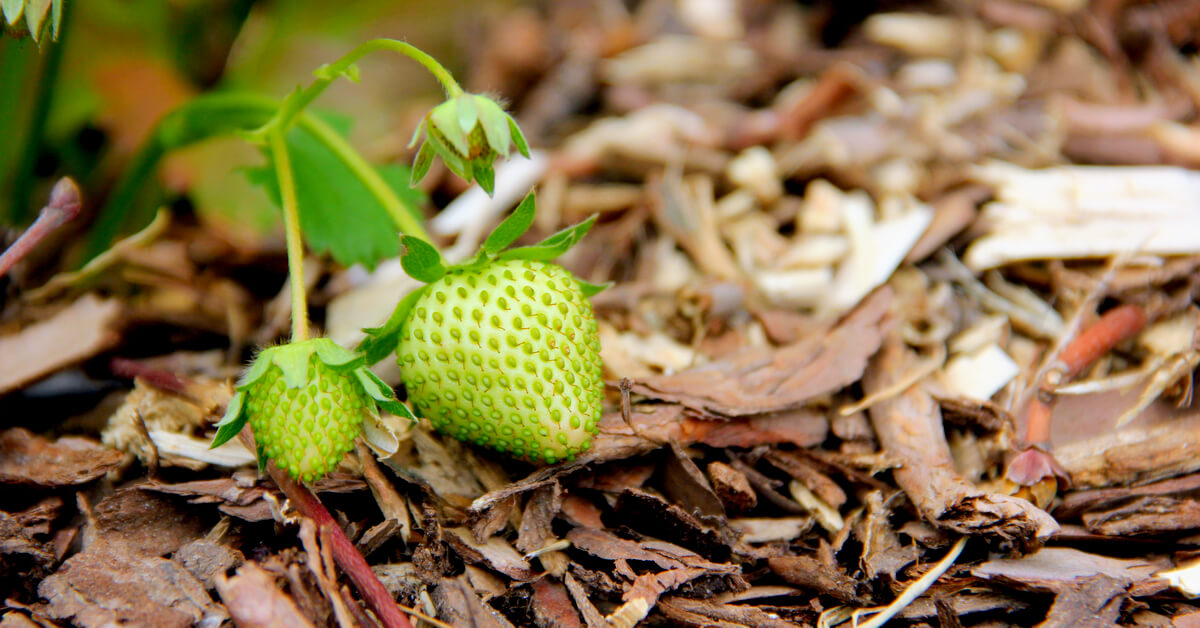
Whether you’re dealing with larger strawberries or wild strawberries, you’ll use the same mulching materials. Chipped wood generally yields better results. With wild strawberries you can also try old compost (soil) while ensuring it limits weed growth. Plastic is discouraged because it complicates the addition of compost or other green manure.
The mulch also offers a frequently underestimated benefit: it directly protects the fruits. By keeping them away from contact with damp soil, it limits diseases and allows you to harvest cleaner, splash-free strawberries.
In the long run, favoring a natural mulch also nourishes soil life (earthworms, microorganisms), essential for a productive and sustainable kitchen garden.
Don’t hesitate to follow the detailed guidance on mulching in the kitchen garden.

Meet your soil! – This workbook, playful and interactive, guides you in understanding your soil: texture tests, pH analysis, observation of fauna, bio-indicator plants…
To discover on Cultura.com
What to remember
- Mulching reduces watering and protects the soil
- About 5 cm (roughly 2 inches) thick is enough to be effective
- A mix of materials improves fertility
- It directly protects the fruits from moisture