If you have a forsythia in your garden, now is the time to act. This springtime shrub, recognizable by its bright yellow blossoms, needs pruning at the right moment to reveal its full potential.
Pruning a forsythia isn’t just about aesthetics. It’s also about respecting the rhythm of the seasons and guiding the plant to stay vigorous, balanced… and abundant in blooms.
Pruning Forsythia: a simple yet essential move
Forsythia is a hardy shrub that grows quickly. Without intervention, it can quickly become unruly and lose its flowering. Pruning helps control its growth while encouraging the appearance of new shoots—those that will bear the flowers next year.
In other words: the more accurately you prune, the more spectacular your forsythia will be in spring.
Why prune Forsythia?
Pruning Forsythia serves to:
- Stimulate flowering
- Limit its size
- Prevent a tangle of branches
- Renew the shrub
When to prune Forsythia?
The rule is simple: just after flowering, in April or May. This is the ideal moment because spent blossoms give way to new shoots.
Pruning too late would remove the buds for next year’s blooms. Conversely, pruning at the right moment guarantees a burst of flowers the following spring.
How to prune Forsythia effectively
Annual pruning
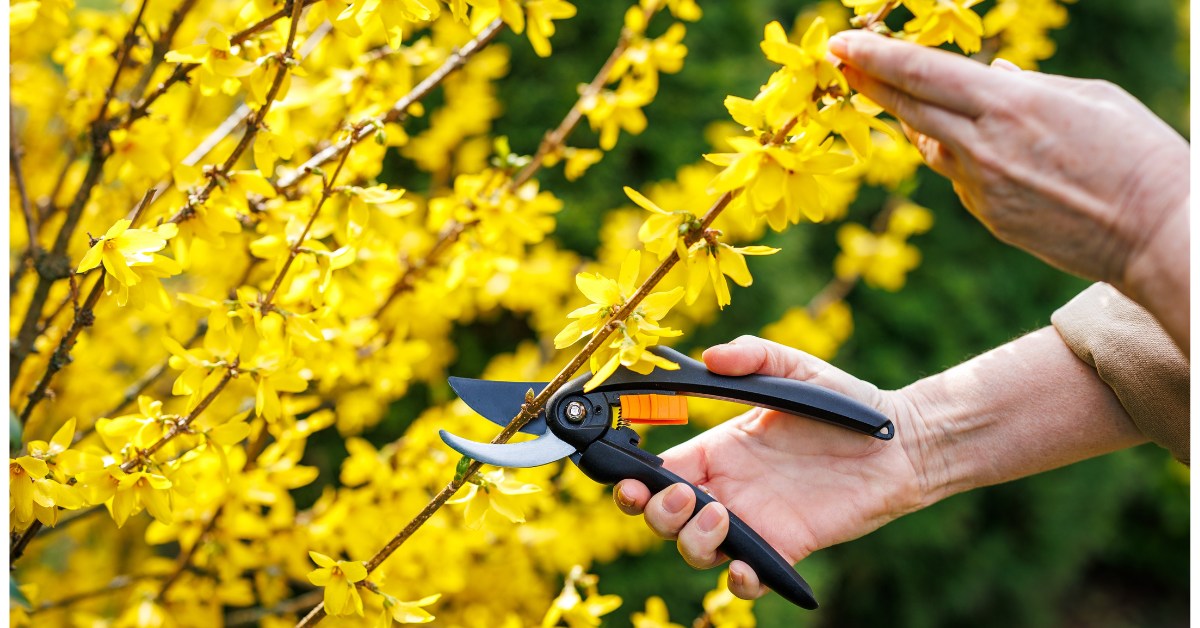
Start by removing dead, damaged, or misdirected branches. Then shorten the canes that have already bloomed by about one-third to one-half.
The goal is to maintain an open shape that light can reach the shrub’s center. This promotes healthy, even growth.
The right habit to adopt
Remember to regularly remove the oldest growth at the base. This renewal pruning technique helps refresh the shrub and prevents it from thinning out.

Bonus tip: bring spring indoors
Rather than tossing the cut branches, keep a few. Placed in a vase with water, they continue to bloom indoors within a few days.
A simple, natural way to enjoy the forsythia show for longer… even inside your home.
Natural care to boost your Forsythia
After pruning, this is the perfect moment to give your shrub a little boost. A well-decomposed compost applied at the base will enrich the soil and support growth.
You can also mulch lightly to retain moisture and suppress weeds. This simple step sustainably improves your plant’s health.
An Easy Shrub… but one not to neglect
Forsythia is often regarded as a low-maintenance plant. That’s partly true, but proper pruning makes all the difference.
By spending a few minutes each year, you transform a simple shrub into a true herald of spring in your garden.