
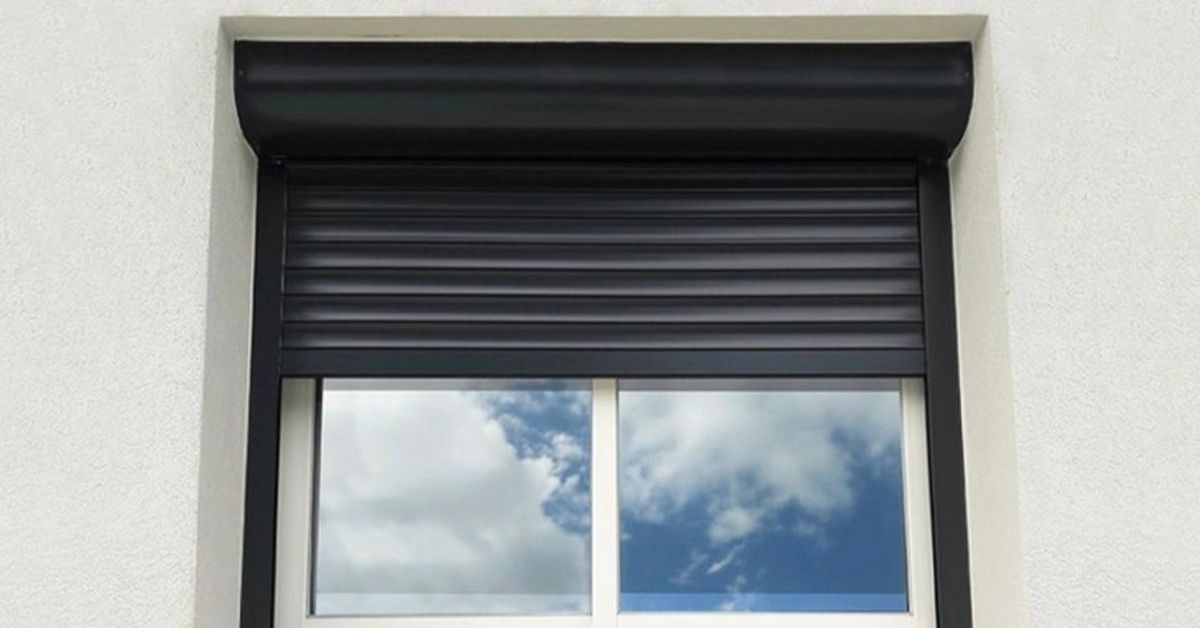
There is a well‑established hierarchy when it comes to insulating a house. People tend to focus on the attic, the walls, and double glazing. Rolling shutters often arrive last, almost as a bonus feature. That’s a mistake.
Close them at night and they can cut heat losses through windows by about 15%, according to ADEME, and by up to 60% in some daytime estimates when the window is closed and the shutter is lowered. On an older home that has no solar protection equipment, the impact on the energy bill is real and measurable.
All the same, you have to choose the right model, one that suits the home’s configuration and the performance goals. In renovations, the topic becomes a bit more complex because the range of solutions is broader than for a new build.
Why the roller shutter really changes the thermal game
A window, even when well insulated, remains the weak spot in a home’s thermal envelope. Glazing accounts for roughly 10–15% of heat losses in a house, making it the second biggest source of heat loss after the roof. A high‑quality double glazed unit greatly reduces these exchanges, but it does not eliminate the “cold wall” effect and it offers no protection against summer overheating. This is where the roller shutter comes in.
In winter, a closed shutter creates an air layer between the glazing and the slats of the shutter, adding an extra insulating layer. For a shutter to be recognized as insulating under building regulations, it must display an additional thermal resistance (ΔR) greater than 0.22 m²·K/W. This threshold governs access to certain energy-related incentives and tax treatment in many places; in France, for example, it determines eligibility for reduced VAT on renovations, compared to standard rates and those outside renovation contexts.
In summer, the mechanism works in reverse but with similar effectiveness. The shutter slats block solar radiation before it reaches the glazing and the heat ends up in the room. Simulations conducted with a study office for the French Building Federation show potential heating energy savings of about 6% to 37% depending on the type of home, its exposure, and existing equipment. Figures vary widely, but they clearly indicate one thing: neglecting shading when renovating leaves energy‑saving potential on the table.
The three major renovation installation options
The first call you have to make is the installation method, the choice that structures the rest of the project. In renovation, there are three main configurations, each with its constraints and benefits.
Exterior face‑mounting is the simplest solution when the window has no room to integrate a box into the wall. The shutter box, usually made of cut or rounded aluminum, is fixed above the window on the facade. It’s the method most professionals use on standard renovation sites. It’s fast, requires no demolition, and does not touch the structural work. Its only drawback is that the box remains visible from the exterior.
The tunnel installation involves sliding the shutter mechanism into an existing tunnel box built into the masonry above the window. This is the configuration found in most houses built between the 1950s and 1990s. When the tunnel box is in good condition, you only need to replace the shutter panel and the mechanism inside, without touching the masonry. The aesthetic advantage is obvious since nothing is visible from the outside. However, these old boxes are often poorly insulated and can create a significant thermal bridge. A complete replacement of the box, including reinforced insulation, is a serious option to consider.
The third option, more ambitious, is to install a unitized window with integrated roller shutter. This is a factory‑assembled window and shutter that are installed together when replacing the windows. This solution offers the best thermal performance because it eliminates imperfect junctions between the window frame and the shutter box. It is more expensive and requires replacing the whole set of joinery but represents a coherent investment when doing a comprehensive renovation.
PVC or aluminum, what the real difference means
Choosing the blade material is often presented as a trade‑off between budget and durability. The reality is a bit more nuanced and deserves careful consideration.
PVC has long been the material of choice for roller shutters. It’s lightweight, naturally insulating, and inexpensive, handles weather well, and requires minimal maintenance. PVC slats are commonly available in standard white, which limits customization but delivers excellent value for budget‑tight projects.
More and more manufacturers are incorporating recycled PVC into their blends, improving the environmental footprint. For historic districts or listed buildings, some manufacturers offer wood‑look PVC or composite options.
Aluminum is steadily establishing itself as the reference material, even for eco‑friendly new builds. It’s stiffer than PVC, making it a better fit for large openings like large picture windows. It offers a much broader palette of colors—often over 300 hues in powder coatings—and superior durability, especially in coastal or heavily polluted urban environments. Aluminum slats with a double skin, foam‑injected, achieve insulation levels comparable to PVC while offering greater rigidity.
For ambitious energy renovation projects, insulated slats are the go‑to option. These two‑tone slats, with a reflective silver interior that helps bounce heat back out of the room, can reach a ΔR above 0.22 m²·K/W and may qualify for higher‑level energy incentives. This can translate into meaningful savings on the total project cost depending on how many windows are involved.
Manual, wired, wireless or solar motorization?
Motorization is inseparable from the choice of model. A shutter that is hard to use defeats the purpose of saving energy. Convenience is a concrete criterion, not just a comfort feature.
Manual shutters with a pull cord or crank remain the least expensive option and use no energy. They are well suited to rarely occupied homes or rooms that are easily accessible. However, when you’re dealing with tall windows, heavy bays, or a program of nightly closures, motorization becomes a practical necessity.
Wired motorization is the classic solution for new builds or renovations that involve electrical work. It offers maximum reliability and proven longevity. Radio (RF) motorization is now the standard for renovations and requires no additional wiring. The motor plugs into a standard outlet and is operated with a remote control. It’s the most coherent solution for adding motorized shutters to an existing home without opening walls.
Solar motorization is perhaps the most relevant option for ecologically minded projects. A small photovoltaic panel built into the box captures light and charges an integrated battery that powers the motor, all without any electrical connection or ongoing energy cost. These models are eligible for energy efficiency incentives in many programs and are compatible with popular home automation platforms. They can be integrated with weather sensors to automatically close in high winds or when the sun is too intense.
Factory direct, custom‑fit: why this is the renovation path to favor
A standard roller shutter simply won’t fit renovation realities. Openings in existing houses are rarely within standardized dimensions. A 1960s home might have French windows with completely atypical sizes, a lintel too low for a standard box, or a stone façade that can’t be drilled without special precautions. That’s why custom manufacturing becomes the norm once you move beyond new construction.
Ordering a custom roller shutter directly from a manufacturer allows you to bypass intermediaries and receive a product built to the exact dimensions of each opening. Delivery times typically range from ten to fifteen business days. It arrives as a ready‑to‑install kit with a detailed mounting guide that makes installation accessible to an experienced DIYer. For homeowners who aren’t comfortable with installation, a local contractor can install the product, and the savings on materials often offset some of the labor cost.
A shutter that is poorly dimensioned creates thermal bridges where the slats don’t sit snugly against the runners. Cold air leaks in from the sides and light comes through from the bottom. These defects are often invisible at purchase but practically cancel out part of the insulating benefit. Customization eliminates this risk at the source.
Financial incentives for roller shutters in renovation
Roller shutters aren’t a top‑priority item in most energy‑efficiency programs. They don’t usually come with a dedicated grant in a standard energy retrofit plan. However, several schemes can significantly lower the out‑of‑pocket cost.
A reduced‑tax rate or rebate can apply when insulating shutters meet certain thermal performance criteria. In the U.S., incentives vary by state and program, and there is no universal national rule identical to the European approach. Working with a knowledgeable installer and checking local and state programs is essential to determine what incentives or rebates you may qualify for.
For substantial renovations, broader programs that target whole‑home upgrades can include the installation of insulated shutters as part of a package designed to improve overall energy performance. In many cases, this can lead to substantial combined savings, especially when the project aims to move the home out of a “thermal‑damaged” classification and toward a more energy‑efficient rating. There are also programs that help with financing such as low‑interest or zero‑interest loans for energy improvements, which can cover a portion of the cost.
For individuals with accessibility needs or who are aging in place, grants or subsidies may cover motorized shutters that aid daily use. And some financing programs allow the cost to be wrapped into a longer‑term loan at favorable rates, easing the upfront burden.
The tunnel box, the weak point that everyone forgets
If your home was built between the 1950s and 1990s, your roller shutter is likely housed in a masonry tunnel box above the window. Invisible from the street, this box can still be a significant thermal weakness.
Old tunnel boxes are frequently poorly insulated, or they have developed cracks after decades of thermal cycling. Cold air can infiltrate from outside and create a thermal bridge above each window. The flaw is rarely visible but detectable with thermal imaging. It appears as a localized cold patch that concentrates moisture and, over time, can encourage mold growth in the corners of rooms.
The remedy is to replace the interior mechanism of the tunnel box with a modern, insulated shutter and to add proper insulation inside the box. In some cases, entire tunnel boxes can be replaced during a façade renovation. When done alongside exterior insulation, this can yield outstanding overall performance for homes built in the 1970s–1980s, which are often among the most energy‑hungry in the housing stock.
Solar roller shutters and smart home integration: ecology meets comfort
Solar motorization is today’s best compromise between ecological commitment and everyday comfort. It’s especially appealing for people who want to lower their carbon footprint without increasing electricity use and who want to avoid wall wiring in older homes.
A well‑tuned solar roller shutter, paired with a light sensor and a wind sensor, can automatically close when the sun hits the facade and open when the sky darkens. This passive automation continuously optimizes the home’s thermal balance without human intervention. In winter, the slats open during sunny hours to let in free solar gains; in summer, they close before heat penetrates the room. Experts call this passive bioclimatization: reducing energy needs through intelligent management of exterior shading.
Connected models that work with voice assistants or can be integrated into a home‑automation hub go even further. They enable centralized control of all window openings, automated routines based on time or weather, and remote control from a smartphone—handy for securing an empty home in summer or preparing the house before returning from a trip.
What the energy performance rating really reveals about your window closures
The energy performance assessment of a home takes exterior openings and their shading into account when calculating overall energy balance. A home rated F or G with no insulating shutters will lose more points on the rating than a comparable home with properly dimensioned closures. The relationship is not perfectly linear, and a roller shutter alone cannot magically convert a G rating into a C, but it contributes meaningfully to the final score.
What is less well known is the indirect impact on property value. Since the 2021 reform of energy ratings and its gradual effects on rental access, improving a home’s rating has become a tangible asset. Renovations that move a property out of the “thermal sieve” status—such as upgrading window insulation and shading—carry value far beyond mere comfort. They condition the ability to rent or sell a home in good standing.
Investing in roller shutters during renovation is thus a concrete step to reduce energy bills, a measurable contribution to reducing building emissions, and a smart decision for safeguarding property value—provided you choose the right model for the home’s configuration and the performance you want.