

Several millions of French people won’t go on vacation this year either. According to data published by the Observatory of Inequalities in June 2026, nearly 40 percent of French people do not take a vacation at least once during the year.
Yet, not packing your bags doesn’t mean giving up the pleasure of taking a breather. In the United States, staying home during vacations has become a trend. It goes by the name staycation, a blend of stay, to stay, and vacation, vacations.
France is catching on too. By choice, for economy, or for a desire to travel differently, staycations are increasingly appealing. On the condition that they are organized like real vacations.
Staycation : vacations at home, but not in the usual way
The word staycation appeared in the United States during the subprime crisis, in 2007. It refers to spending one’s vacation at home, without traveling far.
But beware, it’s not just about sitting on the sofa. The idea is to experience real vacations in your city, town or region.
On the program: outings, visits, strolls, hikes, picnics, naps, reading and family moments. All of it without paying for a plane ticket or overpriced lodging.
The big advantage is obvious: staycations allow you to save money. Travel, tolls, fuel, lodging, restaurants, tourist activities… expenses drop quickly.
In a context of persistent inflation, the idea isn’t trivial. According to the Europ Assistance/Ipsos 2026 barometer, 76% of French people planned to travel during the summer of 2026, i.e., six percentage points less than in 2025. Budget remains a strong criterion.
Staying at home for vacations, a trend gaining momentum
The phenomenon came from the United States, but it quickly inspired other countries. In the United Kingdom, it is sometimes referred to as stoliday or holistay.
In Italy, the Corriere della Sera even mentioned “mole holidays.” The image is a bit harsh, because staying at home vacations can be very bright.
In reality, the staycation taps into several very current desires: consuming less, slowing down, rediscovering the local area, and reducing one’s ecological footprint. It also responds to a well-known fatigue: that of vacations that are too tightly planned.
Why choose a staycation?
Economic reasons are important, but they aren’t the only ones. For many, staying at home allows them to reclaim their time.
One can finally do what they have been postponing all year. But beware: vacations should not become a list of chores.
The real benefits of vacations at home
- Lower costs : no hotel, no rental, little transport.
- Less stress : no packing, no airport schedules, no endless traffic.
- More freedom : you tailor the program to the weather and energy at the moment.
- More time for yourself : reading, napping, cooking, gardening or gentle exercise.
- Better knowledge of your territory : museums, parks, trails, markets, farms, artisans.
Staying at home can also provide the opportunity to spend time with loved ones. All year long we often cross paths in passing. During a staycation, we can adopt a slower, simpler rhythm.
The right move: set a frame for real vacations
To successfully pull off a staycation, you must avoid a trap: living your time off like a regular week. Laundry, emails, groceries and chores can quickly take over.
Before day one, set a few simple rules:
- schedule times to disconnect;
- limit household tasks to a short window;
- plan at least one enjoyable outing every other day;
- prepare a vacation budget, even if modest;
- change a few habits: breakfast outside, dinner on the balcony, sunset strolls.
The goal isn’t to fill the schedule. It’s to create a break from daily life.
Staycation: vacations that are more eco-friendly
Staycation isn’t automatically carbon-neutral. It remains tied to our meals, our leisure, our purchases, and our travel. However, it greatly reduces the environmental impact of vacations when long trips are avoided.
According to ADEME, tourism in France generated 97 million tonnes of CO₂e in 2022. Mobility accounted for 69% of those emissions. So it’s the first lever to address.
Another telling figure: for tourist transport in France, cars account for 53% of greenhouse gas emissions. Air travel accounts for 44%, even though it covers a much smaller share of departures.

The figure to remember
In 2024, emissions from commercial air passenger transport in France reached 22.1 million tonnes of CO₂e, according to DGAC. They rose by 4% in one year.
Of course, this isn’t about shaming every departure. But nearby vacations have real merit. They allow you to rest, support local businesses, and limit emissions linked to transportation.
How to plan a successful staycation?
The secret to a good staycation lies in one word: intention. You have to decide that you’re on vacation, even if you sleep in your usual bed.
1. Be a tourist in your own city
Start by asking what you would recommend to a friend visiting. It’s often revealing. We sometimes know less about our own area than curious visitors do.
- a free or inexpensive museum;
- a farmers’ market;
- a stroll along the water;
- a notable garden;
- an unusual guided tour;
- a neighboring village reachable by train or by bike.
You can also check nearby tourism offices. They often offer free or very affordable ideas.
2. Plan themed days
To avoid the sense of staying stuck in a routine, create different days. It’s simple, fun, and often inexpensive.
- Nature day: hiking, picnic, birdwatching.
- Wellness day: foot bath, gentle yoga, reading, nap.
- No-screen day: board games, cooking, a stroll, a vacation journal.
- Heritage day: visit a neighborhood, an abbey, or an old mill.
- Cool-down day: swimming if permitted, forest, library, cinema.
3. Transform your balcony or garden into a vacation spot
A balcony, a terrace or even a corner of the living room can become a relaxing space. It often takes only a little.
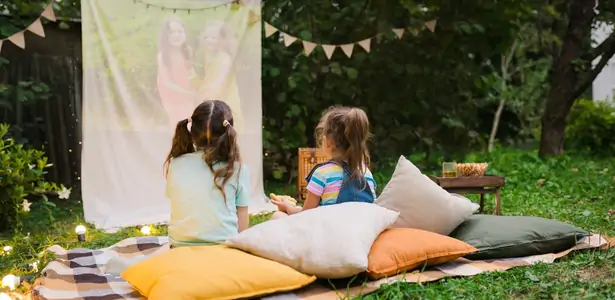
A few cushions, a tablecloth, a solar string light, aromatic plants and a carafe of scented water change the ambiance. The goal isn’t to buy more, but to reuse better.
4. Cook as if you were on vacation
Meals contribute a lot to the sense of escape. Instead of multiplying takeout, focus on simple, convivial recipes.
Homemade recipe: vacation-style flavored water
In a large pitcher, add a few cucumber slices, half an organic lemon, mint leaves, and a few ripe berries. Let it infuse in the fridge for about an hour. Serve with ice. It’s economical, pretty, and much less sweet than soda.
For a vacation meal without going far, also prepare a homemade picnic: seasonal salad, hummus, whole-wheat bread, fresh fruit and reusable bottles.
Mistakes to avoid during a staycation
A staycation can be wonderful. But it can also disappoint if you don’t really break from daily life.
Don’t spend all your vacation tidying up
Taking time off to sort a wardrobe or repair a shelf is fine. But if the entire week becomes a sequence of chores, it’s no longer vacation.
Set a limit: one morning of tidying, then stop. The rest of the time should be spent unwinding.
Don’t stay cooped up
Staying at home doesn’t mean living between four walls. Even a short walk can change the day.
On foot, by bike, by bus or by train, the micro-adventures nearby often yield a true sense of escape.
Don’t feel guilty
Not traveling far isn’t a failure. It’s sometimes a smart, economical and eco-friendly choice. It’s also a way to rediscover what exists around you.
So, who knows? Your next vacation might just begin at your doorstep. With a fresh perspective, a slower pace, and the desire to savor what’s already there.

My eco-friendly vacations
My eco-friendly vacations: 20 sewing and cosmetic projects for healthy, natural holidays.
Discover on Cultura.com