
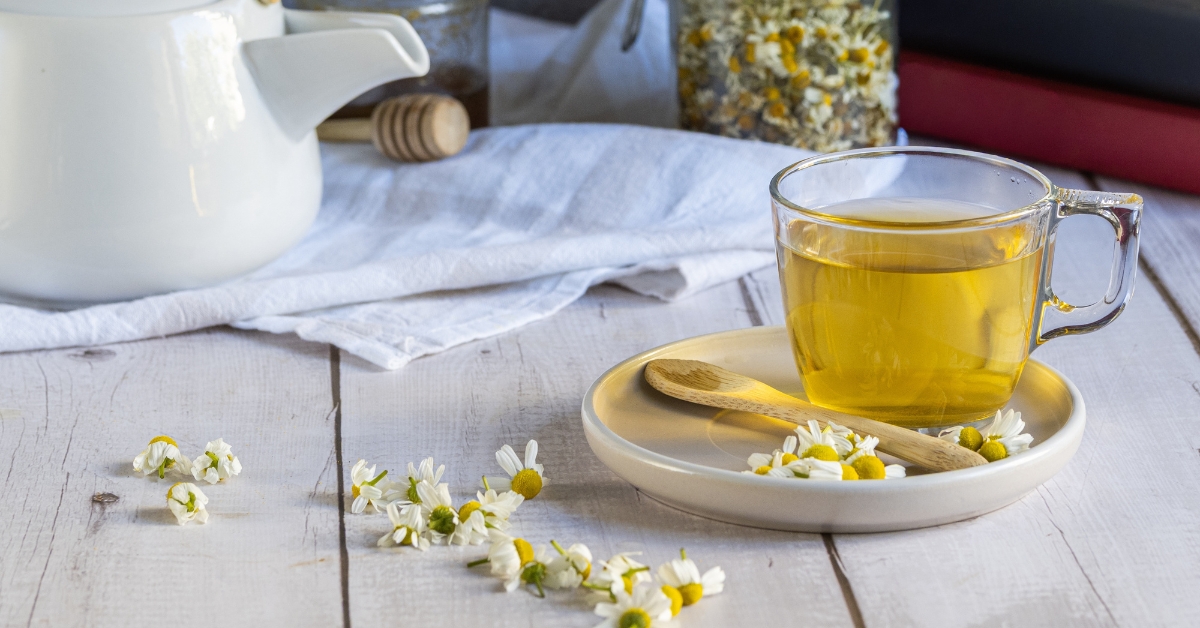
Like linden, peppermint, or lemon balm, chamomile has long been a staple in the European pharmacopoeia. Today, its many benefits for treating minor ailments or for everyday well-being are being rediscovered.
Chamomiles, natural virtues appreciated
Chamomiles belong to the Asteraceae family. While we often say “the chamomile,” there are actually several chamomile species. The most well-known and widely used are Roman chamomile, German chamomile, and feverfew. All possess various benefits and uses in cosmetics and in natural medicine.
The benefits of chamomiles
Chamomile has numerous benefits. To help you remember the essentials, here is a quick overview.
Now, let’s take a closer look.
The benefits of German chamomile
German chamomile for digestive troubles
German chamomile is most often used to treat digestive disorders (dyspepsia) thanks to its tonic, stomachic, antispasmodic, and analgesic properties.
The chamomile called “German” (Matricaria recutita) is not really limited to our German neighbors. It is widely cultivated across Europe, Asia, and the North American continent. This small plant helps fight a number of digestive troubles very effectively:
- Gastroenteritis;
- Gastritis (inflammation of the stomach);
- Gastric and duodenal ulcers (in addition to the main treatment);
- Diarrhea;
- Digestive spasms such as bloating and flatulence.
Not only does chamomile help with all these digestive problems, but it can also help to ease menstrual pain for women.
The soothing virtues of German chamomile
These soothing properties help combat restlessness and insomnia as well as anxiety, depression, attention difficulties, and high nervous tension.
In lotion or by inhalation, German chamomile is a good way to relieve skin irritations and inflammations (eczema, burns, post-waxing, sunburn, etc.), mucous membranes (canker sores, conjunctivitis), and the airways (during colds).
German chamomile is also quite effective for treating advanced hemorrhoids. In some cases, results are better than petroleum jelly when used as a complementary treatment to the main therapy (ligation or anal dilator).
Chamomile against allergies
By virtue of its anti-inflammatory action, German chamomile can be used during allergy crises or allergic reactions.
German chamomile is most often taken as an infusion, whether for digestive or gastrointestinal issues or for flu-like symptoms. It has antiseptic action on the urinary tract. For difficult-to-treat skin lesions, it can be applied as a compress or bath to disinfect and aid in the healing process.
The benefits of the great chamomile
The great chamomile (Tanacetum Parthenium) originates from the regions of Iran and Iraq and then spread worldwide. It is a plant widely present in rural gardens, used as an ornament or as a medicinal plant.
With a pleasant aroma, great chamomile is mainly used in cases of chronic migraines (it has been used for centuries in Europe as a remedy for headaches, migraines, or fever).

Indeed, it helps reduce the intensity and frequency of these migraines. Its effect is felt after four to six weeks of treatment. Many naturopaths recommend a three-month course to relieve the frequency and intensity of migraines and headaches.
How does chamomile help?
The great chamomile contains an essential oil containing camphor (camphor from chamomile), bitter syrups, mucilage, tannins, flavonoids, and sesquiterpene lactones whose main molecule is parthenolide. This compound would act as an antispasmodic and thus be effective in preventing migraine attacks.
In infusion: steep two teaspoons of dried leaves in 250 g of boiling water for about fifteen minutes – drink twice a day.
The benefits of Roman chamomile
Roman chamomile (Chamaemelum nobile) is the most common. It is what most people mean when they say “chamomile.”
It has almost the same stomachic, analgesic, and antispasmodic qualities as German chamomile. Roman chamomile can thus be used for inflammatory and allergic digestive troubles.
It has the following properties:
- antispasmodic,
- tonic,
- analgesic,
- anti-anemic,
- vermifuge,
- emmenagogue (that triggers or regulates menstruation),
- febrifuge (reduces fever),
- cholagogue (facilitates bile evacuation),
- sudorific (promotes sweating),
- sedative.
Chamomile in hair-care cosmetics
Roman chamomile is more commonly used in cosmetics compared with German chamomile (which is used for its medicinal properties).
Presented as a lotion, shampoo, or cream, Roman chamomile is traditionally used as a natural hair colorant, giving a blonde hue and boosting the sun’s lightening effect for “brightening” hair. Chamomile decoctions yield beautiful blond highlights, while also soothing scalp itching.
Chamomile soothes the infant
During teething, massaging the infant’s gums with one to two drops of Roman chamomile essential oil directly onto the finger pad can reduce pain.
Chamomile cream has healing properties for skin care and works wonders for dry skin or diaper rash in infants. The anti-inflammatory, analgesic, and pre-anesthetic virtues help relieve the child and prevent infection.
Chamomile preparations
Chamomile, regardless of species, can be used in several different ways:
-
- as a tea or infusion: steep about one tablespoon of dried flowers in 200 ml of boiled water for about ten minutes. Drink several times a day.
- as a syrup: after infusing 100 g of dried flowers in 200 ml of boiling water, add 100 g of neutral sugar syrup. Then heat to homogenize the mixture. Use to combat pelvic pain, one tablespoon in any herbal tea, four times a day.
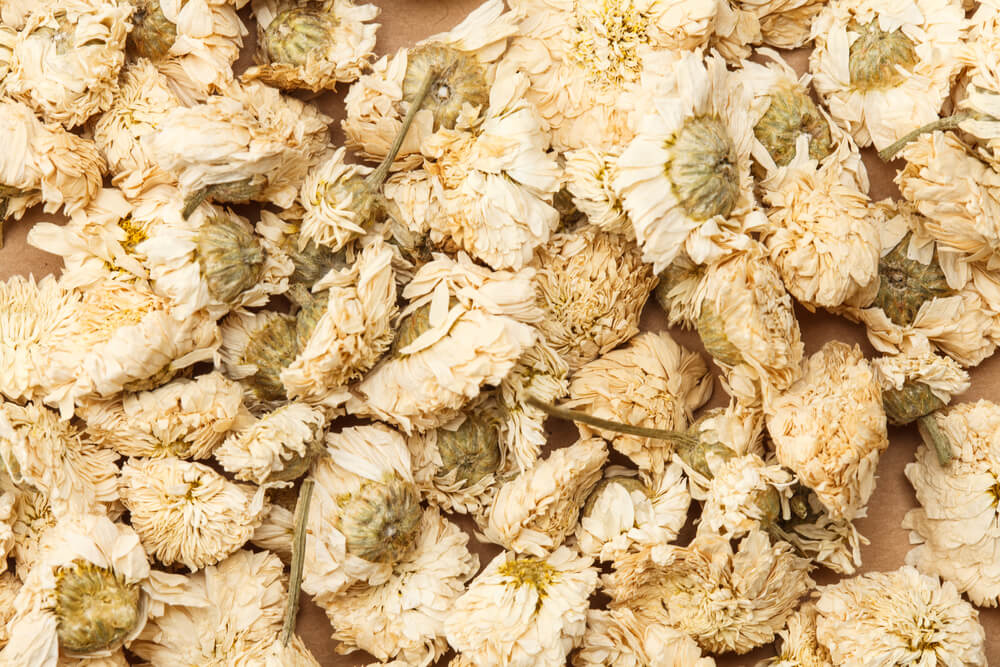
- as compresses and gargles: steep about ten grams of dried flowers in 100 ml of boiling water, allow to cool. Use for skin or mucous membrane inflammation.
- as inhalation: steep 3 g of chamomile flowers in 150 ml of boiling water for 10 minutes and inhale the vapors. Excellent for airway inflammation.
Possible contraindications
Despite chamomile’s benefits in many cases, it’s important to note that there can be contraindications to its use.
- Some people are allergic to plants in the Asteraceae family to which chamomile belongs (just like daisies, arnica, marigolds, chrysanthemums, etc.).
- Furthermore, its use in essential oil form is not recommended during the first trimester of pregnancy. Feverfew is traditionally known for its ability to trigger menstruation. Feverfew is not advised for breastfeeding women or for children under two.
- Direct ingestion of chamomile leaves (and thus chewing them) can potentially cause small mouth ulcers in some people after months of continuous use. Using capsules or tablets instead of chewing the leaves helps avoid this issue.
Republished article