
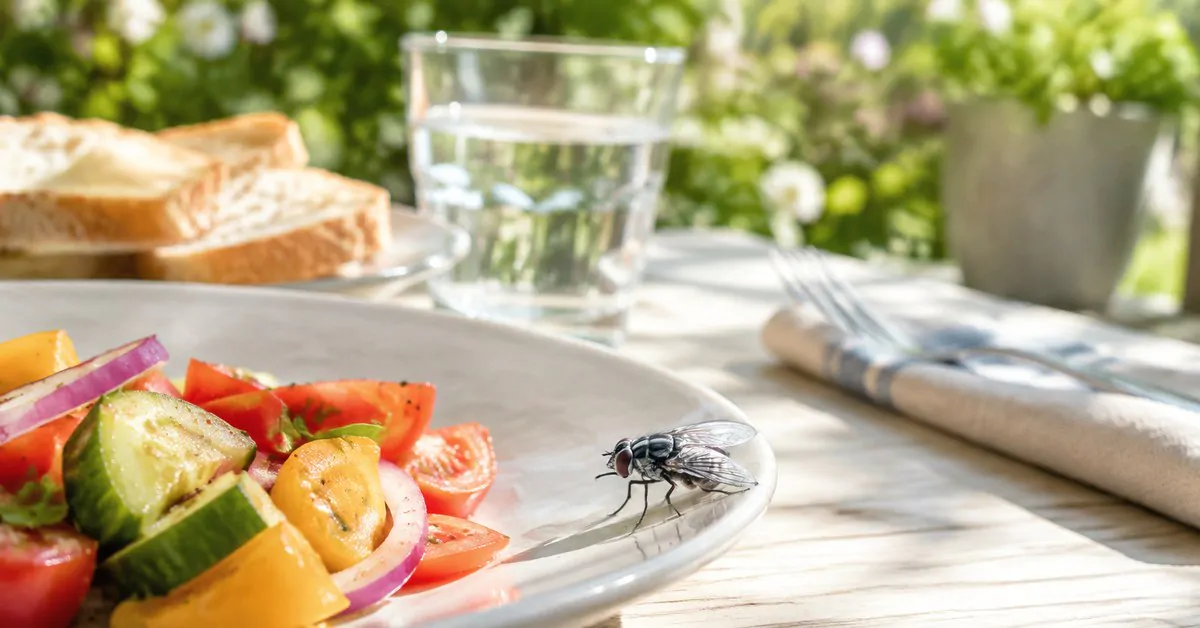
Bright summer days have returned, and with them all the little critters that dim the scene a bit—and among them, the flies! Relentlessly, they buzz around us, land once, twice, ten times in the same spot, scamper with their ticklish little legs wherever they please… So irritating that we sometimes lose a bit of our cool. Yet they seem almost angelic by comparison to the formidable stable fly…
What you need to know
- The stable fly resembles a housefly but features a forward-pointing proboscis.
- Males and females feed on blood and can deliver a painful bite.
- In humans, the reaction is typically local and not serious.
- Eliminating moist organic matter is the best preventive measure.
The stable fly: impossible to miss in the countryside… or is it the other way around!
From April to October, wherever livestock are raised—especially near horses, sheep, or cattle—a formidable vampire is at work. The stable fly (Stomoxys calcitrans), also called a stomox or more simply the barn fly, is a fly that bites in addition to being annoying!
But unlike vampires, the stable fly loves to bask in the sun after guzzling blood. It then tends to cluster on exposed surfaces like tree trunks, fences, walls, and windows (watch out for opening a window at that moment, or you’ll unleash a wave… and you’ll need a good fly repellent!)…
You’ll find it in the countryside… decaying plant matter (grass clumps, etc.), manure, and other waste are ideal places for its larvae to develop!
The problem is that it bites…
Hematophagous, this fly feeds on blood as an adult, whether male or female, even though it can survive by feeding on nectar and pollen.
Like a tick, to draw blood, it carries a particularly robust rostrum—an anterior-pointing, vulnerable organ that lets it suck blood from cattle… or from humans it crosses along the way.
And a stable-fly bite isn’t without risk
The barn fly is more than just a nuisance; it is a pest: it tends to swarm around livestock. Persistent harassment and painful bites can irritate farm animals, keeping them from feeding properly or resting.
But that’s not all—the stable fly, in addition to being painful, can transmit diseases like the virus behind equine infectious anemia and certain fevers.
Fighting stable flies and their bites
To protect yourself from this fly and reduce bite risk, keep them out of homes and cover up when outdoors (pants, shoes, long-sleeve shirts…)
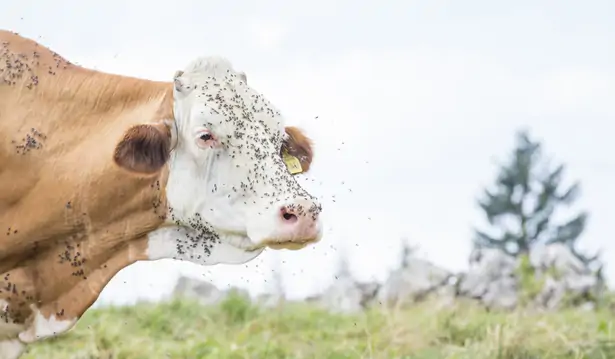
Country folk know this well: in summer, during the hottest hours of the day, they close the shutters on exposed facades—not only to keep the house cool but also to keep these flies at bay… The shutters also shield windows that would otherwise quickly become specked with hundreds of droppings!
Treating a stable-fly bite?
The bite from a stable fly is painful, like a sudden pinch.
To relieve the bite, rinse it under cold water as soon as possible or place a cloth-wrapped ice pack on it: an excellent pain reducer that also helps prevent a lump. Disinfect the bite.
We also recommend true lavender essential oil (or culinary lavender) for this type of bite. Locally anti-inflammatory and anesthetic, it is also antiseptic and healing! You can apply a drop neat on the bump or dilute it in a carrier oil. Note that this treatment should be avoided for pregnant women and children under 3 years old!

In case of a stronger reaction
If there is swelling, itching, or a skin allergic reaction, a soothing cream (analgesic or antihistamine) will ease the inflammation.
Calendula and St. John’s wort can also be used, known for soothing skin irritations. As anti-inflammatories, these two plants relieve itching and limit swelling. St. John’s wort is also healing, but because it can cause photosensitivity, it is not recommended if the bite area will be exposed to the sun.
These two plants are used as macerates for massage on the affected area.
- The stomoxes, little-known vampires… Ecological Challenge
- The stomoxes, little-known vampires… Ecological Challenge
- The stomoxes, little-known vampires… Ecological Challenge