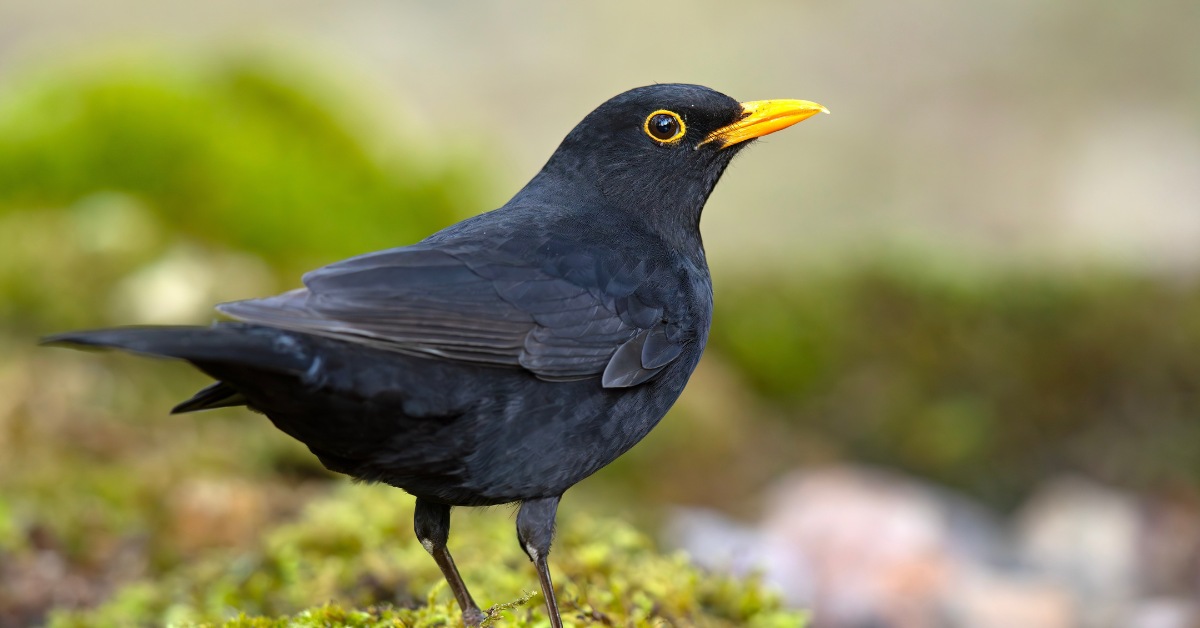
Biodiversity is no longer an abstract concept reserved for nature reserves or vast wild spaces. It plays out right within a few square meters, behind a hedge, at the base of a fruit tree, or on a lawn left to breathe a little. In this context, spotting a blackbird in your yard takes on a meaning far greater than it may seem. This familiar bird, scientifically known as Turdus merula, does more than brighten morning hours with its flute-like song: it acts as a true indicator of the ecological health of your outdoor space.
Why the presence of a blackbird in your garden reveals a natural balance
Long treated as ordinary because it is so common, the common blackbird deserves renewed attention. Its presence, its feeding habits, and its behavior tell us a lot about the quality of your garden. Where it settles, nature often still functions properly.
When a blackbird chooses a garden, it’s never entirely by chance. This bird seeks places that can provide three essential elements: food, shelter, and tranquility. It especially favors spaces where lawns, flower beds, shrubs, hedges, and a touch of wilder areas mingle. In other words, gardens that are too mineral, too tidied, or too artificial attract it much less.
Its presence, therefore, often signals an environment still rich in natural resources. A space where a variety of plants grows attracts insects, caterpillars, spiders, and earthworms, which make up a large part of its diet. Dense hedges or evergreen shrubs provide shelter from predators and good nesting places.
The blackbird remains a common species in Europe today, but its abundance directly depends on the quality of available habitats. When it frequents a garden regularly, it often means that this small ecosystem remains welcoming to many other forms of life.
The blackbird in your garden: a living indicator of soil health
The blackbird spends a good portion of its time on the ground. You’ll see it hop, tilt its head, scratch the soil, or turn over fallen leaves. This behavior is not incidental: it searches for worms, larvae, and small invertebrates hiding in the upper layers of the soil.
Its regular presence thus often indicates living soil. And living soil is one of the pillars of a healthy garden. It contains abundant microfauna, beneficial fungi, helpful bacteria, and decaying organic matter that naturally nourishes plants.
Conversely, compacted, impoverished, chemically treated, or overly tilled soils become much less attractive to it. If a blackbird comes to root through your ground, it’s often a sign that underground life remains active.
By watching this bird, you gain a valuable clue about what you can’t see: the biological vitality of the soil beneath your feet.
A garden frequented by the blackbird is often a refuge for biodiversity
Private gardens today play an increasingly ecological role, especially in urban and peri-urban areas. They are oases of freshness, feeding hubs, and corridors linking different natural habitats. Even a small space can become useful if it includes a few trees, a varied hedge, flowering plants that attract pollinators, or a patch left a bit more spontaneous.
The blackbird benefits fully from this mosaic. It moves from garden to garden, forages on lawns, hides in shrubs, and nests in bushes. Its presence often shows that your terrain is connected to a larger network of wildlife-friendly spaces.
In other words, seeing a blackbird in your garden speaks not only to your plot but sometimes reveals the ecological continuity of an entire neighborhood.
Beyond symbolism: what the blackbird in your garden really says
For a long time, the blackbird fed popular beliefs and symbolic interpretations. Yet the ecological reality is far more interesting than mystery. If it visits your yard, it’s because the conditions genuinely suit it.
A garden frequented by the blackbird is generally a place where the food chain still functions. Insects are present, plants offer seeds or berries depending on the season, hiding places exist, and chemical pressure remains limited. It’s also often a relatively quiet space, less disrupted by constant foot traffic or overbearing landscaping.
Thus the blackbird becomes an excellent daily bioindicator: discreet, visible, and easy to recognize.
How to attract the blackbird to your garden for the long term
To encourage its presence, you don’t need complex installations. A few simple steps are enough: maintain a diverse hedge, leave a leaf-litter area in autumn, limit pesticides, plant berry-bearing shrubs, provide a shallow water feature, and avoid mowing too uniformly everywhere.
The more diversity your garden offers, the more likely it is to welcome the blackbird… and many other species.