
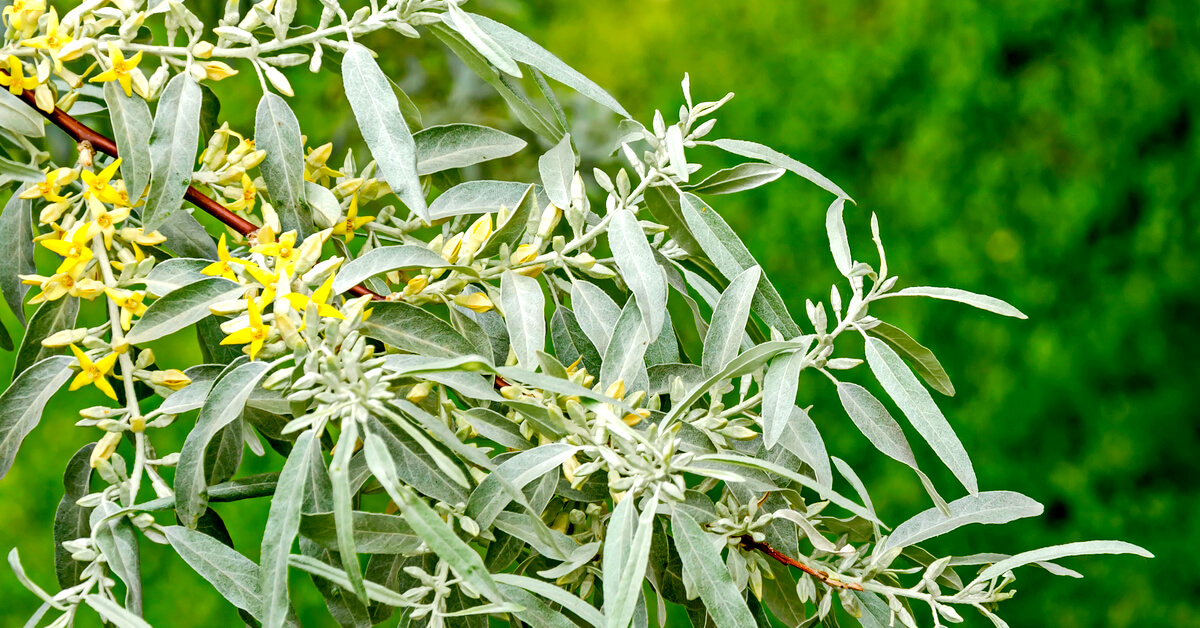
If the Ancients handed down from generation to generation the qualities of the white willow (Salix alba) and the different ways to profit from it, we must wait until 1838 for its active constituent, the salicoside, precursor to the salicylic acid, to be isolated. This discovery would give rise in 1899 to a synthetic medicine today universal: aspirin. Discover why this majestic tree remains, even today, one of the pillars of phytotherapy for relieving pain.
The History of the White Willow: A Sacred Tree with Mysterious Powers
You now know why the white willow is called the plant-based aspirin! It isn’t the only one in this regard: meadowsweet also contains salicyl derivatives that give it remarkable properties. For a bit of history, it’s also the former botanical name of meadowsweet, Spiraea ulmaria, which gave its name to the well-known drug.
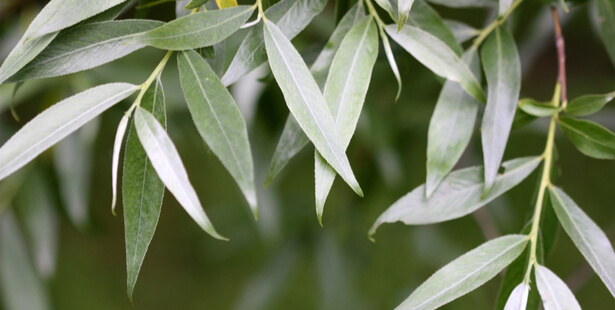
But let’s return to our white willow… It is a large deciduous tree, which loves water and thus grows best on fresh, damp ground, often near a body of water. It can reach up to 25 meters in height.
A Strong Symbol in Ancient Traditions
It stood, alongside birch, alder, oak, holly, hazel, and apple, as one of the seven sacred trees of the Druids, who, in addition to the specific virtues of the different parts of the trees, already used their power to heal.
Traditionally associated with the Moon, with women, with dreams, with emotions and intuition, it naturally sits at the center of many legends and beliefs around the world. Thus, the leaves and the bark of the white willow, carried on one’s person or placed in a home, are entrusted with the mission of protecting the person or the place.
There are even tales that witches’ brooms – yes, the ones that allow flight – are tied to a branch of the white willow… All of this is hard to verify! What is certain, however, is that while different parts of the white willow are sometimes used in healing rituals, they have also been used for millennia to alleviate many ailments, quiet fever, flu-like states and colds.
What are the Benefits of the White Willow? A Natural Painkiller
Long regarded as the “”—thanks to the soothing effects of the compounds in its bark and its anti-inflammatory properties—the white willow today features in the creation of many natural remedies.
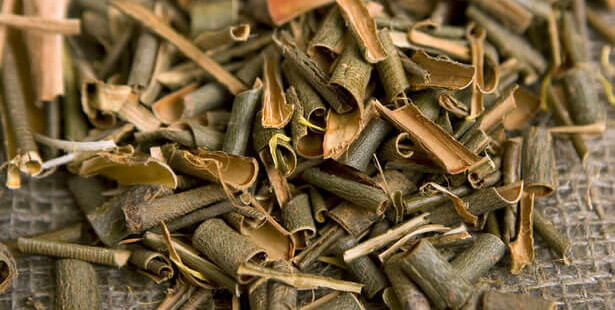
Recent research has confirmed its effectiveness in several specific cases:
- Rheumatic conditions and joint pain: Very useful for relieving osteoarthritis and chronic inflammations.
- Lower back pain: The bark acts effectively on tensions in the lower back.
- Menopause symptoms: Its sweat-suppressing action makes it particularly useful for preventing night sweats and hot flashes.
It’s worth noting, incidentally, that the white willow, this tree that thrives in damp soil, targets precisely disorders caused by excess moisture!
How to Use the White Willow: Dosage and Preparations
Decoctions, tincture, extracts or capsules… white willow often works with other plants in many medicinal preparations. Here’s how to use it daily depending on your needs:
| Use / Need | Recommended Preparation |
|---|---|
| Fever and headaches | Decoction: 1 to 2 teaspoons of bark per cup of water. 3 cups per day. See our fever-fighting tips. |
| Lower back or muscle pains | Liquid extract: 1 teaspoon in a large glass of water, in a 15-day course. |
| Arthritis or gout | Concentrated decoction: 10 g of bark in 750 ml of water to sip all day. |
| Hot flashes | Willow tincture: 1/2 teaspoon in a little water before bed. |
White Willow: Precautions and Contraindications
Worth knowing: unlike synthetic aspirin, its natural constituents do not overly thin the blood and generally do not irritate the stomach mucosa.
Note: just like aspirin, white willow is strictly not recommended for people allergic to salicyl derivatives, as well as for pregnant or breastfeeding women. As a precaution, it is also not recommended for children (risk of Reye syndrome).
Sources:
– Collective, Encyclopedia of Medicinal Plants, Larousse edition.
– Gérard Debuigne and François Couplan, Petit Larousse des plantes qui guérissent, Larousse edition.
- Collectif, Encyclopedia of Medicinal Plants – identification, preparations, care, Larousse edition
- Gérard Debuigne and François Couplan, Petit Larousse des plantes qui guérissent, Larousse edition