
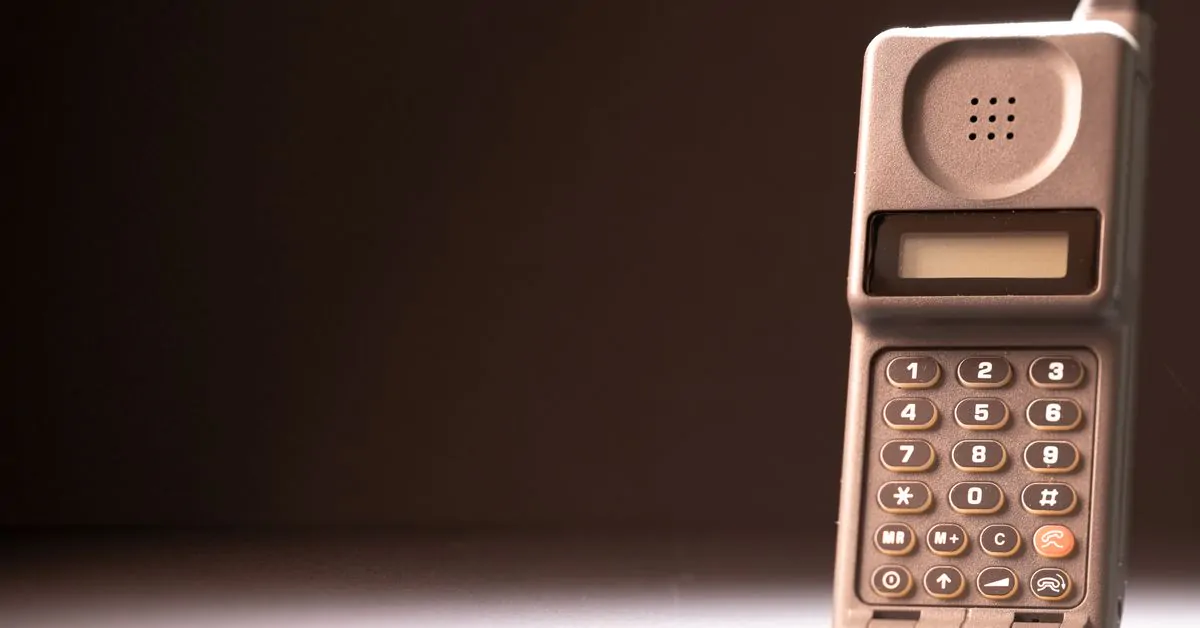
The telecare device for an elderly parent, the transmitter of an alarm installed years ago, or the home’s intercom often sends alerts through a SIM card that no one has ever checked. If that card operates only on 2G on the SFR or Bouygues Telecom networks, the device loses its connection between November 15 and December 15, 2026.
This timeline is cataloged by Arcep, France’s telecom regulator. It warns that equipment not compatible with telecommunications technologies such as 4G and 5G, or other alternative technologies, will need to be replaced because they will no longer work.
Dates by Operator
Shutdown decisions are up to the operators. ARCEP does not set the dates; it compiles them in a common table published in its page on the closure of 2G and 3G networks. SFR, and therefore RED by SFR, began on November 15, 2026 in about thirty major urban areas, including Paris, Lyon and Marseille; the rest of mainland France followed from December 1 to 15, 2026. Bouygues Telecom and B&You proceed in two steps. The shutdown first affects Brest, Guipavas, Nancy, and Vandœuvre-lès-Nancy, then all of metropolitan France from December 1 to 15, 2026.
| Network | 2G Shutdown | 3G Shutdown |
|---|---|---|
| SFR, RED by SFR | November 15, 2026 in about thirty major urban areas; December 1–15, 2026 elsewhere | End of 2028 |
| Bouygues Telecom, B&You (Brest, Guipavas, Nancy, Vandœuvre-lès-Nancy) | November 15, 2026 | End of 2029 |
| Bouygues Telecom, B&You (rest of mainland) | From December 1–15, 2026 | End of 2029 |
| Orange | In waves since March 31, 2026; regulatory white zones from December 1–15, 2026 | 2028 |
| SRR (La Réunion, Mayotte) | November 30, 2026 | According to operator |
The same 2G box installed in the same location does not stop on the same date depending on the SIM card it contains.
A 2G-only alarm transmitter installed in Lyon, in the Rhône department (69), will stop on October 20, 2026 if it uses an Orange or Free SIM card, on November 15 if it uses an SFR card, and between December 1 and 15 with a Bouygues Telecom card. The official table notes that “the schedule may evolve.”
Alarms, Telecare, and Heating
Phones aren’t the only devices affected. Some equipment can still operate exclusively on 2G and 3G networks, such as connected alarm and monitoring systems; telecare systems for personal assistance; heating control systems; intercoms and videophones that rely on a mobile network; and certain medical devices.
The practical guide published with the Directorate General for Enterprises (DGE) adds elevator emergency telephones and older-generation phones to this list.
These boxes fall under what operators call “machine-to-machine” (M2M): a SIM card housed in a device that serves only to transmit an alert, a reading, or a command. By the end of June 2026, the regulator’s quarterly observatory counted 0.62 million SIM cards in such 2G-only objects, and 1.06 million in 2G-only phones and tablets.
At home, you should identify any device that alerts or can be controlled remotely without going through the internet box: an alarm panel with transmitter, telecare box connected to a pendant or bracelet, heating control module, intercom plate without a landline. The label “GSM,” the technical name for 2G, on the label or in the manual is a good clue.
A SIM with Another Carrier
For these devices, calling your own mobile provider may not be enough. The SIM card for a telecare or alarm system is typically supplied by the service provider and may depend on a network different from the household’s phones: a family subscribed to Orange may have a transmitter that runs on the SFR network.
The service provider knows which network and technology the card communicates on. If not, the installer or manufacturer can tell you. If you have doubts about the future operation of some equipment when 2G or 3G networks are shut down, contact your service or equipment provider now.
Three pieces of information to obtain during this call: the technology used by the card (2G-only, 2G and 3G, or 4G), the carrier it depends on, and whether a move to 4G is possible or whether the device needs to be replaced. A device that handles 2G and 3G continues to work for now.
3G will, however, shut down in turn in 2028 with Orange, end of 2028 with SFR, and end of 2029 with Bouygues Telecom. Requesting a 4G model directly can thus spare a second intervention in 2 or 3 years.
Test the Alert, Then Replace
A real test is more reliable than a manual. For telecare, pressing the pendant or the device’s button should trigger a call to the monitoring platform. Inform the center before testing to prevent them from initiating an intervention.
For a monitored alarm, the installer or the monitoring center can run a transmission test and confirm that the signal arrives properly. Some boxes also transmit voice, such as a voice-enabled alarm transmitter, a telecare device with a speaker, or an elevator phone. For those, the regulator recommends checking with manufacturers their compatibility with each operator’s VoLTE settings, and then testing calls over 4G.
Replacing the transmitter may be covered under telecare or monitoring contracts. However, terms vary from provider to provider and contract to contract: it’s up to the supplier to specify in writing who will cover the new box and its installation.
Returning to a copper landline is not a durable solution, as that network is also being shut down. The DGE and ARCEP guide includes a caution about copper as a fallback solution.
Old Phones and VoLTE
A phone that only supports 2G will no longer be able to make calls or send texts. The trickiest case is a mobile marketed as 4G-compatible but without VoLTE, i.e., without the feature that routes voice traffic over 4G.
This type of phone falls back to 3G or 2G for each call. When those networks are shut down, it keeps data but loses voice. ARCEP therefore recommends checking both the device’s 4G compatibility and its VoLTE support.
To test, simply look at the network icon during a call. If it switches from 4G to 3G, H or E, the call is not using 4G. In some cases, a software update or enabling 4G calling in the settings may suffice.
A SIM card that is too old can also pose a problem. It can be replaced in the account portal or at a store, without changing the number. For a compatible device, more than 99.8% of 2G and 3G sites are already equipped with 4G, which covers more than 99.9% of the metropolitan population.