A restriction deemed too restrictive by physicians, as 47.6% of French people already exceed the critical exposure threshold to this carcinogenic heavy metal.
Cadmium, a Public Health Threat Finally Taken Seriously by France’s Health Insurance System
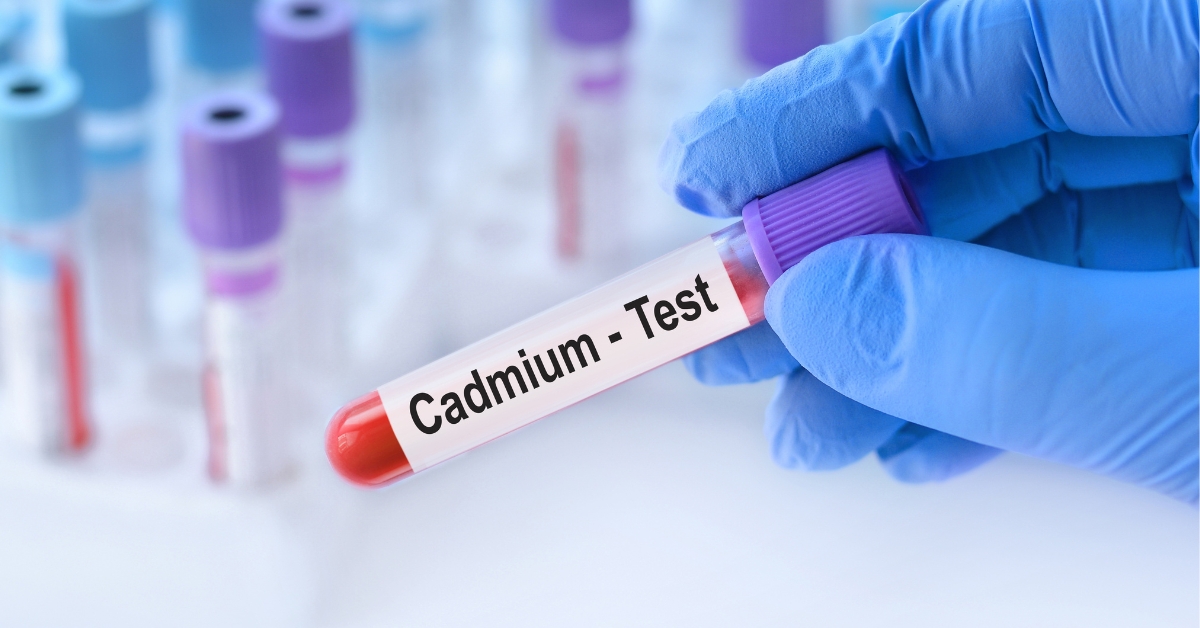
Finally a breakthrough in addressing cadmium, this carcinogenic heavy metal that quietly seeps into the daily life of most French citizens. After months of intense negotiations, the health insurance system and representatives of medical biology laboratories reached an agreement: screening for this ubiquitous contaminant will finally be reimbursed at 60%, at a price of 27.50 euros (about $30).
This advancement responds to a pressing demand from private practitioners, who had sounded the alarm as early as June 2025 about this “health bomb.” Until now, only hospital facilities could prescribe this urinary or blood test in a reimbursed manner, leaving urban physicians facing this growing public health issue.
However, the eligibility conditions are already stirring fierce controversy. Under the signed agreement, screening will concern only the “potentially cadmium-exposed individuals due to their place of residence.” A restriction that health professionals vigorously denounce, seeing in it a deliberate attempt to “limit biological monitoring of the French population.”
A Widespread Exposure That Dangerously Exceeds Critical Thresholds
This critique resonates all the more in light of alarming epidemiological data. The ESTEBAN national biosurveillance study, conducted from 2014 to 2016 by Santé publique France, shows that one in two French people aged 18 to 60 (precisely 47.6%) exceeds the critical cadmium concentration threshold in urine, set at 0.5 micrograms per gram of creatinine.
This proportion signals a significant deterioration compared with the 2006-2007 survey, confirming a trend that is profoundly concerning. The expertise published by ANSES in 2026, incorporating updated modeling for the 2025 population, leaves little room for optimism: exceedances persist for a substantial portion of our fellow citizens. Even more worrying, the third Total Diet Study (EAT3) shows a notable rise in the share of the population whose dietary exposures exceed the tolerable daily intake. Between 23% and 27% of children are affected, compared with only 1.4% to 1.7% among adults.
Diet, the Main Vector of Insidious Contamination
Contrary to common belief, cadmium exposure does not stem from isolated industrial accidents, but from diffuse and stealthy contamination of our food environment. Diet accounts for up to 98% of body burden among non-smokers. Paradoxically, the foods contributing the most are our everyday staples: breakfast cereals, bread and dry bakery products sit alongside pastries, cakes, and sugary biscuits. Added to these are pasta, rice and refined wheat, not forgetting potatoes and certain vegetables.
This contamination originates in agricultural soils, where phosphorous fertilizers account for the primary source of cadmium input (55%), far outpacing livestock effluents (25%). In France, these fertilizer materials represent on average over 80% of cadmium inputs to agricultural soils. This dependence on industrial fertilizers illustrates how modern farming practices have progressively poisoned our food chain.
The geographic origin of phosphate rocks greatly worsens the situation. North African deposits (Morocco, Egypt, Algeria), from which the majority of our imports come, consist of sedimentary rocks with sometimes staggering cadmium contents. By contrast, igneous rocks from South Africa or Russia typically show lower concentrations.
A Toxic Arsenal with Devastating Effects
Cadmium does not earn its nickname “silent killer” by accident. Classified as a carcinogen, mutagen and reproductive toxin, this heavy metal is recognized as a definite lung carcinogen in occupational settings. Suspicions also extend to other cancers: pancreas, bladder, prostate, and breast. With prolonged exposure, even at low doses through the oral route, cadmium causes kidney damage that can progress to chronic kidney disease and marked bone fragility, significantly increasing the risk of osteoporosis and fractures. Other deleterious effects affect neurodevelopment and the cardiovascular system, weaving a network of interrelated pathologies.
“If current exposure levels persist and no large-scale action is taken, long-term adverse effects are likely for a growing portion of the population,” warns Géraldine Carne, coordinator of the ANSES expert group.
Long-Term Solutions That Are Slow to Materialize
In light of this growing health threat, ANSES calls for action “at the source of contamination” by applying drastic limit values for fertilizers. The Agency recommends not exceeding a cadmium input flux of 2 grams per hectare per year, which implies a maximum cadmium content of 20 milligrams per kilogram of P2O5 in mineral phosphatic fertilizers. Currently, European Regulation (EU) 2019/1009 sets this limit at 60 milligrams, three times higher than ANSES’s recommendation. This vast gap highlights the persistent disconnect between legitimate health concerns and the economic imperatives of the fertilizer industry.
Pending these hypothetical regulatory changes, consumers can partially limit their exposure by reducing consumption of wheat-based products that are sugary or salted, and by incorporating more legumes into their meals. Nevertheless, ANSES emphasizes that “reducing cadmium exposure must begin with collective action on contamination sources.”
The reimbursement of screening, even if not universal, will nonetheless be a first step toward better surveillance of this widespread contamination. One can only hope that eligibility criteria will quickly evolve to reflect the true scale of this major public health challenge that concerns us all.