
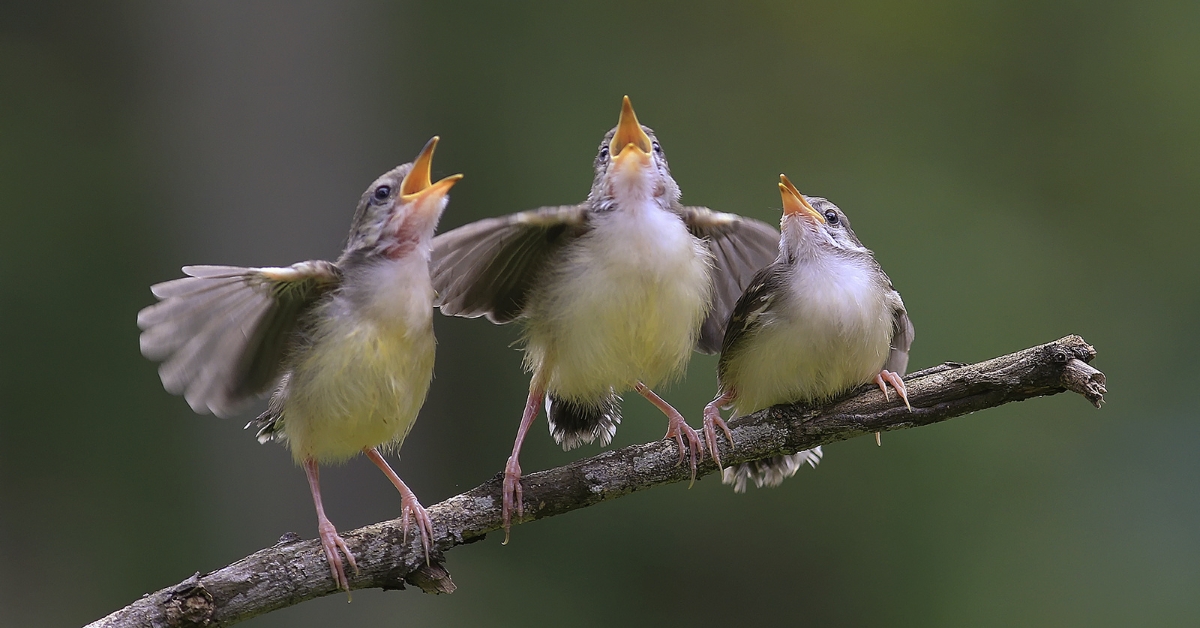
They wake you up in the morning, singing at full blast. And often well before sunrise, long before the day seems to begin for us. But what’s it all for, really?
The Mighty Dawn Chorus
Our eyes aren’t the same as those of birds, nor are our habits and schedules. When we finally drag ourselves out of bed, they’re already singing with all the power in their little lungs, from treetops to chimneys. But why sing so early and so loudly in the morning?
In this field, we’re generally more in speculation and deduction than in hard science. First observation: this “dawn chorus” is especially powerful, or at least it seems so, between about thirty minutes and an hour and a half before sunrise, in spring. And since it’s colder, the air at that time is also denser. Result: sound travels farther.
Marking Territory… and Wooing!
But what is the purpose of this singing, concretely? While the hour isn’t yet prime time for insect-hunting to feed themselves, they have the time anyway, not being focused on gathering their daily food. But this singing is above all a mode of communication. Thus, singing helps birds signal their presence and mark their territory. But not only that.
Indeed, it also aims to recruit potential mates for mating, and to vocally prove their good condition. This is particularly evident in the blackbird, the robin, but also among passerines or chickadees: singing serves to attract females.
Evening Singers
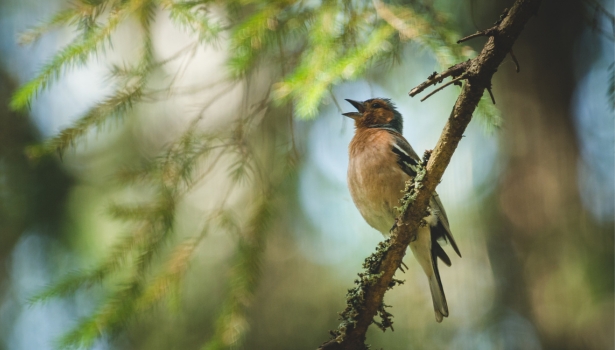
That said, birds don’t only sing at dawn: many species express themselves just as much at dusk. There, too, it’s about marking territory and finding mates. The cycle of light and darkness drives their lives and daily rhythms, just as it does ours.
Who are the kings of song? Probably the robins and the blackbirds, the latter also being very strong at hunting insects in low light. They will always be among the first to launch the morning choir, and among the last to fall silent when evening comes.