
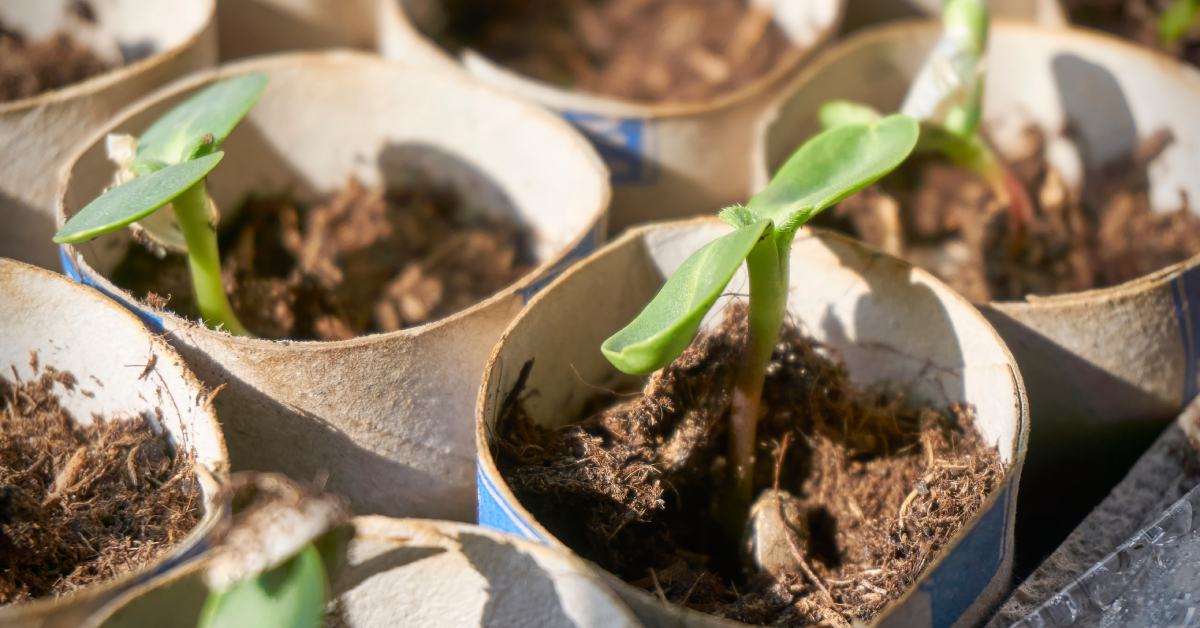
This simple technique helps avoid the transplanting step when your seedlings have grown. As a bonus, it gives a second life to cardboard toilet paper rolls, often discarded without a second thought, which can become small biodegradable pots that are very practical in the vegetable garden.
Sowing in toilet paper rolls: a practical, zero-waste trick
We’re used to tossing them without a second thought, but cardboard toilet paper rolls, on which the paper is wrapped itself, turn out to be a valuable aid for beginner gardeners or simply those who want to make life easier! The rolls can thus be used to plant seedlings, especially when you want to limit handling of young plants.
This method is particularly interesting for seeds that don’t like to be disturbed when transplanting. The principle is simple: the roll serves as a temporary container, then accompanies the young plant directly into the ground or into a large pot.
How-to: make a cup from a toilet paper roll
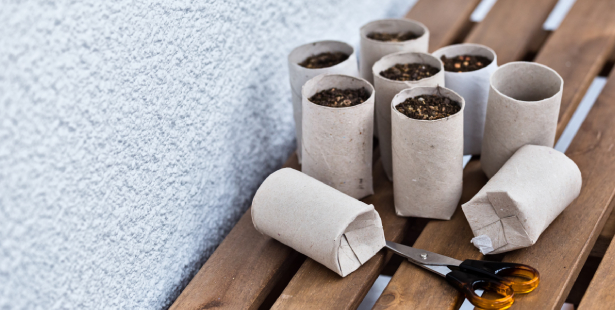
To do this, take a pair of scissors and make several small vertical slits about 2 to 3 cm long at one end of the roll. The slitted part will serve as the base for your future container. Then, as you guessed, simply fold the bottom to form a base, as if closing a small cardboard box.
Next, place these containers you’ve obtained on a solid, flat surface, for example in a tray, a crate, or an old recovery tub. Fill each container three-quarters full with a seed-starting mix, light and fine. Then scatter the seeds in the appropriate quantity, then cover with a thin layer of seed-starting mix, adapted to the size of the seeds. All that remains is to wait, remembering to water your seedlings regularly, but not excessively.
Practical tip: lightly moisten the rolls before filling them. The cardboard will be more pliable, the pots will stay in place better, and the soil mix will distribute more easily.
Why is the toilet paper roll ideal for seedlings?
The toilet paper roll is a lightweight, economical, and biodegradable container. It lets you start your seeds without buying plastic pots and without multiplying waste. It’s also a convenient way to organize your plantings: one roll, one variety, a small label, and you’re set.
Once the seedlings have produced sturdy young plants, you can transplant your filled toilet paper rolls directly into the soil. The cardboard they’re made of is thick indeed, but after many waterings it becomes more supple and permeable. When the time comes for the plant’s roots to grow, it will have become fragile enough for them to pass through.
The protocol: getting the planting right without harming roots
Before planting, check that the potting soil remains evenly moist and that the young plant has a few developed leaves. Dig a hole deep enough to accommodate the entire roll, then install it, making sure the top of the cardboard doesn’t protrude too much above the soil. If it remains visible, it may dry out and draw moisture upward by capillarity. Therefore, lightly cover the edge with soil, gently pat down, and water.
Which vegetables and flowers to sow in toilet paper rolls?
This trick works well for vegetable and flower seedlings that don’t enjoy being handled too much. It can be used for peas, beans, squash, zucchini, sunflowers, or certain annual flowers. The deeper roll is also handy for young roots that like to descend quickly.
For very fine seeds, such as some lettuces or herbs, the method remains feasible but requires more precision at sowing. In this case, it’s best to place only a few seeds per roll, then thin out if necessary to keep only the strongest plant.
The smart tip: label your seedlings from the start
A marker, a small wooden stick, or a label cut from packaging can be enough to note the variety name and the sowing date. It’s a small detail, but it saves a lot of guesswork a few weeks later, especially when several plants look similar at the start.
Bonus: other ideas for reusing toilet paper rolls in the garden
Reusing toilet paper rolls is fashionable, as evidenced by the many tutorials that pop up online. Among other possible uses, there is bird feeding: spread peanut butter on their surface, then roll the cardboard over seeds. This option can help in winter, provided you use bird-safe ingredients and remove leftovers before they mold.
Other uses include turning them into decorations, by wrapping them in colored paper, or as small separators to store seed packets, gardening twine, or seed labels. A simple way to extend the life of a common object before composting or recycling.
Zero-waste alternative: if you don’t have enough rolls, also consider cardboard egg cartons, reused yogurt cups, or small containers with drainage holes. The key is to ensure good drainage and avoid overwatering.