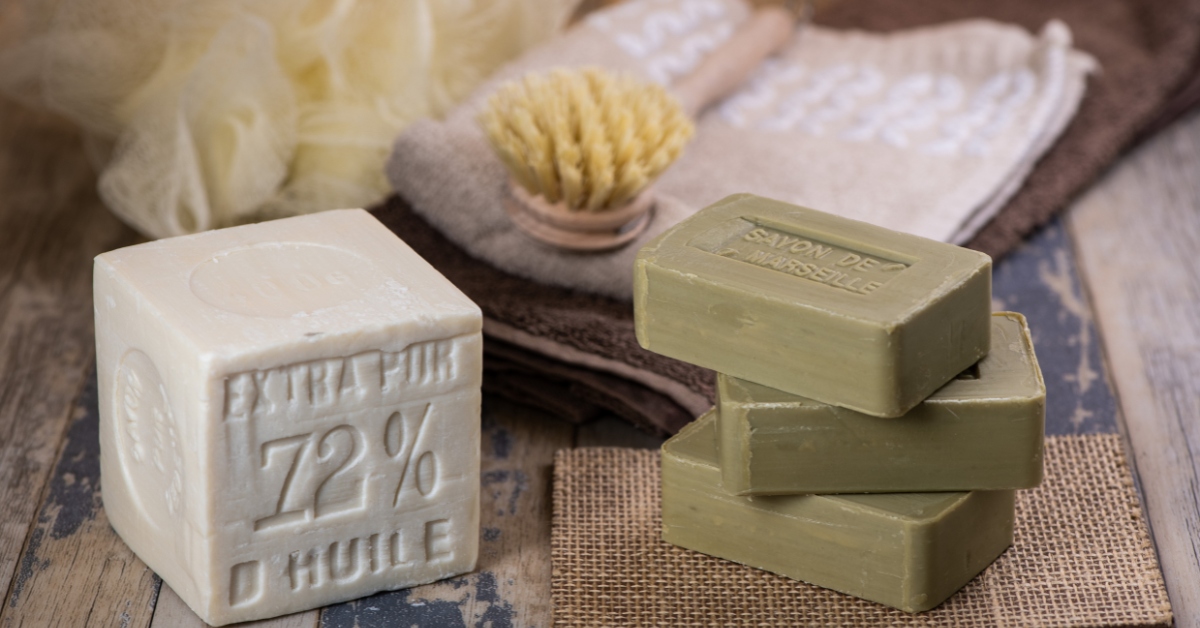
Green cube, discreet scent, the “72%” label… Behind Marseille soap lie many imitations. Here are the details that help you tell the real thing from the fake at a glance.
Marseille soap has genuine versions… and plenty of fakes. Lacking any official protection for its name, the authentic Marseille soap faces the full force of competition from imitations coming from abroad that appropriate its brand. Today, only a handful of soap makers still produce soap the traditional way in cauldrons.
Le Sérail, Fer à Cheval, la Savonnerie du Midi or Marius Fabre continue to produce a soap according to the historic Marseille method. An artisanal know-how that remains appealing, even as the majority of soaps labeled “savon de Marseille” have never stepped foot in the city of Marseille.
Marseille Soap, a French Heritage Spanning Several Centuries
The history of Marseille soap goes back several centuries. The Gauls already used fat-and-ash preparations to wash clothes or color their hair. But it was in the 16th century that soapmaking took on industrial scale in Marseille.
Thanks to vegetable oils imported by the Mediterranean port, Marseille’s soap makers rapidly expanded their activity. Under Colbert, in the 17th century, the quality of soaps was such that the term “savon de Marseille” gradually became a generic name.
At that time, the soap appeared in the form of large green bars weighing several kilos. In 1786, Marseille already had 48 soap factories producing nearly 76,000 tonnes of soap per year.
Bon à savoir : the famous green cube of Marseille soap was not only used for personal hygiene. It was also used to wash clothes, clean floors, remove stains from textiles, and even maintain certain leathers.
The Marseille soap industry remained prosperous until World War I before gradually declining after 1945 with the arrival of industrial detergents and synthetic soaps.
Why Marseille Soap Is Now Under Threat
Marseille soap does not benefit from any AOC, AOP or IGP protection. As a result, any manufacturer can legally sell a product under this name, even if it’s made abroad and does not follow the traditional recipe.
Today, according to industry professionals, 90 to 95% of soaps sold under the name “Marseille soap” would be imitations. Many are manufactured in Turkey, China, Morocco or Tunisia.
The problem isn’t just geographic origin. Numerous mass-market products use animal fats, chemical additives, synthetic colorants or fragrances, far from the historic recipe.
How to Spot a True Marseille Soap?
Faced with numerous copies, a few details thankfully help distinguish an authentic soap.
A Very Simple Composition
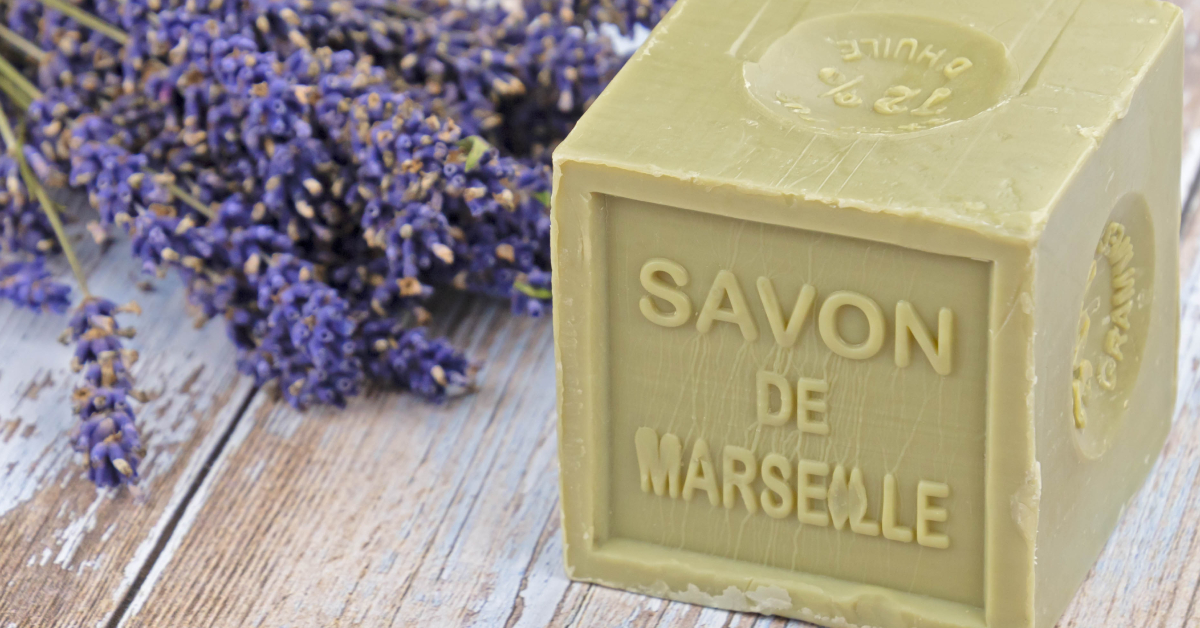
The authentic Marseille soap basically contains only vegetable oils and caustic soda. Traditionally, it carries the label “72% vegetable oils.”
The soap can be made from olive oil, coconut oil, copra or sometimes palm oil. Green or brownish bars generally contain olive oil, while lighter versions use more coconut oil.
Warning: if you see in the ingredient list the term sodium tallowate, that is animal fat. That is not traditional Marseille soap.
A Soap Free of Unnecessary Additives
A true Marseille soap normally contains no preservatives or chemical colorants. Its scent remains discreet and its color may change over time, precisely because it is a living, natural product.
Some scented soaps exist, however. Fragrances or essential oils are then added after the main manufacture, during grinding and cold-molding.
The Famous Stamped Cube
The traditional Marseille soap often appears in the form of a 600-gram cube. The six faces are typically stamped with:
- the “72%” label;
- the name of the soap maker;
- the “pure vegetal” designation.
How the Traditional Marseille Soap Is Made
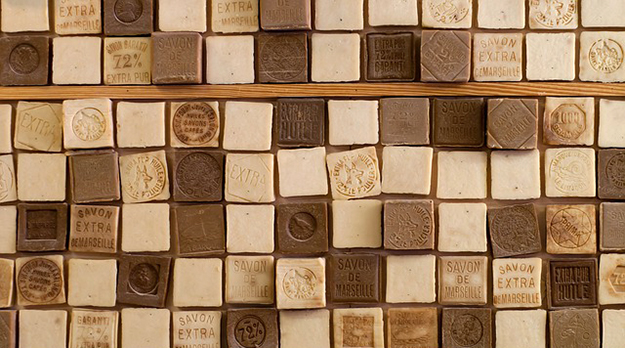
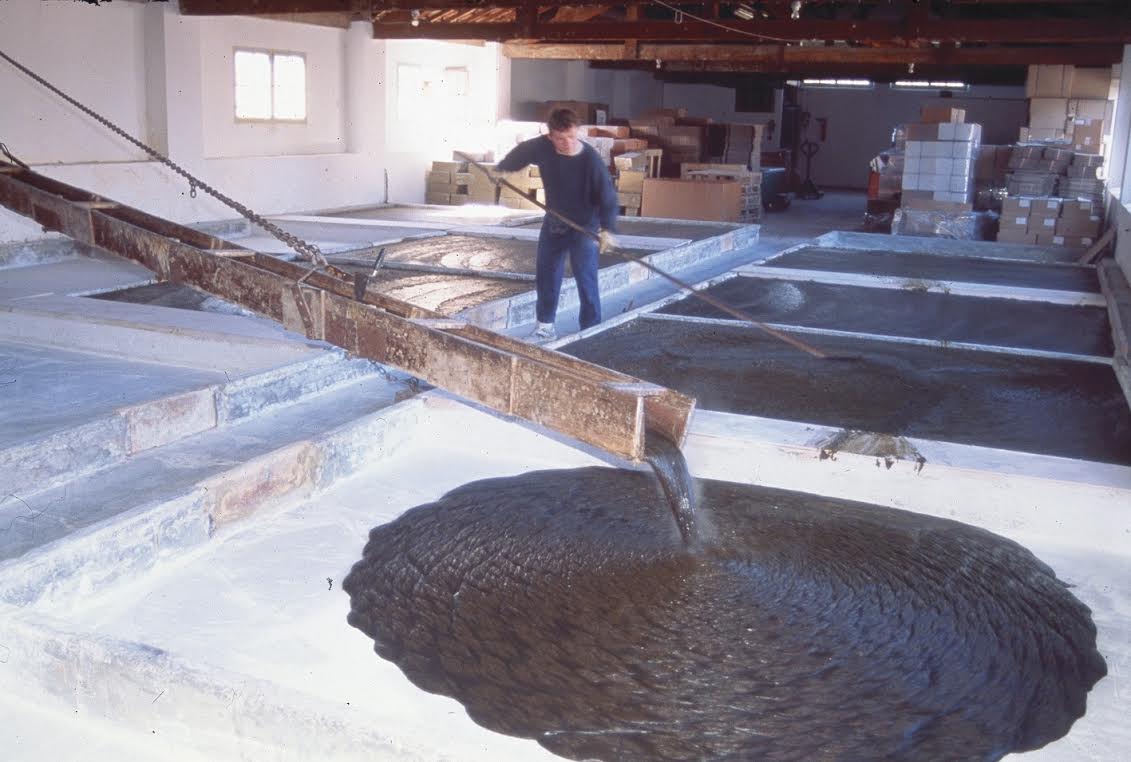
The traditional method rests on a lengthy process called the “Marseille method.” The paste is cooked in a cauldron for several days through various stages: kneading, cooking, relargage, épinage and liquidation.
Altogether, the production cycle can take more than a week. This artisanal know-how partly explains why true Marseille soaps cost more than some mass-produced imitations.
The soap is then molded, cut, and stamped before drying for several days.
Why Marseille Soap Remains So Popular
Marseille soap continues to attract because of its versatility. Biodegradable, economical, and generally gentle on the skin, it is used for both personal care and household cleaning.
It is notably used for:
- making homemade laundry detergent;
- cleaning certain surfaces;
- washing delicate textiles;
- spot-cleaning fabrics;
- cleaning brushes or certain leathers.
Contrary to common beliefs, Marseille soap does not automatically replace a medical disinfectant. For a significant or deep wound, it is better to seek advice from a healthcare professional.
Simple Homemade Marseille Soap Laundry Detergent Recipe
Making your own laundry detergent remains one of the most popular uses for Marseille soap.
The ingredients
- 80 g grated Marseille soap
- 1.5 liters hot water
- 1 tablespoon baking soda
- 1 tablespoon white vinegar
The preparation
Gently melt the soap shavings in the hot water. Then add the baking soda and, once the mixture has cooled slightly, the white vinegar. Shake before each use. This homemade detergent helps reduce plastic packaging while cutting back on industrial detergents.
Tip: preferably choose a Marseille soap without added glycerin to prevent your homemade detergent from thickening too quickly.
Article updated