
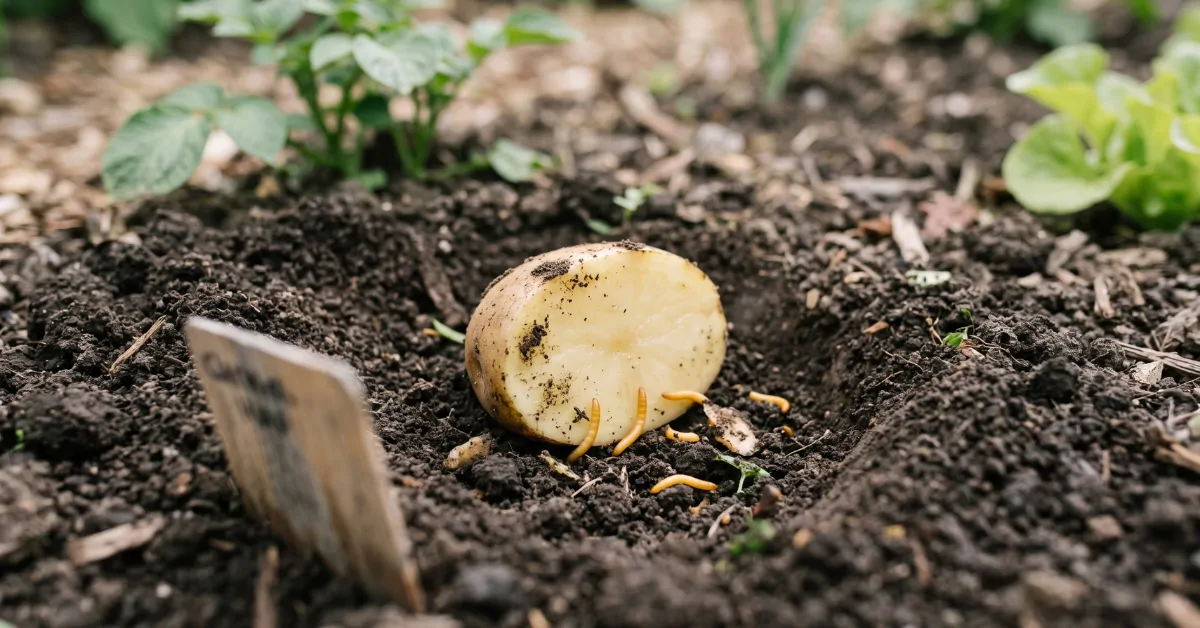
To detect the presence of wireworms and locally reduce their numbers, a very simple method is to bury a potato in the soil to serve as bait. The peels can be used, though thicker pieces of tuber are usually more practical and effective.
Why do potatoes attract wireworms?
Wireworms live in the topmost few inches of soil, where they search for plant material they can feed on. They are especially drawn to roots, germinating seeds, and moist plant matter in various stages of decay. A potato piece buried in the soil thus becomes an easily accessible food source for them. The larvae move toward the bait and cluster around it.
Peelings can work, especially when they’re thick and still have some flesh on them. They also have the advantage of turning a kitchen waste into something useful. For a trap that’s easier to find, however, it’s better to use potato pieces cut in half or into quarters. A piece large enough stays moist longer and can be removed more easily a few days later. With very thin peels, there is a risk they decompose quickly or become difficult to locate in the soil. In any case, only use healthy, disease-free potatoes.
How to install a wireworm trap?
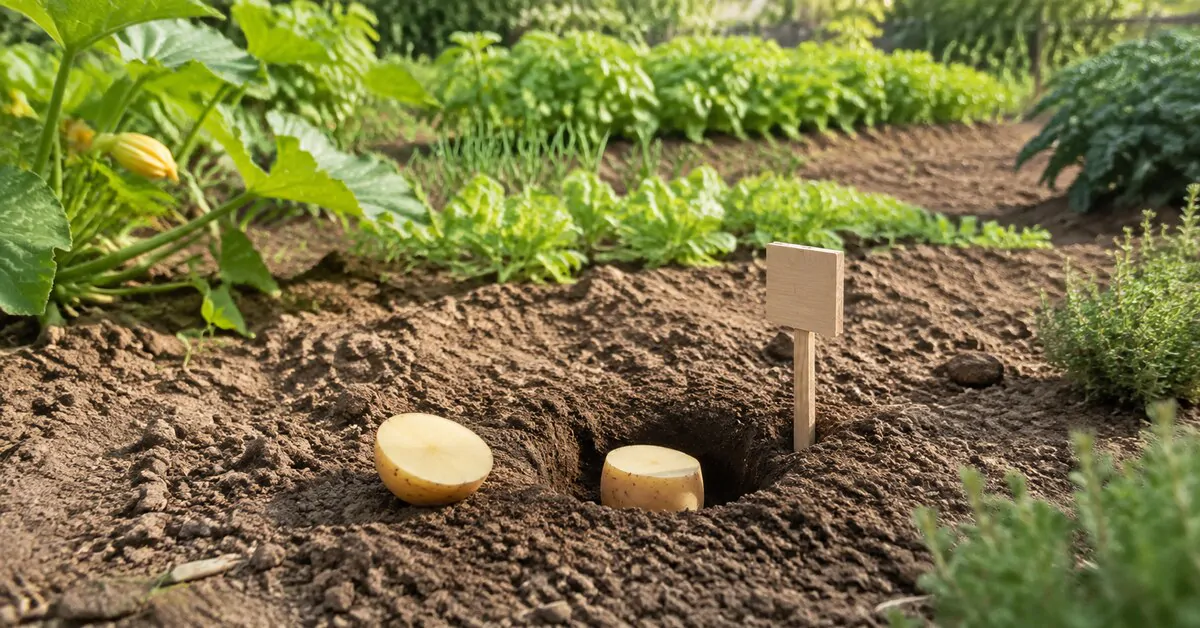
Begin by cutting a healthy potato into several large pieces. Then dig small holes about 2 to 4 inches (5 to 10 cm) deep in areas where you suspect wireworms. Place one piece in each hole and lightly cover with soil. It’s important to mark each location with a small stick or label, because the trap will need to be found again a few days later.
After about a week, carefully dig up the potato and observe the piece and the surrounding soil. Wireworms are easy to recognize: they are elongated, slender, and fairly hard larvae, typically yellow to brown-orange. If you find any, remove them from the soil and discard the potato piece. A new bait can then be installed at the same spot or a few tens of centimeters farther away.
Can you protect your entire garden this way?
One of the main benefits of this method is learning whether a plot truly harbors wireworms. A gardener might place several traps before planting potatoes, carrots, or other susceptible vegetables. If no wireworms are found after several checks, the risk is probably limited. Conversely, repeated detection of multiple larvae indicates you’ll need to monitor the area closely. This method is therefore both a diagnostic tool and a means of control.
Be realistic about the technique’s effectiveness. A potato-based trap can capture several larvae and temporarily reduce their numbers, but a few peels are not enough to eliminate a large wireworm population from a big plot. Larvae can live for several years in the soil and move between zones to forage. In a highly infested garden, it’s best to multiply traps and refresh them regularly.
However, do not use this technique to bury just any kitchen waste. A potato showing signs of rot or disease should not be used. Some potato pathogens can survive in infected tubers and contaminate subsequent crops. When making a trap, always choose a potato that is firm and healthy.
The best natural tips to protect your salads from pests