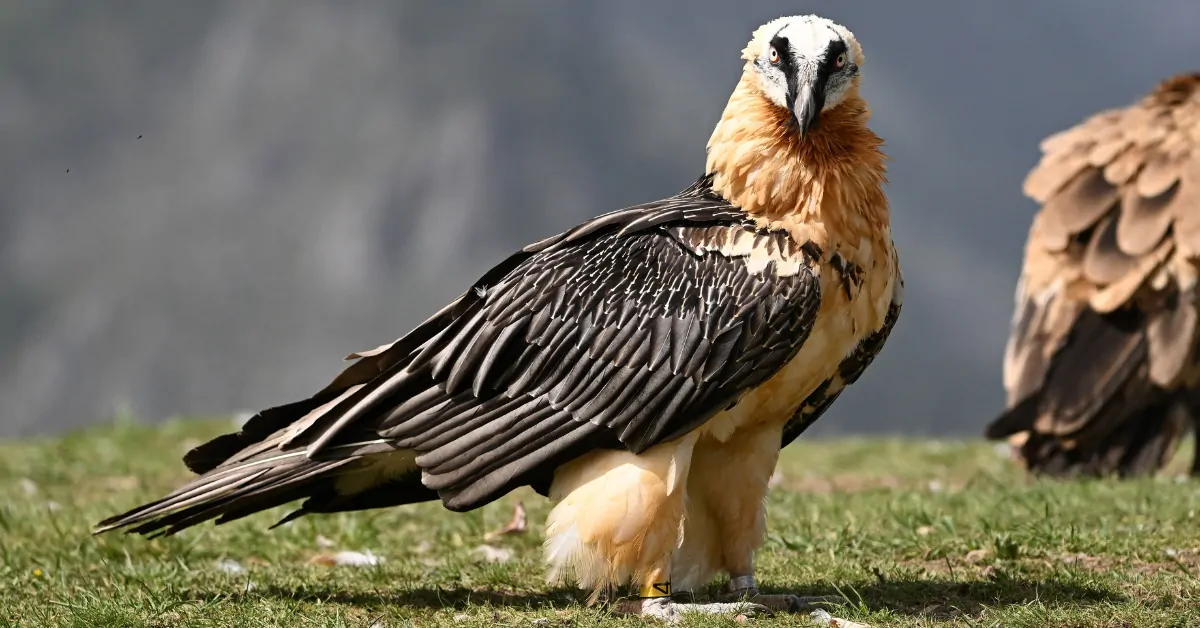
The bearded vulture (Gypaetus barbatus) is one of the most impressive birds of prey in our mountains. With a wingspan of nearly 2.80 meters (about 9 feet across), it soars for long stretches above cliffs in search of carcasses.
This vulture has an astonishing specialty: bones can account for up to 90% of its diet. It swallows them whole or drops them onto rocks to crack them. This behavior has earned it the nickname “bone-breaker.”
After disappearing from the Alps in the early 20th century, the bearded vulture has made a remarkable comeback there. Yet, with fewer than 100 breeding pairs recorded in France, its future remains fragile. Protecting its habitats and reintroduction programs remain essential.
What to remember
- The bearded vulture primarily feeds on the bones of dead animals.
- France still has fewer than 100 breeding pairs spread across several mountain ranges.
- Power lines, lead, gunfire, and disturbance continue to threaten the species.
- The new National Action Plan aims for a 42% increase in territorial breeding pairs by 2034.
The Bearded Vulture, a Natural Mountain Cleaner
Contrary to some old beliefs, the bearded vulture poses no danger to livestock. It typically intervenes after other vultures, when they have consumed the soft tissues of a carcass.
Its digestive system can break down bones thanks to especially powerful gastric acids. Large bone fragments are carried aloft and then dropped onto rocky anvils called “enclumes.”
By removing the last remains of dead animals, the bearded vulture participates in the natural recycling of organic matter. It thus occupies a very special place in the mountain ecosystem.
A Population on the Rise, but Still Vulnerable
Conservation programs have helped the bearded vulture recover some of its foothold in the French Alps. The species is also present in the Pyrenees and Corsica. Birds are released in the Prealps and the Massif Central to reconnect the various populations.
However, this progress should not obscure its fragility. France still has fewer than 100 bearded vulture pairs. Their distribution and status vary greatly by massif.
The species reproduces very slowly. A pair can raise at most one chick per year. Each death of a breeding adult can therefore have a lasting impact on the population.
The National Action Plan 2025-2034 aims to consolidate these nuclei. It specifically targets a 42% increase in the number of territorial pairs by 2034 and a better distribution across the four French massifs.
Protecting its habitats also benefits many other animals, such as the Black grouse (Tétras-lyre), other raptors, and several mountain birds.
How to Better Coexist with Bearded Vultures?
The bearded vulture’s return depends as much on reintroductions as on reducing hazards associated with human activities.
Securing power lines and cables
Power lines can cause collisions or electrocutions. Ski lift cables and other aerial equipment also pose a danger when they are hard to spot in flight.
Visualization devices can be installed to make cables more visible. Some pylons must also be secured to prevent large raptors from touching two conductors at once.
Mapping the most dangerous sectors helps prioritize equipment near breeding sites or major movement corridors.
Reducing lead exposure
The bearded vulture feeds on carcasses of wild or domestic animals. When an animal has been shot with lead ammunition, fragments can remain in its tissues or near the bones.
By swallowing these fragments, the raptor risks lead poisoning, also known as saturnism. Even exposure that does not cause immediate death can affect its behavior or physical abilities.
The switch to lead-free ammunition is therefore one of the solutions promoted by conservation programs. Toxicological monitoring of raptors found dead also helps better gauge this risk.
Respecting quiet zones in the mountains
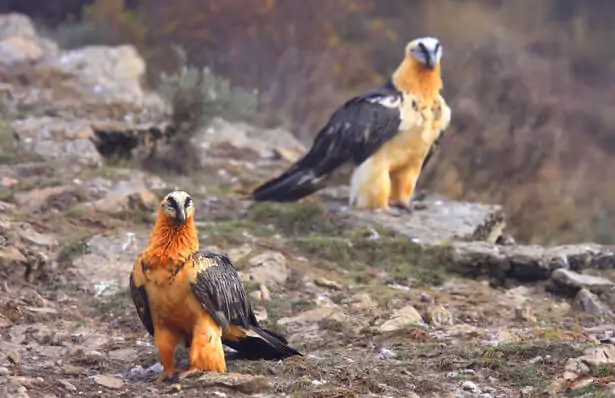
Climbing, paragliding, drones, off-trail hiking, or overflights by helicopter can disturb pairs settled on cliffs. Repeated approaches near the nest can cause adults to interrupt incubation or temporarily abandon their chick.
Major Sensitive Zones are defined around breeding sites. They help professionals and mountain sports enthusiasts adjust routes or activity periods.
The right move in the mountains
Respect temporary closures, avoid flying a drone near cliffs, and never try to approach a nest to photograph the birds.
Breeding and Reintroduction Programs: Essential
Reintroduction means restoring a species to a territory where it has disappeared. When a small population remains, the term used is more often reinforcement.
The first successful captive breeding occurred in 1978. The first young were released in the Alps starting in 1986. This international mobilization has allowed the alpine population to rebuild and today numbers in the hundreds.
Young bearded vultures are typically placed in a modified cavity resembling a natural nest. They spend several weeks there before taking flight. During this period, teams feed them discreetly and monitor their adaptation.
In the Grands Causses, 42 young birds had been released in twelve years by the end of spring 2025. These releases help create a corridor between the Alpine and Pyrenean populations.
The birds come from a European network coordinated within a conservation breeding program. Breeding pairs and their offspring undergo rigorous genetic monitoring. The young are assigned to different projects according to the needs of wild populations.
The Bearded Vulture’s Return Remains a Fragile Victory
The comeback of this large raptor shows that species disappearance is not always irreversible. Conservatory breeding, reintroduction, securing infrastructures, and nest protection have already produced visible results.
But these efforts must be sustained over time. The bearded vulture’s slow reproduction rate prevents rapid compensation for high mortality. Preserving every adult and every chick therefore remains essential.