
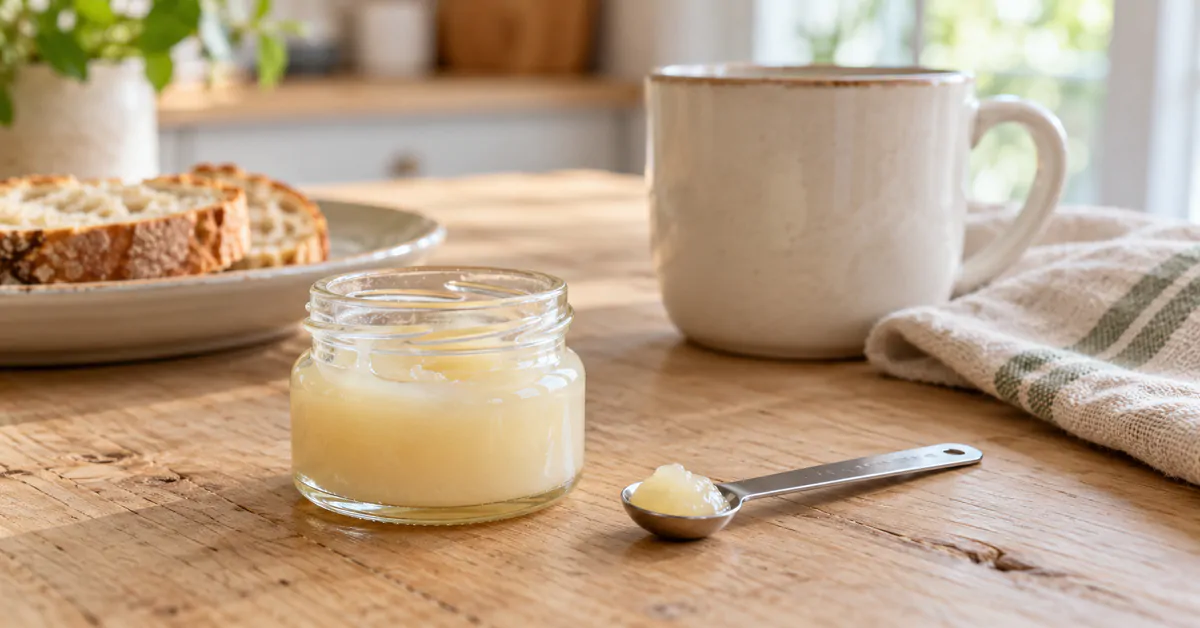
Royal jelly is reserved for the queen bee and for newly hatched larvae. It’s a true superfood for the bee elite, designed to protect them and to give them the energy needed for the rapid growth of larvae and for laying thousands of eggs each day. For evidence: fed exclusively on this nectar, the queen lives 5 to 6 years, compared to only a few weeks for a worker bee, and can lay up to 2,000 eggs per day.
Used since ancient times, royal jelly is recognized for restoring energy, stimulating natural defenses, and maintaining physical and intellectual vitality. It effectively helps combat a variety of external assaults by boosting the immune system and protecting cells from oxidative stress.
Royal Jelly, an Extremely Rich Superfood
The jelly is exceptionally rich in nutrients: water (about 66%), proteins (12%), complex sugars (11%), fats (5%), and many vitamins (B3, B5, B6, B8, B9). It is also one of the natural sources richest in vitamin B5 (the “energy vitamin”), but it’s also packed with essential amino acids, minerals, and trace elements (calcium, iron, copper, magnesium, phosphorus, potassium, zinc, sulfur…).
Its therapeutic secret also lies in honeybee-specific components: royalisin (a peptide with powerful antibacterial properties) and 10-HDA (10-hydroxy-2-decenoic acid), a fatty acid exclusive to bees with remarkable immunostimulant virtues. This makes it one of the most complete supplements, alongside spirulina, maca, and goji berries.
Fatigue and Immunity: The Winning Duo
It is therefore a valuable supplement for fighting fatigue and restoring energy, while aiding concentration, memory, and the balance of the nervous system. It is often paired with ginseng or vitamin C to help the body during recovery, and to support those who are overworked (work stress, exams, mental load).
On the immunity side, it proves particularly effective at keeping flu and winter viruses at bay when combined with propolis. Athletes, people under chronic stress, those experiencing nervous tension or seasonal mood dips, and seniors will especially appreciate its regenerative virtues.
How to Choose Your Royal Jelly?
Not all royal jellies are created equal. On the market, a large portion of production is imported from Asia, often frozen and thawed, which damages its active compounds. To reap all of its benefits, it is crucial to favor fresh royal jelly, not frozen, and if possible sourced from organic farming or local producers who respect bees (such as the GPGR label in France).
Royal Jelly: Dosage and Administration
In a preventive regimen, it is recommended to take 0.5 to 1 g of fresh royal jelly per day (or up to 2 to 4 g in cases of severe fatigue), or the equivalent in liquid extract (10 to 20 ml).
For example, we recommend Fleurance Nature’s 10 g royal jelly dosing spoons. Stored in the refrigerator (between 2 and 5°C) and away from light, royal jelly will retain all of its properties. A one-month course of 1 g every morning—ideally on an empty stomach, letting it melt under the tongue—will effectively support you through seasonal changes. For regular maintenance, you can settle for 0.5 g per day, also in the morning.
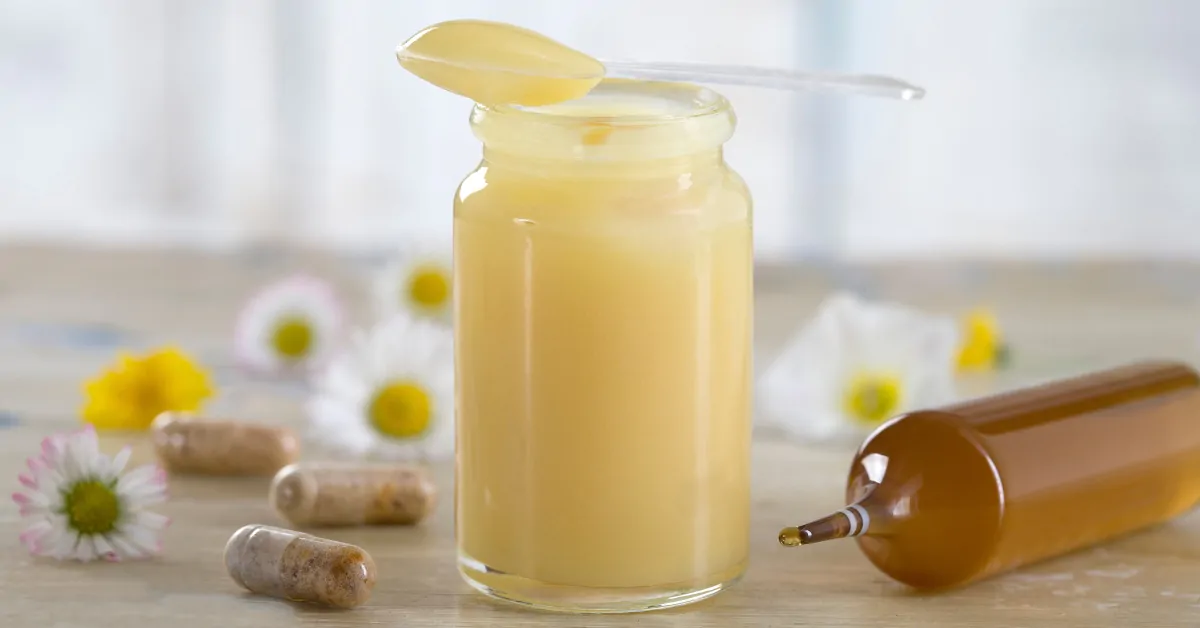
Royal jelly can be presented in chewable tablets, such as Fleurance Nature’s Energy and Fatigue Reduction tablets with Acerola, which are handy on the go. But it is advised to consume it fresh or freeze-dried, so that most of its fragile nutrients are preserved. Of course, organic royal jelly is always preferred to ensure the greatest possible purity, without pesticide residues.
Precautions and Contraindications
The only strict contraindication concerns people allergic to hive products (honey, propolis, pollen) or bee stings, as well as those with severe asthma. As a precaution, due to possible mild estrogenic effects, it is sometimes discouraged in individuals with a history of hormone-dependent cancers.
Also read
- Apitherapy and hive products
- Propolis, another hive product to discover
- Honey and its everyday uses